Coming up with fresh, engaging video marketing ideas can be challenging. It often takes trial and error to figure out what resonates best with your audience. What if you could skip some of that guesswork and have your customers essentially tell you what videos they want to see?
This is exactly what social listening for video marketing empowers you to do. By monitoring online conversations and feedback, brands can uncover valuable insights, from trending topics to common pain points, that inform stronger video content strategies.
In this guide, we’ll explain what social listening is and how to use it for video marketing to turn those signals into better video concepts, hooks, scripts, and data-driven campaign decisions.
What is Social Listening?
Social listening is the process of monitoring and analyzing publicly available online conversations, on social media, forums, blogs, reviews, and other platforms, to understand what people are saying about topics relevant to your brand.
It goes beyond basic social media monitoring (which typically focuses on tracking direct mentions and responding one-on-one) to look at the bigger picture. Social listening considers how your company, products, competitors, and market are discussed as a whole.
In other words, social listening is more of a macro-level analysis or trend analysis, rather than just a series of micro interactions.
When you practice social listening, you track keywords and topics, such as your brand name, industry terms, competitor names, or hashtags, across various online channels. The data you gather can include social media posts, comments, videos, forum discussions, blog mentions, customer reviews, and more.
Advanced consumer insights platforms will capture not only text but also context, including engagement metrics, share of voice, and sentiment. By compiling and analyzing this data, you can understand your audience’s demographics and interests, their content preferences, influencers they follow, and the trends they engage with.
Next, let’s look at how you can leverage those insights to improve your video marketing strategy.
How to Use Social Listening for Video Marketing?
Social listening can elevate your video marketing in multiple ways. It helps ensure your video content covers the topics your audience cares about, strikes the right tone based on sentiment, and is distributed on the platforms where your viewers are most active.
Below, we break down several key strategies for using social listening insights to strengthen your video marketing.
Pinpoint Where Your Audience Is Active
One foundational insight social listening can provide is where your audience is congregating online. Understanding which platforms and communities your target viewers frequent is crucial for effective video marketing. Often, brands default to posting videos on the most obvious channel (e.g., YouTube) or simply cross-posting across all channels.
But a smarter approach is to use social listening data to run a platform analysis of your niche.
By tracking industry keywords or conversations related to your brand, you might discover that a significant portion of your audience engages on platforms you haven’t prioritized. For example, you may find vibrant discussions about your product category happening on Reddit or niche forums, or that a chunk of your target demographic spends time on Twitch or TikTok.
Social listening tools can show you a breakdown of sources for relevant mentions, revealing hidden opportunities that have a lot of chatter about your industry. By identifying where your audience is most active and engaged, you can tailor your video marketing plan to focus on those platforms, optimizing your content’s reach and relevance.
Discover Trending Topics and Audience Interests
Social listening truly shines in helping you identify trending conversations and content themes among your audience. Rather than brainstorming video topics in a vacuum, you can tap directly into what your consumers are currently talking about, questioning, or excited about. This keeps your video content calendar timely and audience-centric.
Most social listening tools for video strategy allow you to surface the top topics, hashtags, and keywords emerging from your monitored conversations. Moreover, by adjusting the timeframe (e.g., the past month vs. last week), you can see how discussions evolve and which new topics are gaining momentum.
With these insights, marketers can craft video content that rides the wave of what’s popular. If a question is being asked repeatedly on social media or in forums, consider creating an explainer video to answer it. If there’s a positive trend or movement your brand can authentically participate in, make a video that adds value to that conversation.
Understand Audience Sentiments and Preferences
Knowing what people are discussing is vital, but so is understanding how they feel about those topics. This is where sentiment analysis as part of social listening becomes incredibly useful. Social listening tools can analyze the overall sentiment (positive, negative, or neutral) of mentions and feedback related to your brand or keywords.
Tracking sentiment patterns helps you gauge audience emotions and preferences at scale: What do customers love? What pain points or frustrations keep coming up? How is your brand perceived relative to the competition?
By digging into these sentiment insights, you can refine your video content to address audience feelings better. You can start with the positives: identify recurring praises or enthusiastic comments about your product, service, or recent campaigns. These represent your strengths and delight factors, the things you’re doing right that you should continue to highlight.
On the flip side, pay close attention to any negative sentiment trends. Social listening will surface frequent complaints, questions, or pain points people mention about your brand or industry. Rather than avoiding these, savvy marketers use them as fuel for better content.
If you discover, for instance, that many viewers are confused about how a feature works or upset about a specific issue, tackle it head-on in a video. Create an explainer or tutorial video to address common questions and misunderstandings, effectively turning an FAQ into engaging content.
By proactively responding to negative feedback through your video content, you not only inform viewers but also demonstrate empathy and responsiveness, which can rebuild trust with disillusioned customers. In summary, social listening helps you fine-tune your social media marketing.
Monitor Competitors for Inspiration and Gaps
Social listening isn’t just about your own brand; it’s also a powerful window into your competitors’ performance and how the audience perceives them. Keeping an ear to the ground on competitors’ mentions can inform your video marketing strategy in several ways.
First, by monitoring conversations about competitor brands or specific competitor videos, you can gauge what is working and what is not working for them. Do viewers praise certain aspects of their content, or are there negative comments piling up about something they did wrong?
Moreover, listening to competitor mentions helps identify market gaps your videos could address. For instance, if people wish a competitor would showcase real customer stories instead of polished ads, that’s a gap your brand can step into with authentic testimonial videos.
To do this effectively, set up social listening alerts for your competitors’ brand names, product names, and even their campaign hashtags. Tools like MetricsCart allow side-by-side comparisons of your brand and competitors. It can benchmark competitor reviews and feedback across channels to reveal what makes their products win or lose in customers’ eyes.
Transform Insights into Engaging Video Content
The most important step is turning all these social listening insights into actual video content that engages your audience. Knowing audience behavior, trending topics, sentiment, and competitor info is powerful, but it must be applied creatively in your content creation process.
Here are several ways to leverage social listening insights when developing video concepts, scripts, and campaigns:
- Give the people what they ask for: Use the lessons from listening to ideate new video topics directly addressing your audience’s interests.
- Address FAQs and pain points on camera: Your customer support and social teams have likely noticed patterns in questions or complaints. Social listening amplifies those common threads. Instead of replying one-by-one, create videos that address frequent questions or issues broadly.
- Incorporate customer voices and social proof: Social listening will surface great user-generated content and testimonials, and add them to your videos (with permission). You might feature user testimonials or quotes from positive social media posts directly in your videos to build credibility.
- Mirror the audience’s language and tone: As you develop scripts and creative direction, use the same vocabulary and cultural references that your audience uses in their posts. Social listening gives you a window into the language, slang, and tone that resonates with your community.
- Encourage engagement and UGC through listening: When you pay attention to your community, you’ll often identify your brand advocates and most passionate fans. Social listening can highlight these individuals, and you could feature a fan’s story in a video. This provides you with fresh video content and also strengthens community bonds.
By integrating these tactics, you essentially let social listening data fuel your entire content pipeline. When your video topics and messages come straight from consumer insights, you’re far more likely to strike a chord and see higher engagement. Over time, this approach can foster a stronger connection with your audience and turn viewers into loyal advocates.
From Insights to Impact: Shaping Smarter Video Strategies
Social listening can be a game-changer for your video marketing strategy. In an era where consumers are inundated with content, the videos that cut through the noise are those that truly speak to the audience’s needs and interests.
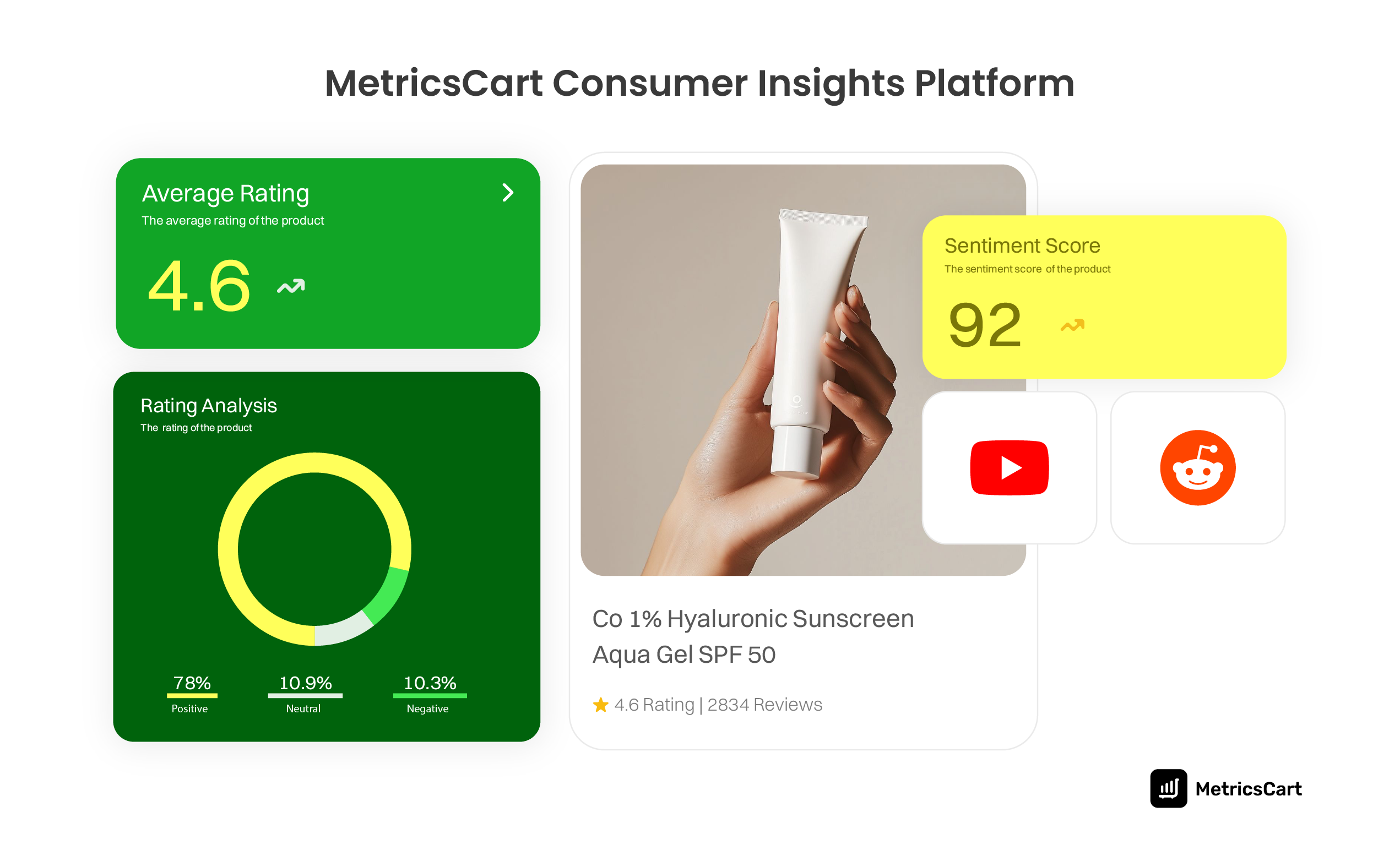
Using social listening for video marketing helps you craft content that is more targeted, timely, and impactful. A robust consumer insights platform like MetricsCart can aggregate conversations from reviews and social channels and distill them into clear dashboards of trends, sentiment shifts, and key themes. This means you can quickly identify what matters and pivot your video strategy accordingly, without manually sifting through thousands of comments.
The more you listen, the better you know your audience; and the better you know them, the more likely you are to create video content that truly connects. So start tuning in to the online chatter, your next great video idea might already be out there in a tweet, post, or review just waiting for you to discover it.
Are Real Shopper Conversations Informing Your Marketing Strategy?
FAQs
Social listening in video marketing is the process of tracking and analyzing conversations, comments, reviews, and trends across social platforms to understand what audiences are talking about and using those insights to shape video content that resonates.
Social monitoring focuses on tracking mentions and engagement metrics, while social listening goes deeper. It analyzes sentiment, recurring themes, pain points, and intent to inform content strategy, messaging, and creative direction for videos.
Social listening helps brands create videos that address real customer questions, objections, and interests, making content more relevant, watchable, and shareable.
Social listening analyzes real-time conversations, comments, and sentiment across social platforms to understand what audiences are talking about and feeling. Search listening focuses on analyzing search queries and keywords to understand what people are actively looking for. While search listening captures intent, social listening reveals context, emotion, and emerging trends; together, they help brands create video content that is both discoverable and highly relevant.
Brands should listen across platforms where video content and conversations happen, including YouTube, Reddit, review platforms, and even comments on competitor videos.