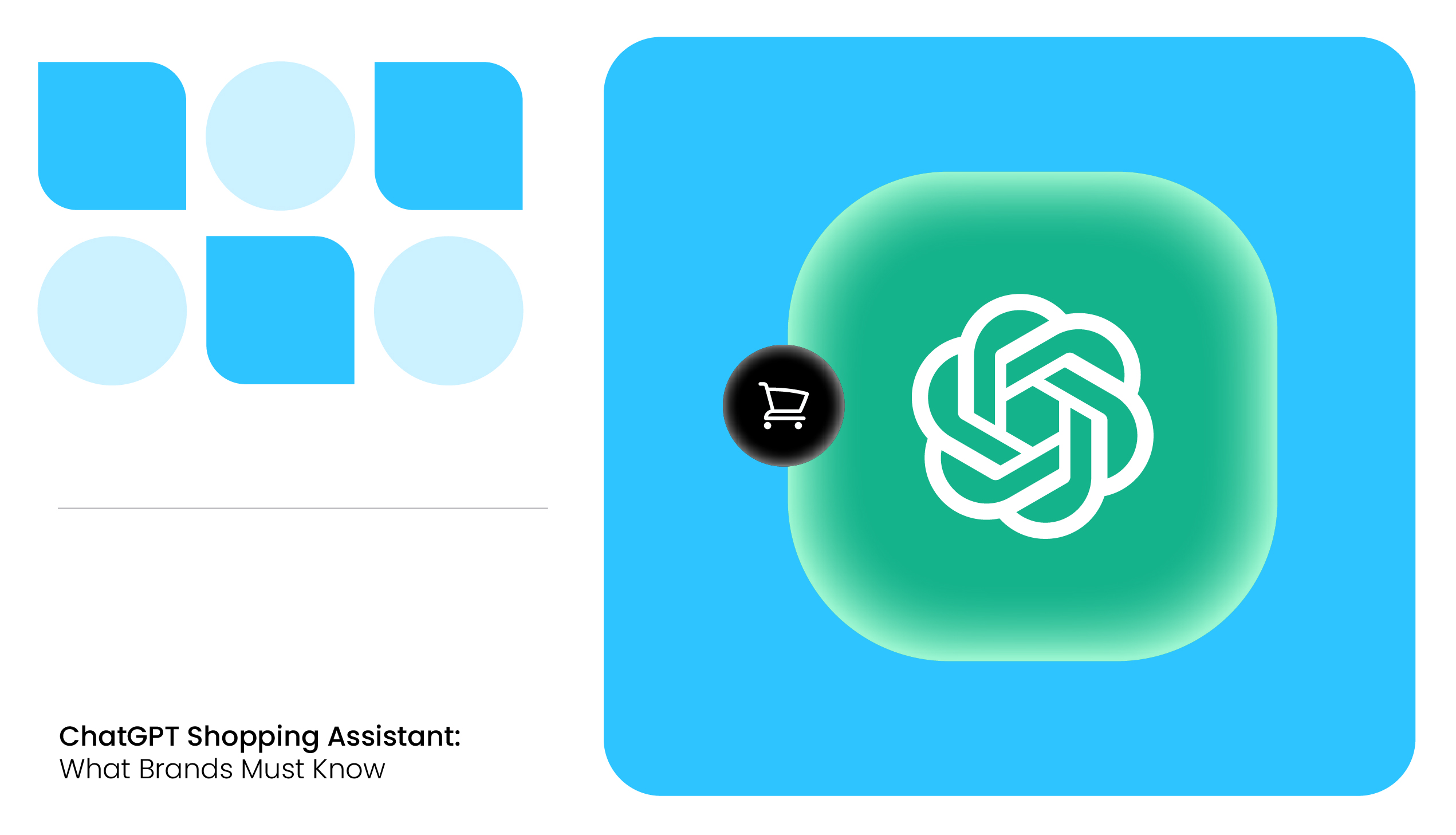
Online shopping is changing. What once began with simple search, filters, and product listings is now moving toward conversation-led buying. OpenAI confirms this shift with the launch of its AI-powered ChatGPT Shopping Assistant.
For brands, this means that ranking on marketplaces or bidding on keywords alone can no longer guarantee digital shelf success. To win, they must align with a model where their products are naturally selected by an AI that helps shoppers make decisions.
Want to know more? Read this article to get the full picture on how AI is changing online shopping, what the ChatGPT Shopping Assistant is, and what you must do now to stay visible and competitive.
Highlights
- ChatGPT Shopping Assistant is an AI-powered tool transforming online shopping from search-based to conversation-led, helping shoppers make decisions through natural language.
- It offers many benefits for shoppers, including faster decision-making and providing a personalized shopping experience.
- Brands must ensure a clean digital shelf presence with accurate product data, consistent messaging, and real-time monitoring of reviews, pricing, and availability to stay competitive in AI-powered shopping.
- Brands can optimize product pages for AI by focusing on clarity, specific use cases, and well-defined features.
- Brands should also strengthen trust signals (reviews, ratings), and monitor key metrics like sentiment trends and price stability for better AI visibility.
- As AI-driven shopping grows, brands must adapt by staying consistent across channels and improving their digital shelf management with tools like MetricsCart.
What Is the ChatGPT Shopping Assistant?
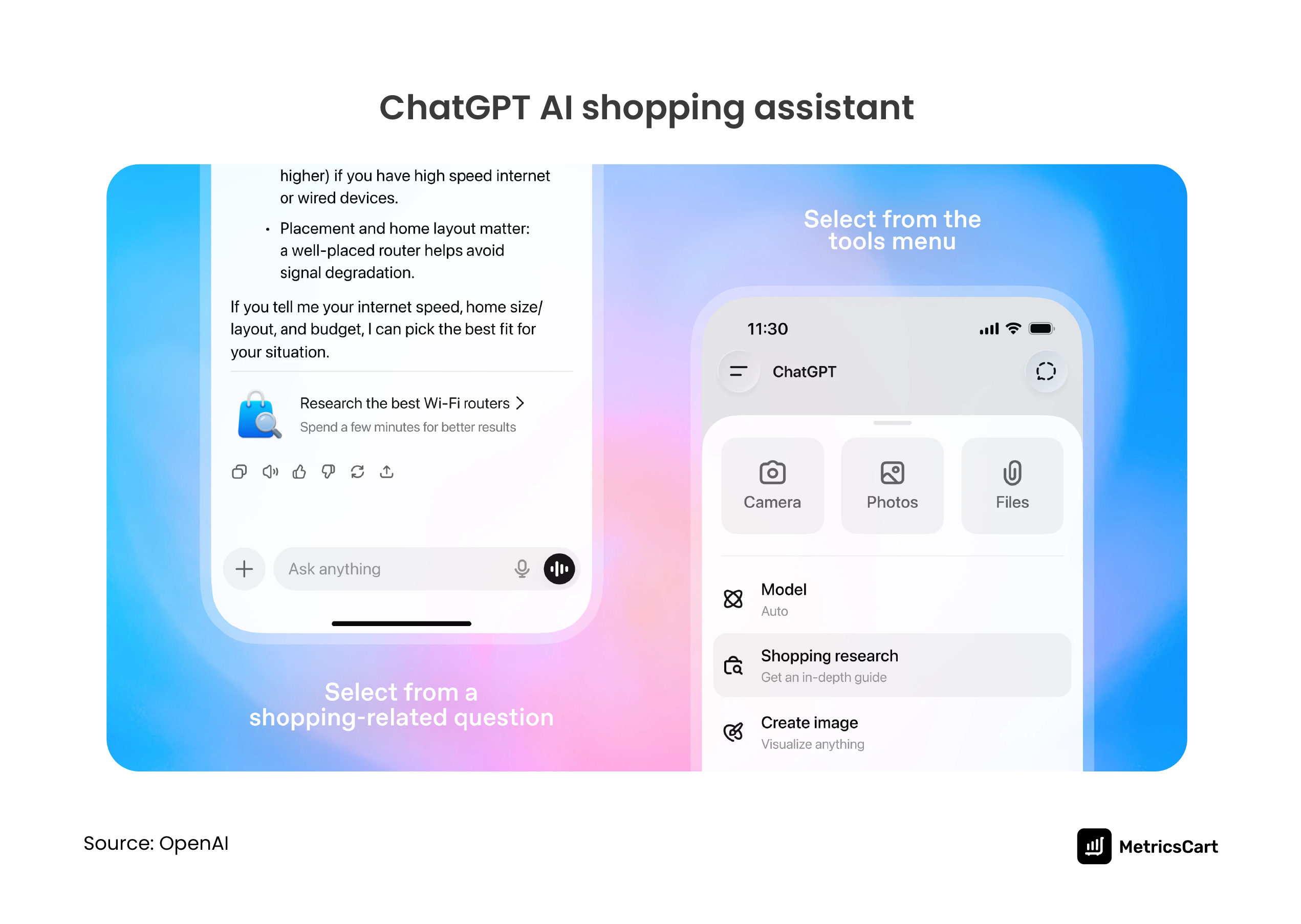
The ChatGPT Shopping Assistant is a built-in shopping research and recommendation experience inside ChatGPT. Instead of sending users to a list of links, it helps them research products through simple conversation-like chats.
Shoppers describe what they need, refine their preferences, and receive product suggestions with explanations, comparisons, and trade-offs.
How the ChatGPT Shopping Assistant Works
At its core, the assistant focuses on three things.
- Understanding intent: Instead of relying on keywords like “best headphones under $200,” it asks follow-up questions about use case, preferences, and constraints.
- Synthesizing information: It pulls product data, reviews, specifications, and availability from across the web and retail sources.
- Guiding decisions: Rather than showing everything, it narrows choices and explains why certain products are better fits.
Today, most purchases still redirect users to merchant sites or marketplaces to complete checkout. However, with Instant Checkout and merchant integrations already in place, ChatGPT is clearly positioning itself as more than a research layer.
It is becoming a shopping interface where discovery, comparison, and purchase occur in a single flow.
READ MORE | 10 Best AI Tools for E-Commerce Businesses: Top Features, Pricing & More
How ChatGPT Is Improving the Online Shopping Experience
From the shopper’s point of view, ChatGPT’s e-commerce impact is obvious. Online shopping has always been efficient, but not always easy. Too many choices, inconsistent product information, and biased reviews often slow decisions.
ChatGPT changes this by acting like a knowledgeable assistant rather than a search engine.
Moving from Search to Conversation
Traditional online shopping starts with a query and ends with dozens of tabs. Shoppers scan product pages, compare specs manually, and read reviews across multiple sites.
ChatGPT replaces that with a guided conversation. A user can say what they want in natural language, clarify preferences as they go, and adjust the results instantly.
This matters because more than half, around 51%, of the shoppers do not know exactly what they want at the start. They refine decisions while learning. ChatGPT supports that behavior far better than static filters or category pages.
Faster Decision-Making
One of the biggest promises of AI in online shopping is speed. ChatGPT shortens the path from interest to confidence. Instead of reading ten reviews and five product descriptions, shoppers get a summary of what matters. They see key differences, common complaints, and clear reasons why one product may be better than another.
This does not just save time. It reduces decision fatigue. Fewer options, explained clearly, often lead to faster purchases and fewer abandoned carts.
Personalized Product Recommendations
Personalization is not new in e-commerce, but ChatGPT handles it differently. Instead of relying only on past behavior or cookies, it personalizes in real time through conversation. Budget, preferences, constraints, and context all shape recommendations instantly.
This is why the question “Can ChatGPT give personalized product recommendations?” matters.
The answer is yes, and it does so based on expressed intent rather than assumptions. That makes recommendations feel more relevant and trustworthy to shoppers.
Accuracy and Trust Still Matter
ChatGPT does not create product information. It relies on existing data, reviews, and sources. When that data is accurate and consistent, the experience feels reliable. When it is outdated or incomplete, problems surface quickly.
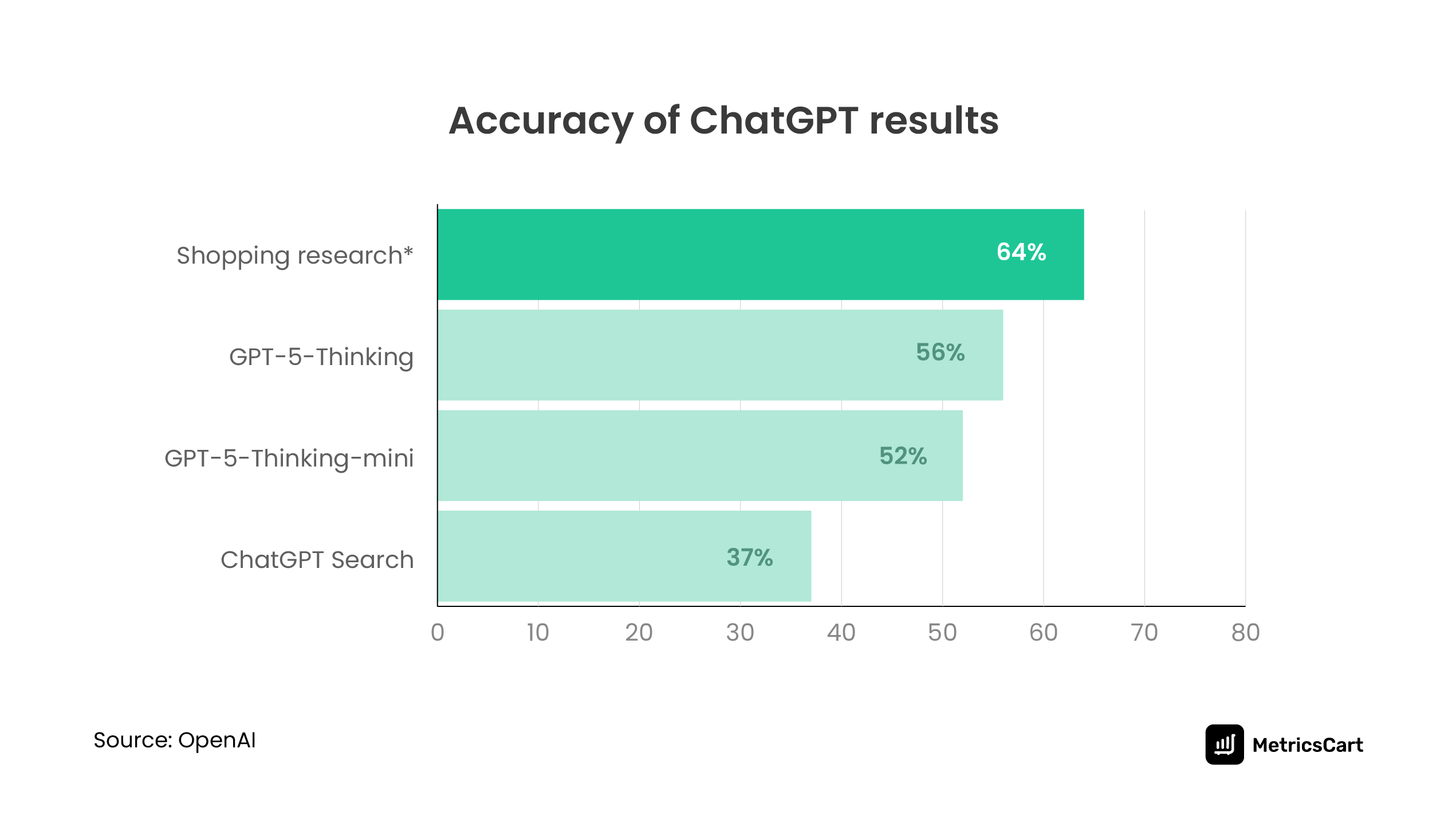
OpenAI itself acknowledges that the details it shows may occasionally be wrong. This means shoppers still verify before buying. For brands, it also means errors in product data are more visible than ever. AI does not hide inconsistencies. It exposes them.
How Brands Can Prepare for ChatGPT-Led Shopping
For brands, the most important question is not whether ChatGPT will influence shopping, but how to prepare for it.
The rules are different from traditional SEO or marketplace optimization, but the foundation is familiar.
Fix the Basics First
Preparing for ChatGPT-led shopping is less about chasing a new algorithm and more about tightening execution across the digital shelf. AI assistants depend on clean inputs. Brands that manage their product data, reviews, pricing, and availability well will naturally surface more often in AI-driven recommendations.
This is where continuous visibility matters. Brands need a way to track how their products appear across retailers, how prices fluctuate, where content gaps exist, and how reviews are trending at the SKU level. When these signals are monitored in one place, teams can fix issues early instead of reacting after visibility is lost.
Platforms like MetricsCart help brands keep this foundation strong by making it easier to spot inconsistencies, content gaps, pricing risks, and review issues across channels. It gives real-time insight into the same signals AI systems rely on to compare and recommend products.

Strengthen Trust Signals
Trust plays a central role in AI-led shopping. Reviews, ratings, and feedback are not just social proof. They are inputs into how products are summarized and compared.
Brands should actively monitor review trends, not just averages. Repeated complaints about sizing, quality, or packaging matter more than a high star rating alone. ChatGPT often highlights common issues when explaining trade-offs. Ignoring those themes weakens recommendations.
Customer experience teams also play a role here. Faster issue resolution, clearer instructions, and honest responses improve review quality over time. In an AI-driven environment, these improvements directly affect visibility and conversion.
Optimize for AI Discovery
Optimizing for AI discovery is not about gaming algorithms. It is about clarity.
Products that are easy to explain perform better. Clear use cases, well-defined features, and consistent terminology help ChatGPT compare and recommend accurately. Ambiguous claims and marketing fluff do not help. Specifics do.
Brands should also think in terms of comparison. Shoppers often ask questions like
- “What is better for small apartments?” or
- “Which option lasts longer?”
Products that clearly answer these questions in their content are easier for AI to position correctly.
Finally, consistency across channels matters more than ever. If a product tells a different story on Amazon, Walmart, and the brand site, ChatGPT has to reconcile that conflict. Clean, aligned messaging improves outcomes.
READ MORE | Introducing MetricsCart AI Assistant: Your New Co-Pilot for E-Commerce Excellence
Monitor Metrics That Matter More in an AI-Driven Shopping World
As shopping shifts toward AI assistants, some metrics become more important than others.
Review sentiment trends matter more than raw volume. Price stability matters more than deep but erratic discounts. Content completeness at the SKU level matters more than brand-level storytelling alone. Consistency in availability across platforms matters more than single-channel optimization.
Brands that monitor these signals continuously are better positioned to adapt. Manual checks and periodic audits are no longer enough when AI systems operate in real time.
The Window to Act Is Now
As AI increasingly shapes how shoppers discover and evaluate products, maintaining a strong, consistent digital shelf becomes critical. Brands that have clear visibility into their product content, pricing, availability, and customer feedback are better positioned to adapt as shopping shifts toward AI-led decisions.
Platforms like MetricsCart support this by helping teams monitor and improve the signals that influence how products are compared and recommended across retailers. For brands preparing for the next phase of online shopping, staying informed and in control of these signals is a practical place to start.
Become AI-Ready Before It’s Too Late. Try MetricsCart Digital Shelf Analytics Solution Today.
FAQs
In most cases, yes. ChatGPT reduces the time spent comparing products by highlighting key differences, common issues, and best-fit options. By narrowing choices and explaining trade-offs clearly, it helps shoppers reach confident decisions with less effort.
ChatGPT Instant Checkout allows shoppers to complete purchases without leaving the chat experience. While still rolling out, it signals a future where product discovery, comparison, and purchase happen in one flow, making early visibility and data accuracy even more important for brands.
ChatGPT does not fully replace search engines, but it reduces reliance on them for product research. Many shoppers now start with AI to understand options before visiting marketplaces or brand sites to complete purchases.
Currently, ChatGPT focuses on relevance rather than traditional paid ads. Recommendations are based on product data, reviews, availability, and how well a product matches user intent, not keyword bidding.
Reviews help AI summarize strengths, weaknesses, and common issues. Repeated feedback themes often influence how products are positioned and compared, making review quality more important than star ratings alone.