Do you know who’s selling your products online? Brands face growing challenges from unauthorized and counterfeit sellers on Indian marketplaces, which disrupt pricing strategies and reputation.
Reports and legal commentary discuss this concern in the context of trademark infringement and unauthorized product listings.
In this seller audit explainer article, we’ll explore the process that Indian brands use to monitor and enforce pricing policies in the absence of traditional MAP monitoring. You’ll learn why seller audits are essential for protecting your brand’s value and how to identify and address unauthorized sellers on online marketplaces.
Let’s dive in.
Highlights
- Seller audits help identify unauthorized sellers who undercut prices and damage brand reputation.
- Unlike MAP monitoring, seller audits are India’s approach to maintaining pricing integrity.
- The audit process includes marketplace monitoring, price comparison, test purchases, and seller identity verification.
- Regular seller audits help protect your brand by enforcing pricing discipline and supporting authorized partners.
What is a Seller Audit?
Seller audit is a systematic process for identifying and monitoring sellers on online marketplaces to ensure they are authorized and adhere to your brand’s pricing guidelines. In markets like the US, brands use Minimum Advertised Price (MAP) policies and software to monitor price violators.
However, in India, strict MAP enforcement is not common; instead, brands rely on seller audits to achieve similar outcomes. A seller audit involves monitoring your products’ marketplace listings, comparing prices across sellers, and identifying sellers who undercut or violate agreed-upon prices.
Why Seller Audits Matter for Online Marketplaces
Unauthorized sellers can cause multiple problems for brands and their channel partners. Conducting regular seller audits is important because:
Protecting Brand Value & Pricing
Unauthorized resellers often list products at steep discounts, which can trigger price wars. When one seller drastically undercuts the price, others may follow, leading to a race to the bottom that erodes your product’s perceived value. A seller audit helps catch these pricing outliers early, preserving your margins and brand’s premium image.
Maintaining Customer Trust
Products sold by unauthorized sellers might be older stock, imported via grey channels, or even counterfeit. Customers who unknowingly buy from such sellers may have a poor experience, and they’ll blame your brand. By identifying these sellers, you ensure customers get genuine products and reliable service, safeguarding your brand reputation.
Supporting Authorized Partners
Your authorized dealers and marketplace sellers invest in promoting your brand and stick to your pricing guidelines. If rogue sellers online keep undercutting prices, your trusted partners lose sales and confidence in the brand.
Regular seller audits demonstrate to your official distributors that you’re committed to protecting them by keeping the playing field fair. This helps maintain healthy relationships and channel loyalty.
Ensuring Consistent Branding
Unauthorized sellers may use incorrect product descriptions or outdated images, creating a fragmented brand presence online. Seller audits can catch those listings, allowing you to correct content via programs like Amazon Brand Registry and ensure consistent, authorized product information everywhere.
Avoiding Long-Term Market Chaos
Once price erosion sets in, it’s hard to reverse. If unchecked, rogue sellers can normalize their discounted pricing, making it difficult for any seller to stick to official prices. Performing a seller audit and acting on its findings helps enforce pricing discipline across the board, so your online marketplace strategy remains sustainable.
In fact, ignoring unauthorized resellers can pose serious risks to your brand’s long-term health, customer trust, and revenue. Seller audits are a proactive way to mitigate that risk.
With the importance established, let’s dive into the seller audit explainer – a step-by-step look at how seller audits work and how you can execute one for your brand.

Seller Audit: Step-by-Step Process
Conducting a seller audit may sound complex, but breaking it down into clear steps makes it manageable. Below is a step-by-step guide for brand managers and e-commerce teams to identify unauthorized sellers and take corrective action.
Step 1: Data Collection & Marketplace Monitoring
The first step of a seller audit is gathering comprehensive marketplace data for your products. This typically involves scanning the relevant marketplaces for all listings of your brand’s SKUs. For example, a consumer electronics brand might monitor Amazon and Flipkart to find all sellers offering its popular models.
To get a complete picture of India, this monitoring should cover multiple geographic regions. Marketplaces display seller offers based on the customer’s delivery PIN code, so check a variety of PIN codes across the country to reveal region-specific sellers.
As the data is collected, record the essential information for each listing and seller. This includes the seller’s name and seller ID, the price they are offering, the fulfillment method, and whether the seller can deliver to the specific PIN code.
Using marketplace intelligence platforms like MetricsCart can help monitor listings at scale and compile the data in real time. The goal is to have a complete snapshot of the online market for your product so nothing slips through the cracks.
Step 2: Comparing Prices Across Sellers & Detecting Undercutting Patterns
Once you have the raw data, the next step is to compare the prices of your product across all those sellers and locations to spot abnormal pricing:
- Identify Price Undercutters: Sort and compare the prices to find sellers who are significantly lower than others. For instance, if most authorized sellers list a washing machine at ₹30,000 but a few sellers list it at ₹20,000, that’s a big red flag. They might be dumping excess inventory or sourcing from grey markets.
- Flag Deviations from Guidelines: If your brand has a recommended advertised price or any pricing guidelines for partners, measure each seller’s price against that benchmark. Any seller pricing well below the recommended price should be flagged. Sellers consistently way below these might be unauthorized or violating seller agreements.
- Analyze by PIN Codes: Cross-analyze if certain PIN codes or regions show more severe price cuts. This can indicate where unauthorized trade is active. For example, you might find that in the East zone, prices are uniformly lower, which could indicate that a regional wholesaler is supplying multiple unauthorized sellers there.
Step 3: Sample Purchases & Invoice Collection
Data analysis might highlight suspicious sellers, but to take action, you need concrete evidence and information about who these sellers really are. To do this, you can conduct sample test purchases and collect invoices, which will reveal the seller’s legal identity.
Choose a few of the most problematic or unknown sellers identified and order your own product from them (preferably to a region you know they serve). The goal isn’t to actually consume the product, but to get the transaction details. Once the seller processes the order and issues an invoice, you can often cancel or return it.
The invoice from the test purchase will contain valuable details about the seller. In India, every invoice will list the seller’s GSTIN, along with the legal business name and address associated with that GSTIN, the invoice value, and product details.
The GSTIN will reveal the registered business name, its PAN, business type, and state of registration. This will tell you exactly who the seller is and where they operate from. In many cases, this step determines whether the seller is linked to any of your known distributors or is a completely unrelated third party. It also provides an official record tying that seller to a business location and tax ID, which is useful for any future legal enforcement.
Step 4: Seller Identification & Reporting
Now that you know who the sellers are and you have a list of the likely unauthorized or unaligned sellers, it’s time to classify and report findings:
- Verify Seller Alignment: Cross-check each identified seller against your company’s list of authorized partners or dealers. Some might be completely unknown to you, while a few could be rogue behavior by an authorized seller operating outside their territory or channel.
- Classify each seller as one of: Aligned (authorized), Unaligned (unauthorized), Unknown/Unverified (if you couldn’t confirm their status). This classification helps prioritize actions.
- Pin Code Hotspots: Look at where the unaligned sellers are concentrated. From the earlier steps, you might notice certain PIN codes or cities had multiple unauthorized sellers.
- Seller Profiling: For each unauthorized seller, create a brief profile based on the information gathered. Note their business name, location, type of seller, and any patterns observed. Profiling helps determine the enforcement route: whether it’s an internal issue (e.g., a leaking distributor) or an external rogue that needs legal action.
- Internal Reporting & Recommendations: Compile the findings into a clear report for internal stakeholders (e.g., management, legal, sales teams). This Seller Audit report should include a list of identified unauthorized sellers, supporting evidence (screenshots of listings and invoices), and recommended actions for each.
Doing this step manually can be troublesome, so it is important to use an AI-driven tool like MetricsCart to automate the entire process.
Step 5: Enforcement & Corrective Actions
Identifying unauthorized sellers is only effective if you follow through with actions to stop them. At this stage, it’s wise to involve your legal and compliance teams as well, since further steps may require formal notices or complaints.
In the final step of the seller audit process, brands implement enforcement measures and corrective actions to remove or neutralize the offending sellers and prevent future issues:
- Legal Notices and Cease & Desist: For clearly unauthorized sellers, brands often begin by sending a formal cease-and-desist letter or legal notice. This requires the seller to stop selling the brand’s products, citing trademark infringement, breach of distribution agreements, or other grounds.
- Marketplace Reporting: Leverage the platforms’ own brand protection tools. On Amazon, enroll in Amazon Brand Registry to unlock the Report a Violation tool. Through Brand Registry, you can report sellers for IP violations, counterfeit products, or policy breaches. The goal is to get the marketplace to delist those sellers or remove the Buy Box from them.
- Marketplace Enforcement via Pricing Policy: While Indian law doesn’t enforce minimum prices, e-commerce platforms do take action in certain extreme cases (such as counterfeit or warranty infringement claims). If your audit found a seller providing fake products or claiming false warranties, report it immediately. This can lead to faster removal by the marketplace for consumer safety reasons.
- Partner and Distribution Adjustments: If your seller audit revealed that an authorized partner was the source of leakage, take corrective action within your channel. This might mean re-educating partners about their agreements, cutting off supply to violators, or tightening contracts to discourage diverting stock to unauthorized channels.
- Ongoing Monitoring & Automation: Enforcement isn’t a one-and-done activity. The moment one rogue seller is removed, another might pop up. Brands should treat seller auditing as an ongoing discipline. Consider using automated pricing intelligence software (like MetricsCart), which can continuously scan marketplaces for new sellers and price drops.
These tools send real-time alerts when a new seller lists your product or when a price falls below a set threshold, allowing you to react quickly.
By automating data collection and even sending template warnings to sellers, you maintain control with much less manual effort. Remember, consistency is key – regular audits and swift action deter most rogue sellers from your products.
The Bigger Picture: From Seller Audits to Strategic Pricing Discipline
Seller audits aren’t just about identifying unauthorized sellers—they’re a vital part of your broader strategy for maintaining pricing discipline and safeguarding your brand. Today, unauthorized sellers can quickly erode your brand’s value, create confusion for customers, and undermine your authorized partners.
By implementing regular seller audits, you not only protect your pricing integrity but also reinforce the trust customers and partners place in your brand.
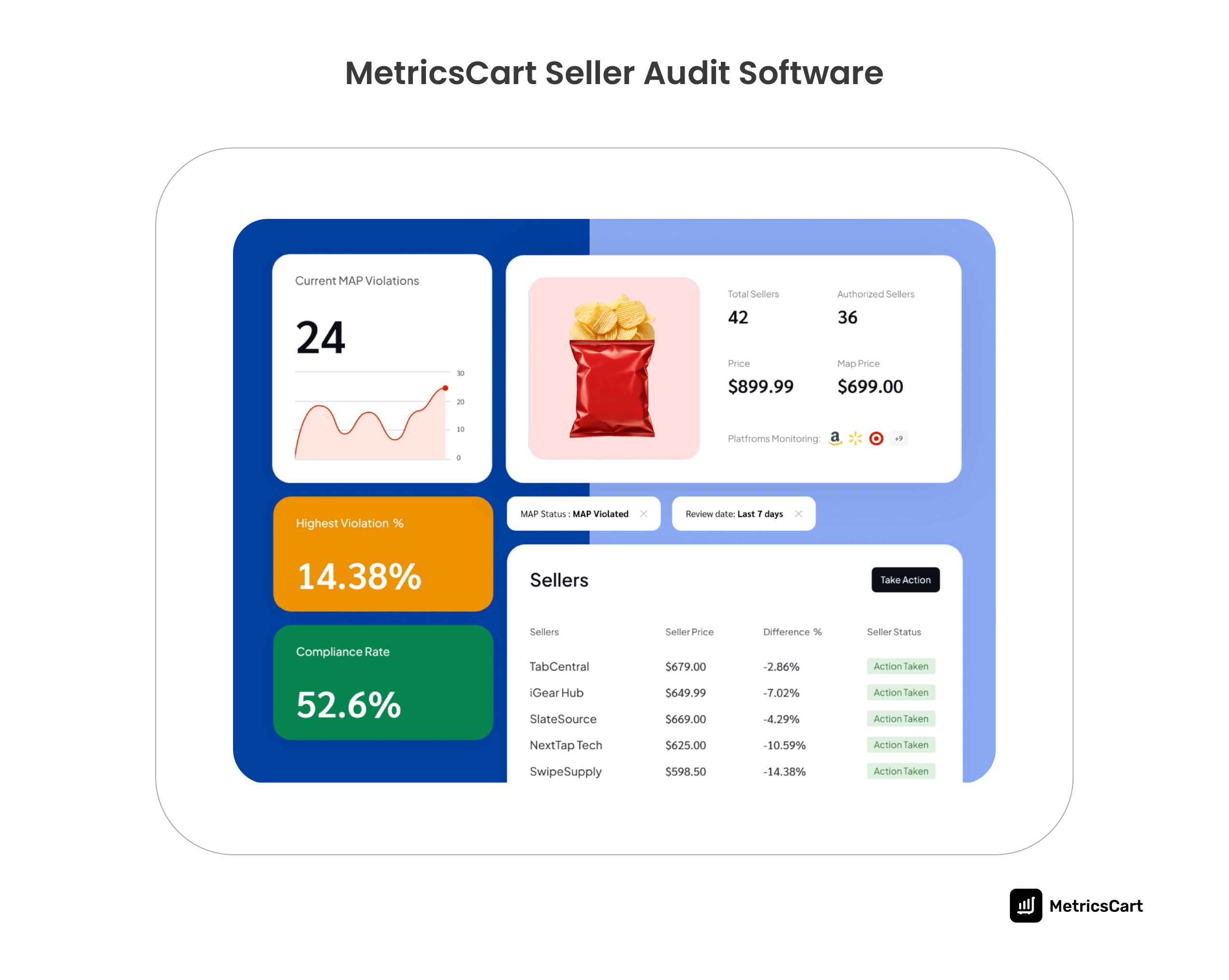 The process doesn’t stop at identifying rogue sellers; it’s about creating a system of continuous monitoring and enforcement that ensures consistent, fair pricing across all platforms. With MetricsCart, you can turn seller audits from a reactive task into a proactive strategy that drives brand value, protects margins, and ensures a consistent brand experience for every customer, every time.
Protect your Brand with Effective Seller Audits.
FAQs
A Seller Audit is the process of monitoring online marketplace listings to identify unauthorized sellers and ensure they adhere to your brand’s pricing and distribution policies.
Seller audits help prevent unauthorized sellers from undercutting your prices, which could damage your brand’s value, customer trust, and relationships with authorized partners.
Seller audits involve crawling online marketplace listings, comparing prices across sellers, detecting price discrepancies, and verifying seller identities through test purchases and invoices.
Yes, tools like MetricsCart can automate data collection, price tracking, and seller monitoring, making the seller audit process more efficient and scalable across multiple retailers, including Amazon, Flipkart, and others of your choice.
You can send legal notices, report violations to the marketplace (such as Amazon Brand Registry), or work with legal teams to enforce takedown requests or cease-and-desist actions.