
Highlights
- MetricsCart is not just for enterprise brands. Starter plans at $300/month, making it accessible to DTC startups, regional brands, and mid-market teams.
- It goes far beyond Amazon, Walmart, and Target. MetricsCart monitors 150+ global retailers, including Best Buy, Sephora, Chewy, Carrefour, and quick commerce platforms like Blinkit, Zepto, and Instamart.
- It is not just a dashboard. MetricsCart is an end-to-end marketplace intelligence platform that combines digital shelf analytics, pricing intelligence, MAP monitoring and enforcement, review analysis, share-of-search tracking, and quick commerce insights.
- Bestseller Reports span multiple regions. Monthly reports cover Amazon US, UK, Germany, India, Saudi Arabia, UAE, Australia, and Walmart; not just Amazon US.
- Pricing intelligence is not about tracking the lowest price. MetricsCart helps brands monitor MAP compliance, detect recurring violators, automate enforcement actions, and protect long-term margin health.
- Implementation is lean. Brands can activate insights quickly without lengthy onboarding timelines or dedicated IT resources.
- ROI is measurable and fast. Brands gain visibility into violations, content gaps, and competitive shifts, often within the first few weeks of use.
Introduction
When brands evaluate digital shelf software vendors, assumptions often shape the shortlist before facts ever do. That happens frequently with MetricsCart.
Some prospects assume it is only for large enterprise organizations. Others believe it only focuses on Amazon. Some think it is just another reporting dashboard. Others assume pricing is too high or implementation will be difficult.
These misconceptions on MetricsCart are common, but they are also costly. When teams rely on outdated assumptions, they often continue to use spreadsheets, fragmented reports, and reactive workflows that slow growth.
The reality is that MetricsCart is built to help brands gain clearer visibility into pricing, reviews, digital shelf performance, search presence, and marketplace execution without unnecessary complexity.
This article debunks myths about MetricsCart that potential customers have and explains the reality behind each one.
Myth #1 – MetricsCart is Only for Large Enterprise Brands
Reality: MetricsCart serves startups, mid-market brands, and enterprises alike.
One of the most common misconceptions about MetricsCart is that the platform is designed only for Fortune 500 companies with massive budgets and global teams.
That is not the case. While many leading enterprise brands use MetricsCart, the platform is intentionally built to scale across business sizes and growth stages.
That means:
- DTC brands can track competitor pricing and marketplace visibility
- Regional brands can monitor unauthorized sellers and retailer compliance
- Mid-market companies can benchmark category performance and ratings trends
- Enterprise organizations can unify intelligence across markets and teams
A fast-growing personal care brand may need visibility across Amazon and Walmart. A challenger electronics brand may need MAP enforcement. A global household brand may need pricing consistency across regions.
Different size. Different complexity. Same need for accurate intelligence.
MetricsCart offers scalable plans and modular solutions, so brands can start where they are today and expand as they grow.
Myth #2 – MetricsCart Only Tracks Amazon, Walmart, and Target.
Reality: MetricsCart has 150+ retailer coverage across categories
Amazon, Walmart, and Target dominate e-commerce conversations, so many assume most tools focus only on these major platforms. MetricsCart provides SKU-level tracking across more than 150 online retailers and marketplaces, including:
- Category-specific platforms (e.g., beauty, electronics, pet care)
- Large-format retailers
- Niche and regional e-commerce players
- Emerging marketplaces
This expanded coverage helps brands:
- Detect unauthorized sellers across smaller or less visible platforms
- Maintain price consistency across all retail touchpoints
- Identify assortment gaps where competitors are present, but they are not
- Compare review sentiment and ratings distribution across channels
- Evaluate promotion effectiveness during key sales periods
For example, a pet care brand selling on both Amazon and a niche retailer can compare pricing, reviews, and availability, and adjust its strategy accordingly.
The result: true omnichannel visibility, not just marketplace-level insights.
Myth #3 – MetricsCart is Just Another Dashboard
Reality: An end-to-end digital commerce intelligence platform
Many tools in the market present themselves as dashboards, leading to the assumption that MetricsCart is simply a visualization layer over raw data.
MetricsCart goes far beyond dashboards. It is a decision-making engine that combines multiple intelligence layers:
- Pricing Intelligence – Track price changes, discount patterns, and competitor benchmarks
- MAP Monitoring & Enforcement – Detect violations, identify repeat offenders, and automate actions
- Digital Shelf Analytics – Monitor content quality, availability, and assortment
- Ratings & Review Analysis – Extract insights from customer feedback at scale
- Share of Search – Measure brand visibility across search results
- Quick Commerce Insights – Track real-time availability and pricing in instant delivery ecosystems
Instead of just showing what happened, MetricsCart helps brands understand:
- Why it happened
- Who is driving the change
- What action should be taken next
For example, if a SKU drops in search ranking, MetricsCart can correlate that with price changes, stock availability, or declining review sentiment, giving teams a clear path to resolution.
Myth #4 – MetricsCart only focuses on the US
Reality: Global coverage with localized intelligence
Many digital shelf analytics tools originated with a US-first focus, leading to the assumption that global visibility is limited or secondary. MetricsCart is built for multi-region tracking, allowing brands to monitor performance across:
- North America (US, Canada)
- Europe (UK, Germany, France, and more)
- Asia-Pacific (India, Australia)
- Middle East (UAE, Saudi Arabia)
This enables brands to go beyond isolated market analysis and instead understand:
- Regional pricing inconsistencies
- Localization gaps in product content
- Differences in review sentiment across markets
- Competitive positioning by geography
For instance, a beauty brand can compare how the same SKU performs on Amazon US vs Amazon UK, analyzing price points, review ratings, and promotional activity to ensure consistent brand positioning globally.
Expansion into Quick Commerce
In 2025, MetricsCart expanded into quick commerce analytics, covering platforms like:
- Blinkit
- Zepto
- Instamart
This allows brands to track performance in hyperlocal, high-frequency purchase environments, where factors like delivery time, stock availability, and visibility directly impact conversions.
With MetricsCart, brands don’t just see where they’re selling; they understand how they’re performing across regions and formats.
Myth #5 – MetricsCart Bestseller Reports are limited to Amazon US
Reality: Multi-region, multi-market reporting
Amazon US is often treated as the default benchmark, leading to the assumption that insights are limited to that region.
MetricsCart’s Bestseller Reports cover:
- Amazon (US, UK, Germany, India, UAE, Saudi Arabia, Australia)
- Walmart
Each report provides deep insights into:
- Top-performing brands and SKUs
- Pricing tiers and discount strategies
- Review volume and sentiment trends
These reports enable brands to:
- Benchmark against competitors across regions
- Identify emerging trends early
- Adjust pricing and promotional strategies
- Understand category dynamics at a granular level
Instead of relying on fragmented reports, brands get a standardized, comparable view of performance across markets.
Myth #6 – Pricing Intelligence Means Only Lowest Price Tracking
Reality: Pricing intelligence is about margin protection and control
Pricing tools are often associated with undercutting competitors, leading to a race to the bottom. MetricsCart approaches pricing as a strategic lever, not just a number.
Key capabilities include:
- MAP Compliance Monitoring – Ensure sellers adhere to minimum pricing policies
- MAP Violation Detection – Identify when and where pricing breaches occur
- Repeat Offender Tracking – Spot patterns among unauthorized sellers
- Automated MAP Enforcement Workflows – Streamline response actions
- Historical Price Analysis – Understand long-term pricing trends
For example, a brand can detect if a reseller consistently violates MAP during promotional periods and take action before it impacts overall pricing perception.
The goal is not to be the cheapest, but it’s to protect brand value, maintain pricing consistency, and prevent margin erosion.

Myth #7: MetricsCart pricing starts at $1,000/month.
Reality: Starter pricing begins at $300/month
Enterprise-grade platforms are often associated with high entry costs, leading smaller brands to assume they are priced out. MetricsCart offers flexible pricing plans designed to support:
- DTC startups
- Mid-market brands
- Enterprise organizations
Starting at $300/month, brands can access powerful analytics without committing to large budgets.
- Smaller teams can replace spreadsheets and manual tracking
- Growing brands can scale insights as they expand across retailers
- Enterprises can centralize data across markets and teams
| The Common Myth | The Reality of MetricsCart |
| Exclusively for Large Enterprises | Accessible for all: Plans start at $300/month and serve DTC startups to Fortune 500s. |
| Only tracks Amazon, Walmart, and Target | Omnichannel Coverage: Monitors 150+ global retailers and niche marketplaces. |
| Just a data reporting dashboard | Decision Engine: Provides end-to-end intelligence (MAP, Digital Shelf, Share of Search). |
| US-Centric Monitoring | Global Footprint: Native tracking across EMEA, APAC, and the Middle East. |
| Pricing Intelligence = Price Wars | Margin Protection: Focuses on MAP enforcement and brand value preservation. |
| Complex, long implementation | Lean Integration: No heavy IT lift or ERP integration required to start. |
How to Evaluate If MetricsCart Fits Your Brand
Now that we have debunked myths about MetricsCart, the right question shifts from “Is this for us?” to “What does our specific fit look like?” The following framework is designed to help brand leaders and marketplace managers structure that evaluation with rigor.
- Audit your SKU count, number of retailers, markets, and how often pricing/content changes. If you manage 25+ SKUs across 3+ retailers, manual tracking usually creates costly visibility gaps.
- Review how quickly you detect and resolve violations. If it takes days or weeks to process via spreadsheets or manual checks, automated MAP monitoring can recover lost margin and improve compliance speed.
- Check all places where your products appear, including unauthorized sellers. Blind spots can lead to MAP violations, poor listings, stock issues, and counterfeit risks.
- Calculate time spent on price checks, audits, reports, and delayed decisions. Add the opportunity cost of staff performing repetitive tasks rather than strategic work. Often, this exceeds platform cost.
- If different regional teams use different data sources, decision-making slows. Unified benchmarking helps align teams and compare performance fairly.
- Evaluate based on retailer coverage, data freshness, MAP automation, review analytics, international reach, quick commerce support, implementation effort, and total ownership cost; not surface-level features.
What Brands Gain When They Use MetricsCart Correctly
Debunking MetricsCart myths is only half the work; the other half is understanding what the platform makes possible once those misconceptions are cleared. The misconceptions addressed in this article share a common thread: they all undersell what MetricsCart actually enables.
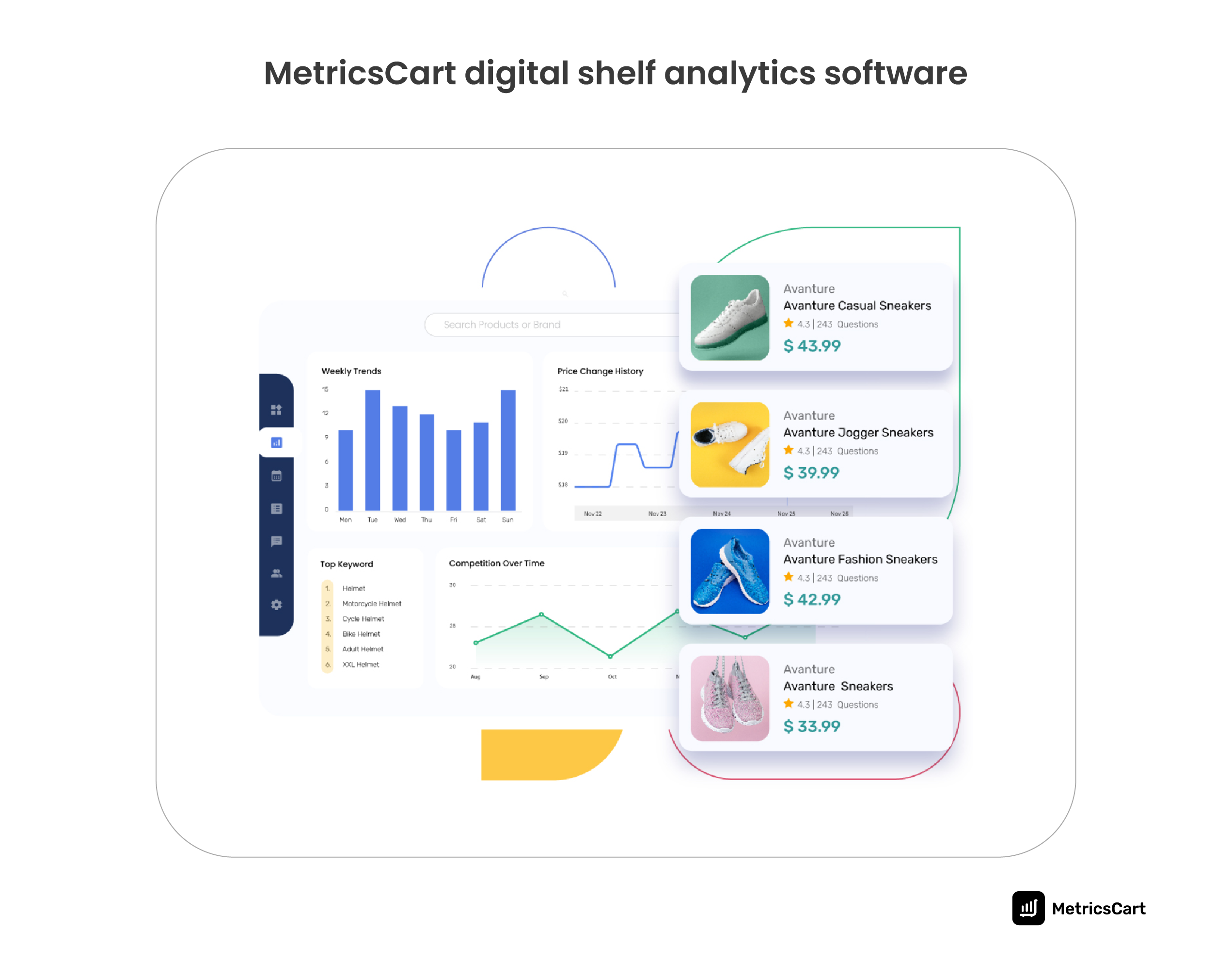
When brands move past common misconceptions and implement MetricsCart strategically, they gain far more than a monitoring tool. They gain stronger margin protection through automated MAP enforcement, faster competitive decision-making powered by real-time market intelligence, and higher conversion rates through continuous content compliance.
MetricsCart also helps brands unlock deeper customer insights through advanced review analytics, identify growth opportunities early in emerging channels such as quick commerce, and unify global teams with a single source of truth across markets. Most importantly, it turns day-to-day marketplace data into leadership-ready intelligence tied directly to revenue, margin, and market share outcomes.
In short, MetricsCart is not just about tracking e-commerce performance; it is about helping brands operate faster, protect profitability, and scale smarter in an increasingly competitive digital marketplace.
See What You’re Missing on the Digital Shelf.
MetricsCart is a marketplace intelligence platform that collects, processes, and delivers real-time data on pricing, availability, ratings, reviews, assortment, and promotional activity across 150+ global online retailers and quick commerce platforms.
No. MetricsCart is designed to deliver genuine value at multiple stages of brand growth, and the platform’s pricing — starting at $300/month — reflects that intent directly. The core capabilities that enterprise clients use to protect margin, monitor competitors, and optimize digital shelf performance are available to brands at the entry tier.
MetricsCart collects data directly from retailer and marketplace product pages through an automated monitoring infrastructure built specifically for e-commerce environments. This direct collection approach is fundamental to the data freshness and accuracy that brands need to make time-sensitive pricing, enforcement, and competitive decisions.
Implementation is intentionally fast and low-friction. MetricsCart does not require brands to integrate internal ERP systems, connect inventory management platforms, or deploy complex technical infrastructure to begin accessing value from the platform.
Yes. Small and mid-sized brands frequently face competitive pressures that are, proportionally, more acute than those affecting large enterprises with diversified product portfolios, multiple retail channels, and dedicated e-commerce analytics teams.