About The Report
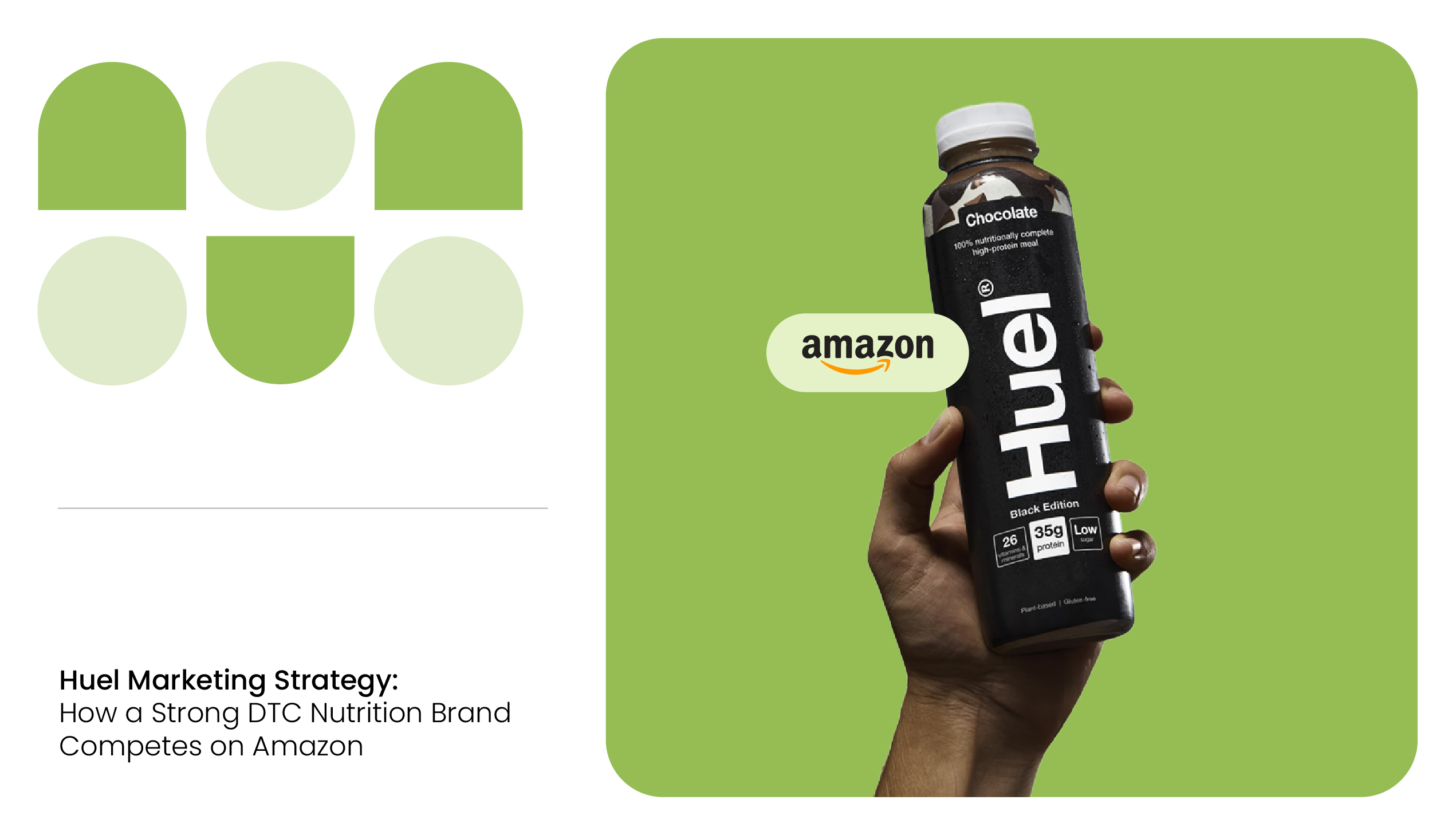
This Digital Shelf Insights report analyzes Huel’s marketing strategy and business model, focusing on its pricing, product assortment, reviews, seller mix, and availability trends on Amazon US.
The report is based on an analysis of the MetricsCart app and profiles Huel’s Amazon US digital shelf performance from November 12 to November 19, 2025.
Introduction
Meal replacements started as niche fitness products. Today, they are becoming everyday food solutions. As busy routines dominate, health awareness is rising, and plant-based nutrition is increasingly popular across the U.S.
Grand View Research projects that the demand for meal-replacement shakes in the USA will grow from $4.30 billion in 2025 to approximately $7.0 billion by 2035.
Brands like Huel emerged to meet this shift. Founded in 2015, Huel (Human + Fuel) focuses on nutritionally complete, plant-based meals designed by nutritionists and product specialists.
Each Huel meal delivers all 27 essential vitamins and minerals, along with protein, fats, carbs, and fiber in one serving.
Instead of competing on flavor or indulgence, Huel positions itself as a daily-use food option for people who want balanced nutrition without the time-consuming work of cooking.
This clear focus is what helps Huel stand out, both as a brand and on platforms like Amazon US.
Highlights
- The most expensive Huel product on Amazon is the Gluten-Free Vanilla Complete Food Powder at $150, indicating that shoppers are willing to pay more for a specific health need.
- Most high-priced Huel products range from $55 to $70, with Black Edition powders leading the way, keeping premium pricing clear and consistent.
- Black Edition Banana, Chocolate, and Vanilla powders have around 14K reviews each, making them Huel’s most trusted products on Amazon.
- Meal Replacement Drinks have the highest stock on Amazon, followed by Banana Protein Powder, showing Huel supports the products that sell the most.
- Huel Inc sells 21 of 31 products on Amazon, helping the brand keep control over pricing and product listings.
Why Is Huel Everywhere in Modern Nutrition Conversations?
Huel’s growth did not come from adding more flavors or chasing food trends. It came from solving a simple problem: eating well takes time, and time is limited.
Instead of offering more choices, Huel reduced them. The brand positioned its products as nutritionally complete meals designed by nutritionists, meant to replace a meal without the planning, prep, or comparison. That framing shifts the decision from “what should I eat?” to “this already works.”
Huel’s brand strategy focuses on simplicity and clarity. By calling itself “the future of food,” the brand positions its products as practical meal solutions rather than something trendy.
The same approach can be seen in campaigns like “Sound of Huel”. The brand used everyday sounds from the making and use of Huel to emphasize its focus on convenience, nutrition, and sustainability; a focus that extends seamlessly into the customer experience.
- Community became the proof layer.
Huel’s customers, called “Hueligans”, are long-term users. They share how Huel fits into everyday life. This made the brand feel normal and reliable. Over time, trust was built around a few core products, helping those SKUs gain reviews faster on Amazon.
- Influencers followed the same rule.
Huel did not chase momentary attention. It is built for repeated exposure. Fitness trainers, endurance athletes, and lifestyle creators repeatedly showcased the product in everyday settings. The message stayed unchanged, and so did the demand.
- Education completed the loop.
Clear ingredient lists and simple nutrition info helped shoppers understand what Huel replaces. Once that was clear, price mattered less. Premium products became easier to choose without heavy discounts.
This is how Huel executes its growth strategy: by addressing the need for quick, balanced meals, backed by science, and reinforced through community and education.
Huel’s Price Ceiling Is Set by a $150 Gluten-Free Vanilla Powder, Followed by Superblend Chocolate Powder
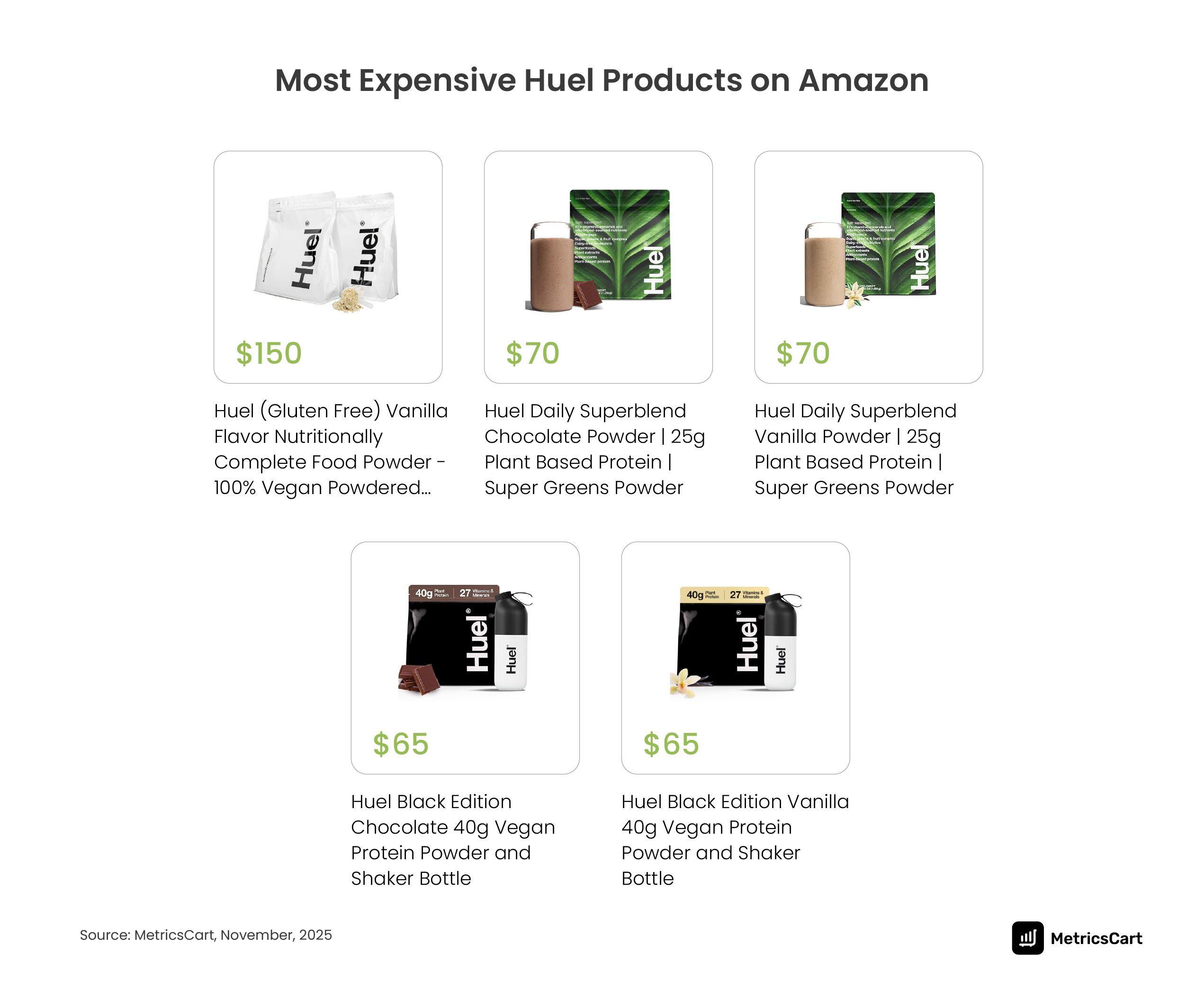
MetricsCart app findings show a clear split at the top of Huel’s price range. The Gluten-Free Vanilla Complete Food Powder at $150 stands well above the rest. This SKU leads the price spectrum because it targets a specific dietary need.
Shoppers buying gluten-free complete meals are less price-driven and more focused on safety, nutrition coverage, and reliability. Vanilla further strengthens this position because it is neutral, easy to consume daily, and works as a base for mixing.
Just below this extreme, Black Edition powders dominate the $55–$70 range. Compared to the gluten-free SKU, Black Edition products are built for repeat use across a wider audience. They offer higher protein and full nutrition without narrowing the buyer base. This makes them scalable, which explains why multiple Black Edition SKUs cluster tightly in this range instead of pushing higher.
At the bottom end of the pricing range, Huel does not pull core meals down. Instead, affordability is achieved through smaller formats and supplements, while premium meals remain protected.
Huel’s Affordable Range Starts With $3 Daily Greens
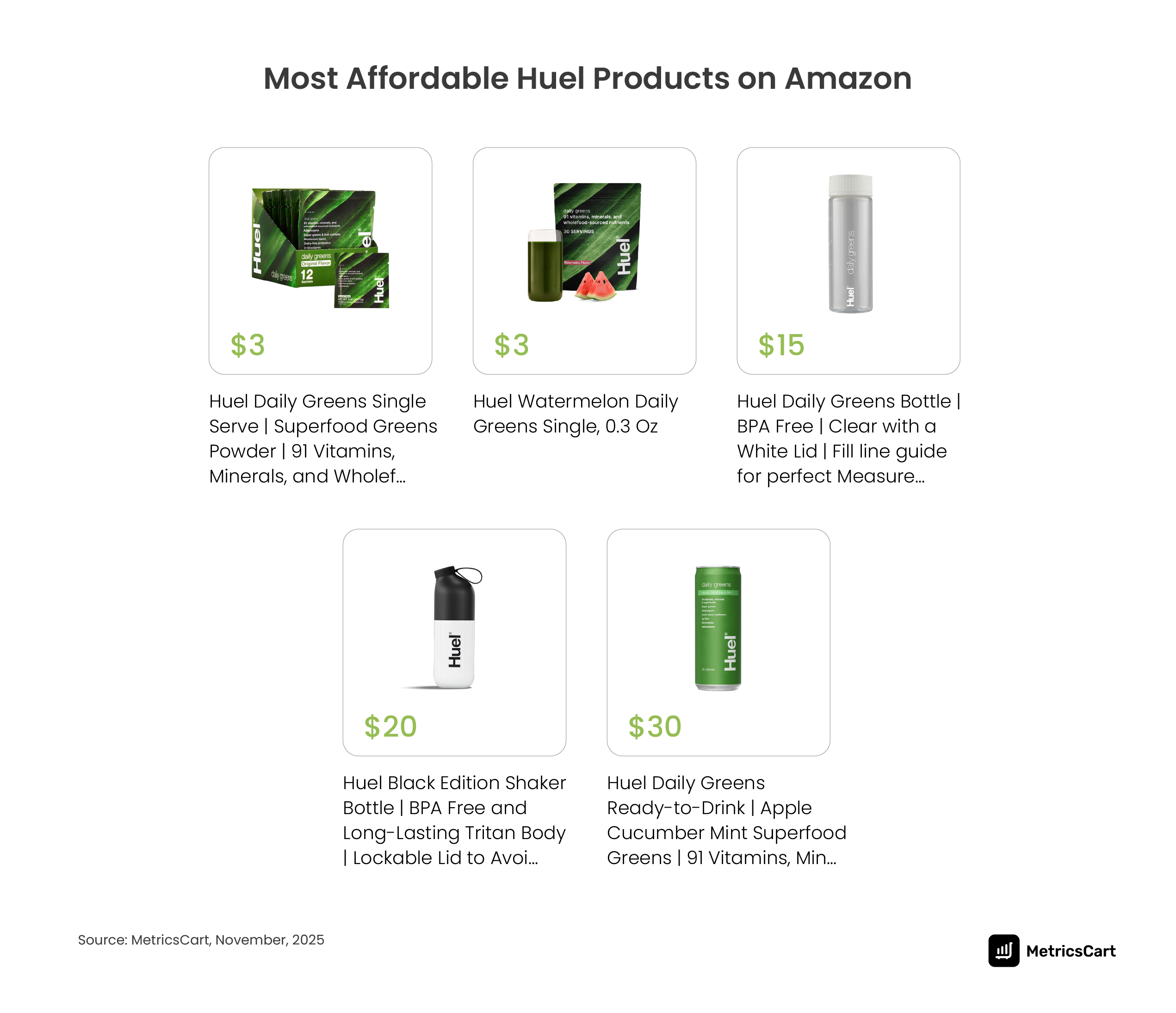
At the lowest end, the $3 Daily Greens single-serve packs lead the affordable list. These products exist to reduce entry risk. They allow first-time shoppers to try Huel without committing to a full meal replacement.
Above this, accessories like bottles and shakers ($15–$20) act as usage enablers rather than nutrition substitutes. They support routines once a shopper is already engaged with the brand.
RTDs and single-meal packs ($30–$38) make up the middle tier. They offer convenience but are often used on a case-by-case basis. The upper end of the affordable range ($40–$43) is led by full meals and bars, which act as the final step before shoppers move into the premium Black Edition range.
Huel’s pricing ladder moves shoppers upward without weakening the core premium tier.
Meal Replacement Drinks and Core Protein Powders Lead Huel’s Category Footprint on Amazon
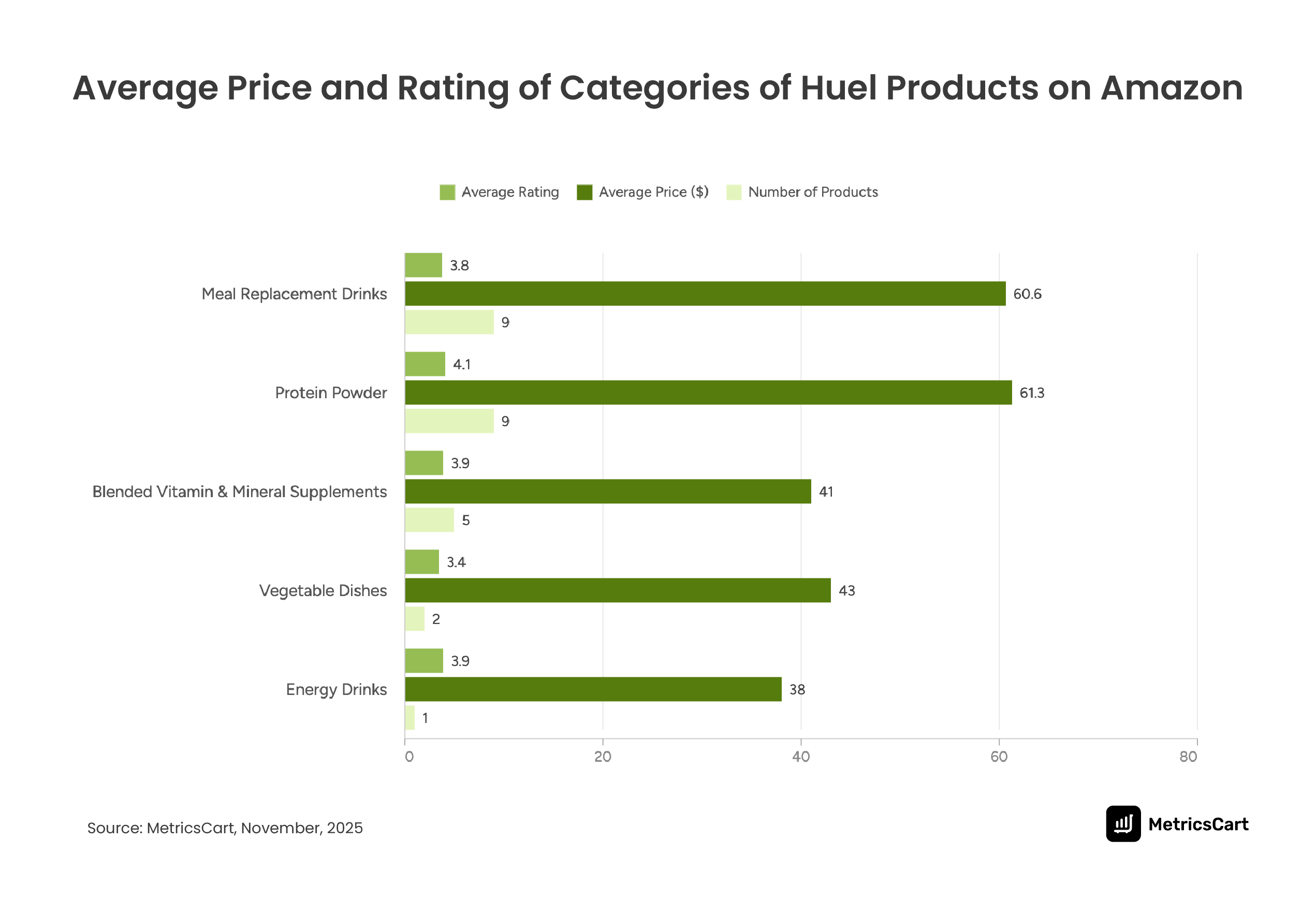
Metricscart experts revealed that Meal Replacement Drinks and Protein Powders are the main drivers of Huel’s presence. Each category includes 9 active products, the highest count among all Huel categories.
These categories sit at the center because they fit two of the strongest Amazon purchase patterns in nutrition: quick consumption and repeat routines.
Meal Replacement Drinks stand out with an average price of $60.6 and an average rating of 3.8. This price point places them firmly in the premium range, signaling that shoppers view them as meal substitutes rather than supplements. These products lead because they remove the need for preparation entirely. For consumers buying nutrition, no-prep formats fit workdays, travel, and time-pressed routines.
Protein powders follow closely, with an average price of $61.3 and a higher average rating of 4.1. This category benefits from repeat behavior. Powders plug directly into gym, recovery, and daily macro routines, which increases reorder frequency. The higher rating suggests stronger satisfaction once the product becomes part of a routine.
In comparison, Hot & Savory meals and supplements tend to require more planning and clearer intent. That slows repeat demand and keeps these categories smaller on the shelf.
Huel Black Edition Banana, Chocolate, and Vanilla Powders Dominate Reviews
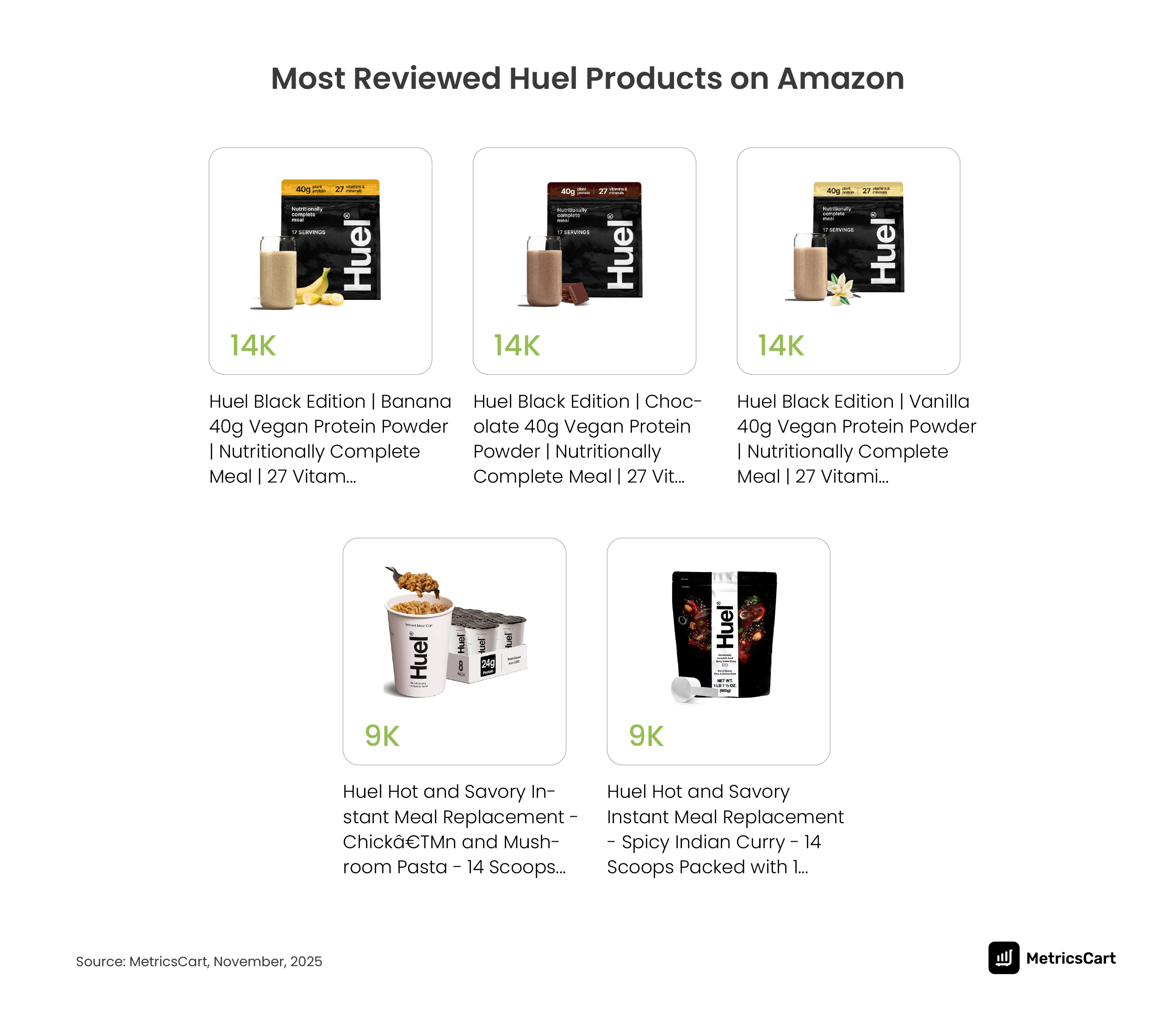
Here, the review analysis shows a steep concentration at the top. Black Edition Banana, Chocolate, and Vanilla powders each have ~14K reviews, far ahead of the rest of the catalog. This generally happens when one format becomes the brand’s “default choice” on the digital shelf.
First, these SKUs win on low decision risk. For new buyers, the biggest uncertainty in meal powders is taste. Banana, chocolate, and vanilla are the safest flavors in the category, so they become the most common first purchase.
On Amazon, first-purchase SKUs often become the top-reviewed SKUs because they capture the widest top-of-funnel traffic and then continue to accumulate reviews as repeat buyers reorder.
Second, powders are structurally better at building repeat behavior than meals or RTDs. They store easily, are easy to portion, and fit multiple daily moments (breakfast, post-workout, “no time to cook”).
That increases the likelihood of a reorder, and reorders are what build review volume over time. Compared to RTDs, powders also reduce “per-serve price pressure,” so shoppers feel more comfortable making repeat purchases.
Third, Black Edition’s positioning aligns with the highest-intent nutrition shopper on Amazon. Shoppers looking for higher protein and complete nutrition are typically more committed and more likely to leave reviews. Compared to casual snack buyers, this segment behaves more like a “program buyer” than a “trial buyer,” which pushes review density upward on the products they standardize on.
The next tiers fit different shopper behaviors. Hot & Savory (~9K reviews) performs well but requires a larger behavior change: it replaces a full-meal occasion with a prepared-food routine.
RTDs (~7K reviews) follow because they are convenient, but they are often bought as situational add-ons.
Huel Inc Leads Seller Presence on Amazon, While Premium Pricing Extends to Select Resellers
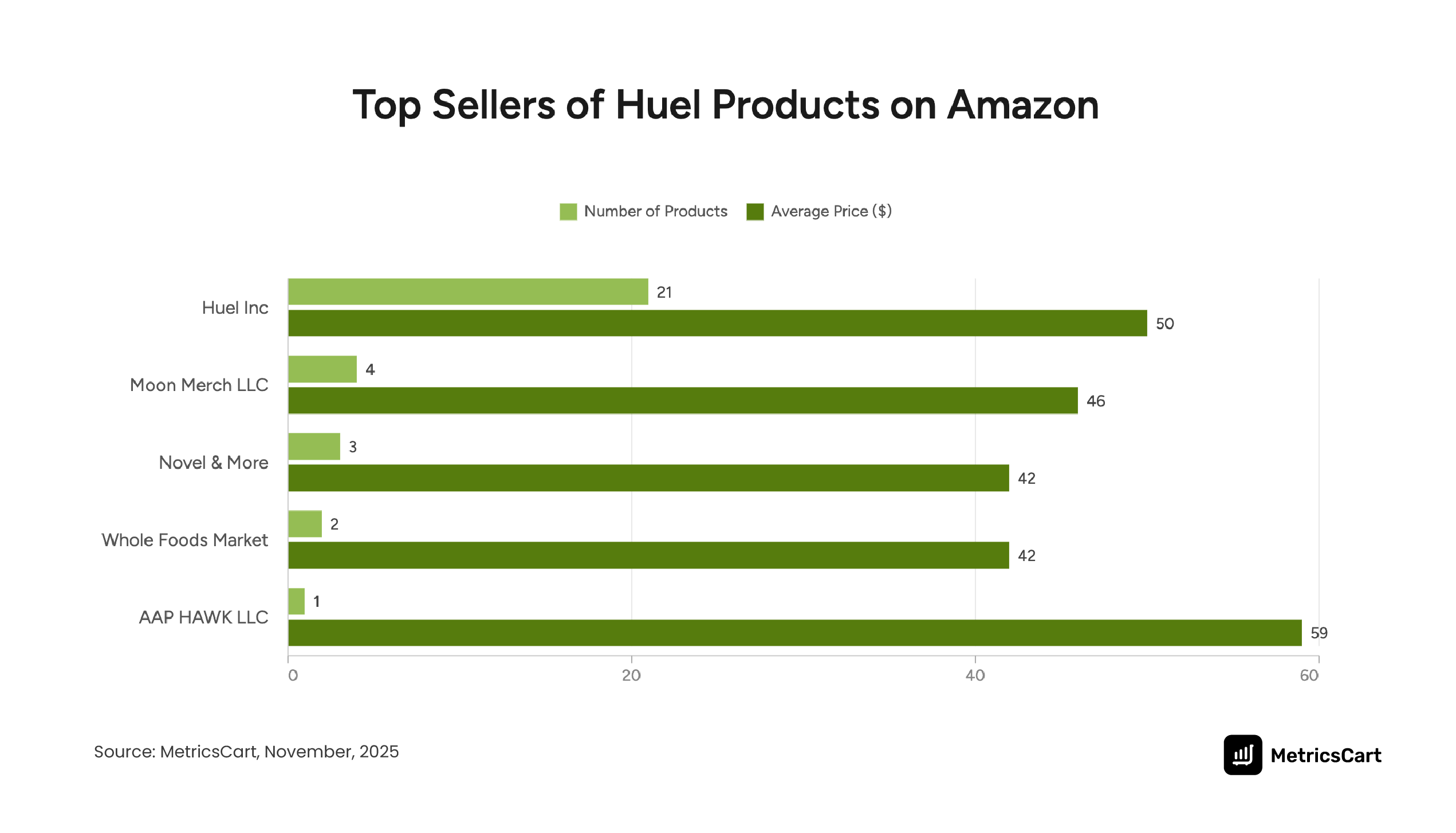
Among the top sellers, Huel Inc lists 21 products on Amazon, more than any other seller. This concentration signals intent. When a brand carries most of its own assortment, it is usually to keep pricing, content, and availability aligned across high-volume products.
Other sellers appear in much smaller roles. Moon Merch LLC lists 4 products, Novel & More lists 3, and most sellers list only one. This indicates that demand for Huel is not evenly distributed across sellers. Instead, it is concentrated around brand-owned listings where shoppers expect consistency.
Pricing patterns reinforce this structure. Products sold by Huel Inc average around $50, which aligns with Huel’s core range. These are the products that rely on repeat purchase and routine use. Brand control here helps keep pricing stable as volume grows.
The highest average price on the shelf, $150, belongs to a seller listing just one product. This suggests that Amazon’s price ceiling is set by narrow, specialized demand rather than by everyday consumer products.
Higher-priced items attract different buying behavior and can sit outside the core seller structure without affecting it.
From a digital shelf perspective, this setup allows Huel to scale its core products under a single seller while still extending into premium territory through limited listings.
Availability Is Highest for Meal Replacement Drinks, With Banana Protein Powder Close Behind
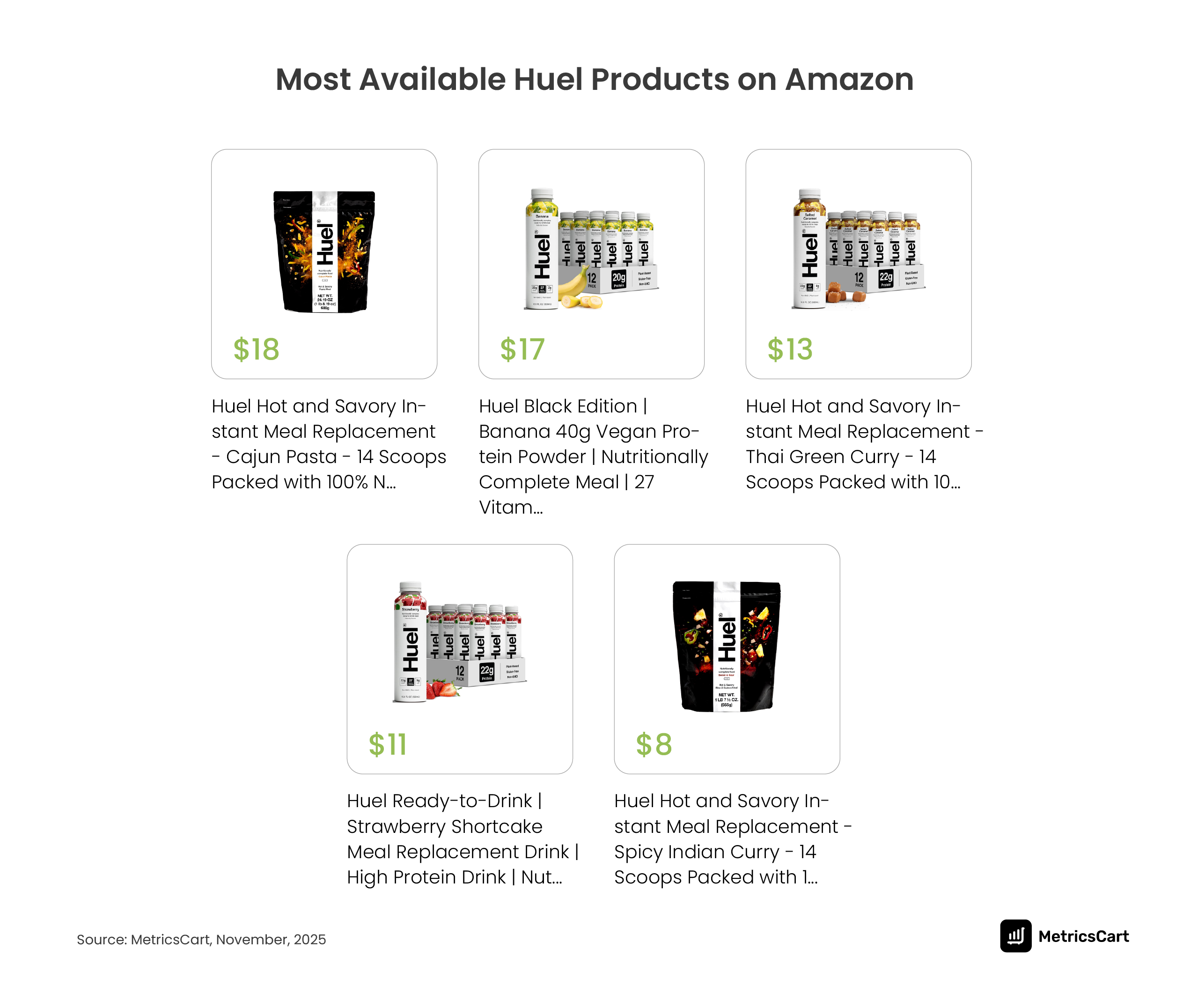
Based on Metricscart research, Meal Replacement Drinks have the highest available quantity, followed by Banana Protein Powder. This ranking is not random. These two products sit closest to “daily-use behavior” on Amazon.
Meal Replacement Drinks are not purchased for occasional nutrition. They are used as replacements. They fit into workdays, travel routines, and post-workout recovery. Because these use cases repeat frequently, demand stays consistent. That consistency supports deeper inventory and makes these products easier to keep in stock.
Banana Protein Powder follows closely behind. This SKU benefits from two factors working together. The powder format supports daily routines, and the banana acts as a neutral, familiar flavor.
Huel’s Hot & Savory and Black Edition products dominate the availability chart on Amazon, underscoring the brand’s emphasis on everyday nutrition formats that align with its positioning as a provider of complete, convenient meals.
- Hot & Savory Leads With Everyday Flavors
Variants such as Cajun Pasta, Thai Green Curry, and Spicy Indian Curry top the list of SKUs available. These flavors cater to regional palates and replicate familiar comfort foods in a healthy format, making them more approachable for new users. The range’s strong shelf presence suggests that Huel continues to expand assortment within this sub-category to capture diverse taste preferences and drive trial.
- Black Edition Reinforces the Protein Proposition
The Black Edition Banana Protein Powder and Chocolate Ready-to-Drink SKUs rank among the most listed items, reflecting sustained demand for protein-rich alternatives. Their balanced mix of performance-oriented ingredients and flavor appeal makes them a consistent bestseller among health and fitness audiences.
- Ready-to-Drink Variants Build Accessibility
SKUs like Strawberry Shortcake Meal Replacement Drink indicate Huel’s effort to capture on-the-go consumption moments. While fewer in number, these RTD options support brand visibility in convenience-driven categories and act as entry points for new consumers.
- Flavor Innovation and Functional Diversity Maintain Shelf Momentum
The presence of both savory meals and sweet protein shakes within the top listings highlights Huel’s strategy to diversify within its two strongest pillars: meal replacements and protein nutrition, rather than fragmenting into low-velocity niches.
Average Prices Hold Near $50 as Huel Maintains Premium Positioning Without Broad Discounting
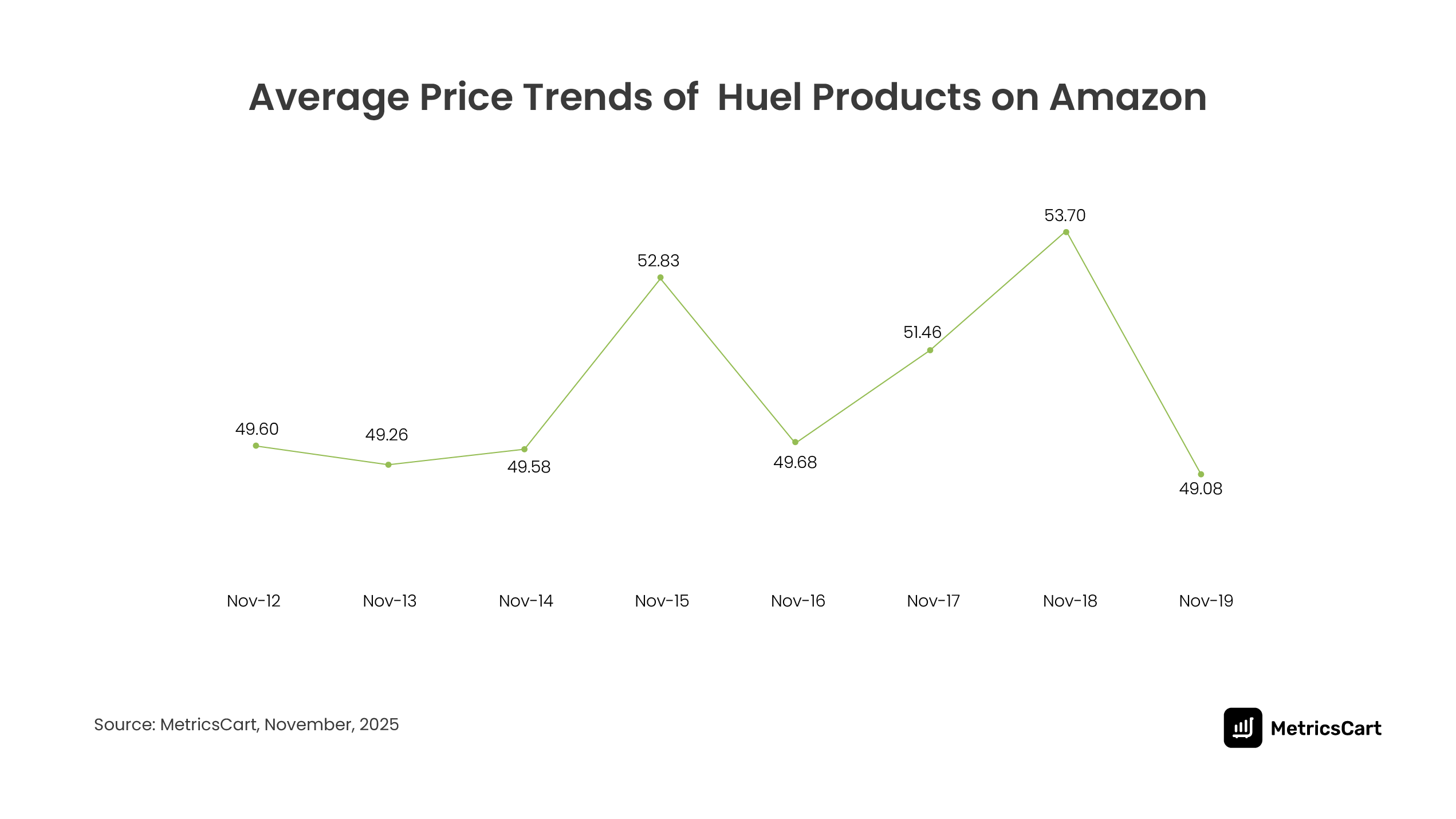
Over Nov 12–14, Huel’s average price is around $49–$50. That’s a controlled baseline. It matches a shelf where the brand’s core range remains premium, without visible price-cutting to drive volume.
The two jumps, $52.83 on Nov 15 and $53.70 on Nov 18, look like mix shifts rather than broad repricing. On days like these, the “average” climbs when higher-priced staples (especially premium powders and higher-ticket formats) make up a larger share of what’s active and winning attention. This pattern fits a catalog in which most premium products cluster in the $55–$70 range, while only a small set sits below.
The immediate pullback to $49.68 on Nov 16 and $49.08 on Nov 19 signals that the spikes were temporary. That kind of snap-back usually happens when lower-priced items (smaller formats, accessories, entry SKUs) regain share, or when the shelf balance returns after a short availability or merchandising swing.
This is also consistent with Huel’s seller structure on Amazon. With Huel Inc listing 21 of 31 products, the brand can keep day-to-day pricing anchored and let the “average price” move mainly based on which SKUs are most visible and available that day.
Reviews Stay Flat at ~16.5K Before a One-Day Listing Change Drops Visible Counts
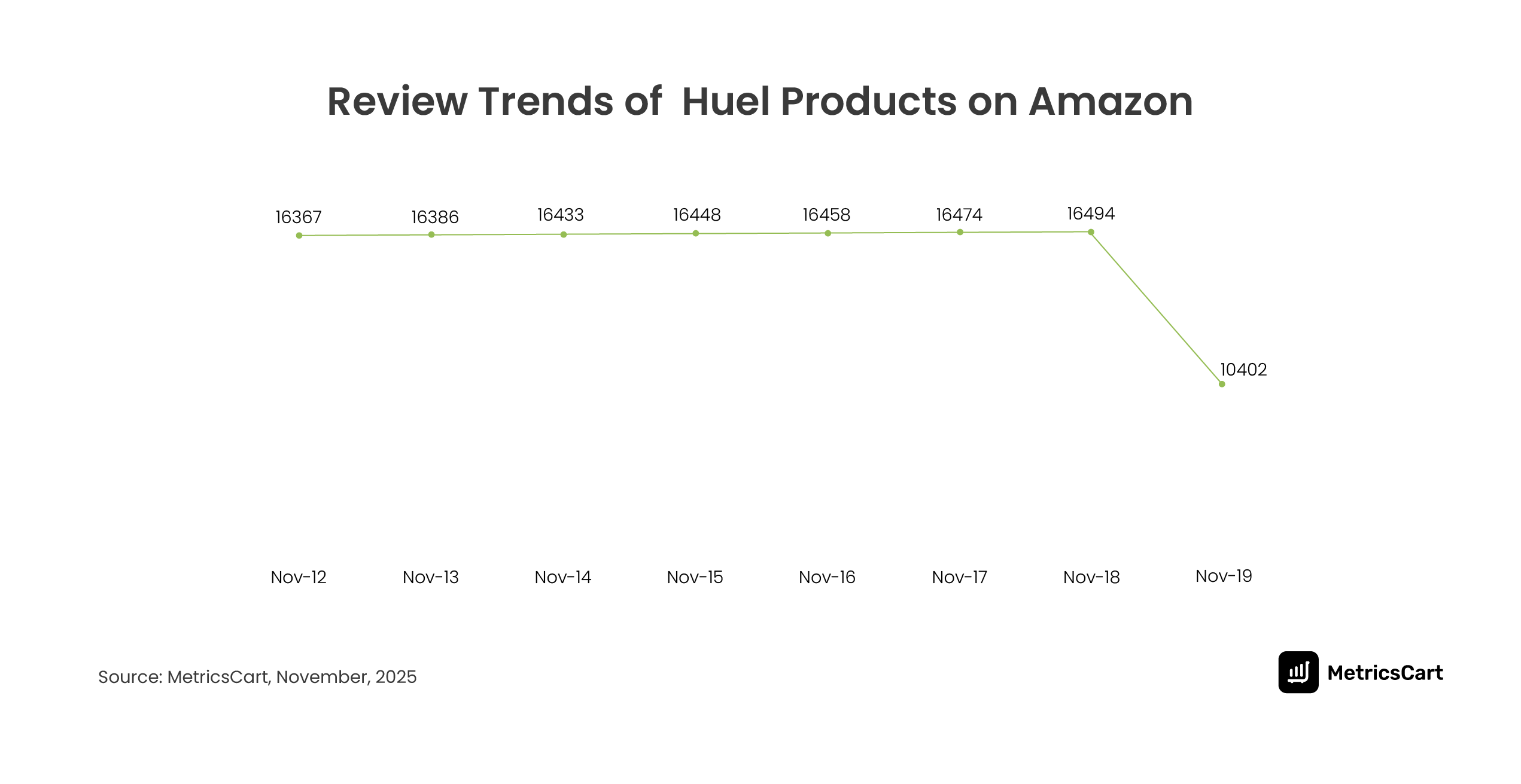
Findings from the MetricsCart app show review counts holding within a narrow band of ~16.3K–16.5K from Nov 12 to Nov 18. The flat trend indicates stable reorder-driven growth rather than promotion-led spikes.
Consistent review accumulation suggests that core powders and drink formats continue to drive routine purchases. Growth appears incremental, aligning with a portfolio built around repeat-use nutrition rather than seasonal demand swings.
The drop to ~10.4K on Nov 19 points to a catalog-level shift rather than a decline in demand.
From a digital shelf perspective, the signal remains stable. Visible review variation reflects listing mechanics, while underlying engagement across Huel’s core SKUs stays consistent.
Huel’s Growth Strategy: Building a Nutrition Brand Without Catalog Bloat
Huel’s Amazon performance shows that a premium scale does not require a wide catalog. MetricsCart findings consistently show that a small group of products accounts for most of the demand, reviews, and availability.
Instead of expanding across many formats and flavors, Huel makes the default choice clear. Core powders anchor trust. RTDs support convenience-driven use cases. Entry products reduce first-purchase friction.
This approach keeps the shelf easy to understand. When shoppers know what to buy and why, they convert faster and repeat more often. That is what Huel gets right on Amazon US:
READ MORE | Best Digital Shelf Analytics Solutions for CPGs: A Complete Guide
What can brands learn from Huel’s brand strategy?
- Fewer hero SKUs drive most outcomes. Black Edition powders lead reviews, availability, and repeat behavior.
- Pricing reflects use, not variety. Premium pricing applies when products replace meals, not when they are optional.
- Availability follows conversion confidence. Inventory is deepest where demand is predictable.
- Entry products lower risk without eroding value. Low-cost items invite trial but do not define the brand.
- Consistency beats expansion. Stable prices and ratings support routine buying over time.
MetricsCart helps brands track digital shelf signals before they show up in sales reports. From pricing movements and availability patterns to review trends, category shifts, and MAP compliance, MetricsCart gives brands the visibility needed to stay competitive online.
Disclaimer: MetricsCart is the exclusive owner of the data used in the Digital Shelf Insights reports. Any third-party use requires proper attribution to the source material.
Want to see how your food products are doing on the digital shelf?