In beauty and personal care, consumer trust is paramount. Studies show that almost 90% of shoppers consider reviews when buying a product. This means consumers often trust what other customers say about a moisturizer or lipstick more than what the brand says.
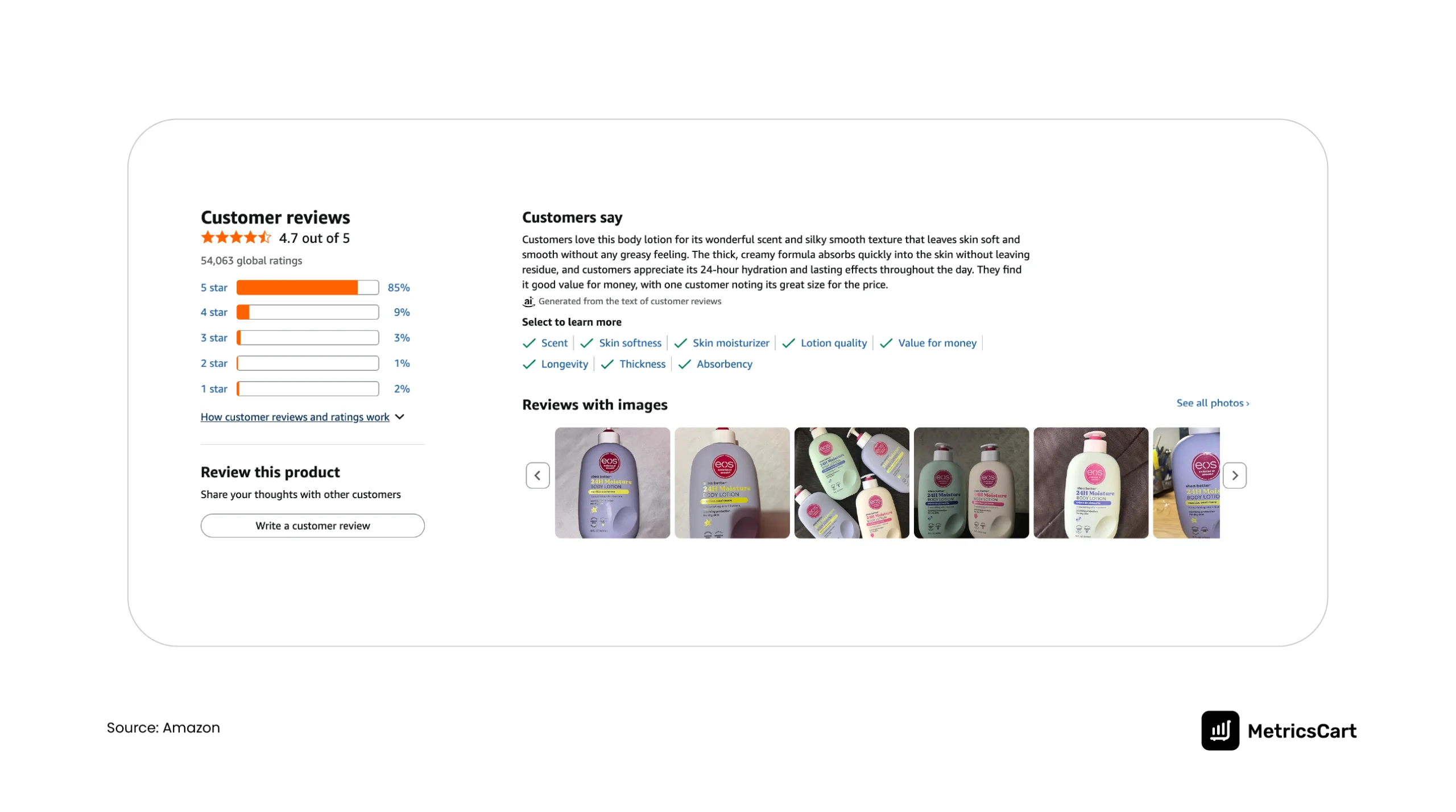
As a result, review analytics for beauty brands has moved to center stage. It’s no longer just a support metric; it’s a core part of modern beauty brand reputation management, spotting trends, surfacing issues, and building trust in the marketplace.
Beauty brands face a unique set of reputational risks. Regulatory hurdles, high consumer expectations, and volatile trends mean that every review matters. By leveraging advanced review analytics tools like MetricsCart, brands can continuously monitor customer sentiment, compare performance against competitors, and act quickly on feedback.
Brand Reputation Risk Factors Unique to Beauty & Personal Care
Skin Reactions and Safety Credibility
Beauty and personal care products are applied directly to the body, so any hint of adverse effects can trigger swift backlash. If customers experience skin irritation, allergic reactions, or other safety concerns, they often address them in reviews as warnings to others.
A few well-publicized complaints about a product causing breakouts or rashes can rapidly erode trust in a brand’s safety credibility, dragging down ratings almost overnight.
Packaging & Applicator Issues
In the beauty sector, packaging and applicators are part of the product experience, and failures here can instantly damage a product’s reputation. Leaky bottles, malfunctioning pumps, or messy applicators don’t just annoy consumers; they often lead to negative feedback.
A luxury cream might have a superb formula, but if its dispenser clogs or its lid cracks, customers will call it out, and those reviews can make even a premium product seem low-quality. In an age of unboxing videos and instant online feedback, a packaging flaw becomes highly visible, swiftly tarnishing the brand’s image.
Formulation Inconsistency (Batch-to-Batch Trust Risk)
Beauty and personal care consumers expect that each jar or bottle of their favorite product will perform the same. When a product’s formulation is inconsistent – say one batch is runnier, a different color, or less effective than the last – it raises red flags.
Loyal users might suspect cost-cutting or quality-control issues, and they often voice these concerns in reviews. Industry best practices emphasize the importance of batch-to-batch consistency for exactly this reason: maintaining uniform appearance, scent, and texture is essential to avoid customer complaints and protect the brand’s reputation.
Just one subpar batch can spark a wave of negative reviews that undermines trust. If buyers lose confidence that they’ll get the same product every time, they may abandon the brand, and skeptical new customers will think twice before buying at all.
Review Analytics as a Core Brand Reputation Management System
Review analytics transforms scattered customer feedback into a systematic reputation toolkit. Key components of such a system include:
Aggregating Multi-Channel Feedback
Modern brands capture reviews from every touchpoint, including their own e-commerce sites, marketplaces (like Amazon, Sephora, Ulta, Walmart), and even social media. Tools like MetricsCart consolidate reviews from multiple channels into a single dashboard.
This unified view ensures no complaint or compliment slips through the cracks. For example, a new hero lipstick might have great reviews on Sephora but mixed feedback on Amazon; seeing both together prevents blind spots. By continuously ingesting all channels, brands maintain a single source of truth on customer sentiment.
READ MORE | Cross-Platform Review Tracking for Brands: A Guide
Automated Sentiment & Thematic Analysis
With thousands of reviews, manual reading is impossible. Personal care review monitoring platforms like MetricsCart apply NLP and AI to extract meaning from reviews. They go beyond star ratings to identify key themes (texture, scent, lasting power, etc.) and customer emotions.
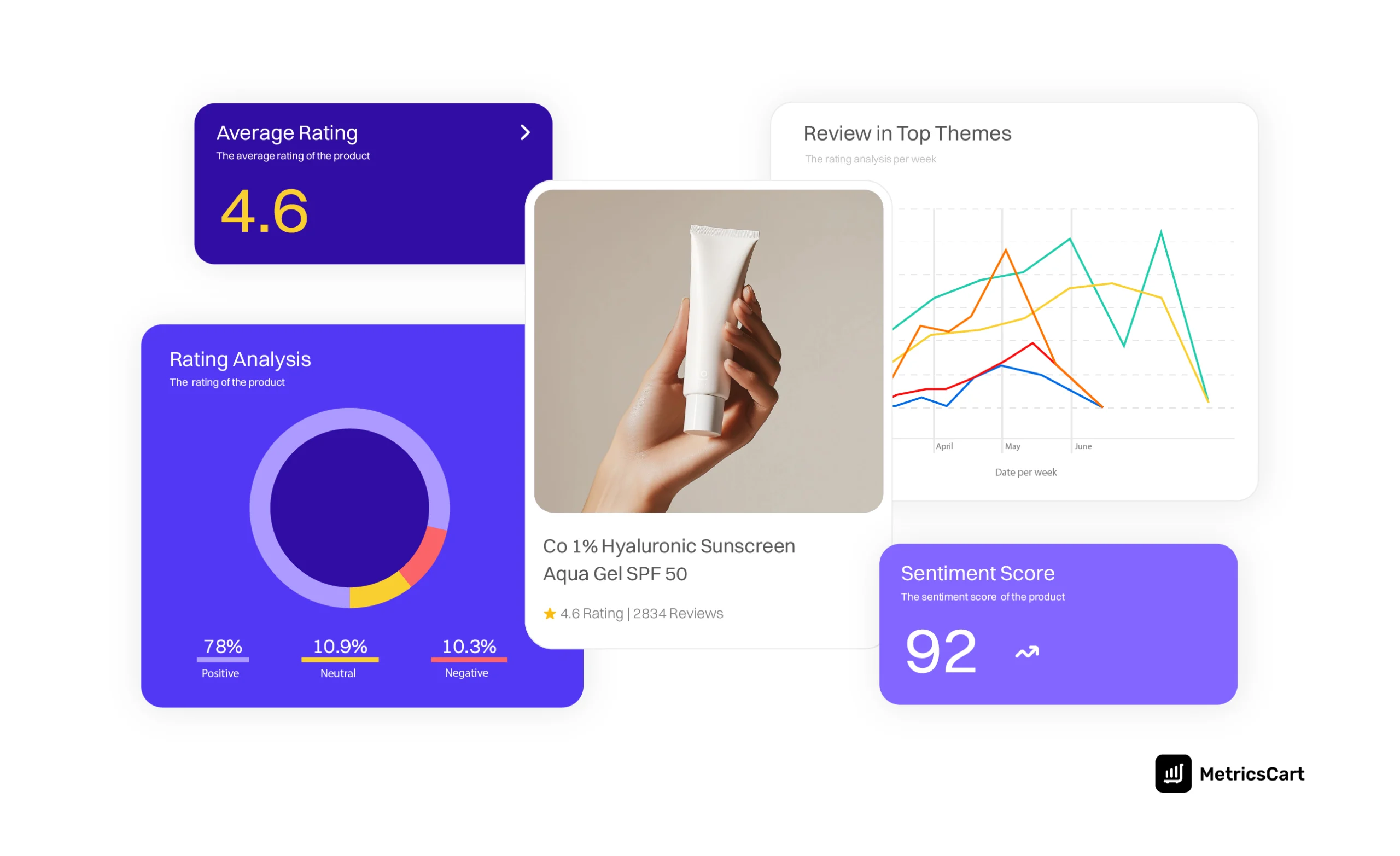
For instance, a beauty brand can automatically see that “clumping mascara” or “too oily cream” are recurring complaints, while noting which product features are “best loved”. In addition, they can visualize sentiment trends over time. If overall sentiment drops sharply one month, brands can quickly diagnose and address the cause. In short, customer sentiment analysis and theme discovery turn raw reviews into actionable intelligence.

Benchmarking and Competitor Intelligence
Review analytics doesn’t stop at the brand’s own products. It extends to competitors. Personal care review monitoring platforms can benchmark ratings and review volumes across brands to spot market gaps.
You can quickly see how your products stack up in terms of average ratings, sentiment, and review themes versus competitors. For example, you might discover that a rival’s new moisturizer has climbed to a 4.6-star average while yours lingers at 4.2 — prompting a deep dive into what customers love about theirs and dislike about yours.
By analyzing shared themes and sentiment scores side-by-side, you can uncover what makes competing products win or lose in the eyes of shoppers. These insights also reveal product improvement opportunities, market gaps, and untapped niches before others spot them.
Product Trend Analysis
Consumer preferences in beauty evolve rapidly. MetricsCart’s product trend analysis tracks review volume, engagement, sentiment, and NPS evolution over time, allowing beauty brands to spot shifts early and act faster than competitors.
The review analytics for beauty brands platform surfaces how customer feedback is changing and issues real-time alerts on emerging trends before they impact sales or reputation.
For instance, you might notice a growing number of reviews mentioning a “drying effect” after a reformulation, which is a signal to investigate immediately. Or you may see rising mentions of a desired feature, such as a “travel-size version,” revealing an unmet market need.
Review analytics thus becomes a beauty brand reputation management system. It systematically collects customer feedback, applies AI to distill insights, and benchmarks performance. In doing so, it elevates consumer reviews from a passive data pool into the brand’s strategy engine.
From Insight to Action: How can Beauty Brands Use Review Data
Collecting data is only half the battle – the real power of review analytics lies in how brands take action on those insights. Leading beauty brands today don’t just read reviews; they respond to them through concrete improvements and strategic adjustments. Here are some of the key ways beauty and personal care companies operationalize review data:
Product Innovation and Quality Improvement
R&D and product teams mine reviews to refine formulas or packaging. For example, if a leading skincare brand discovers an increased demand for fragrance-free formulations, they can adjust their lineup accordingly to boost sales.
Similarly, when reviews frequently complain that a lotion is “too greasy,” the team can alter the emulsion based on this honest user feedback. By prioritizing fixes that customers explicitly mention, brands can reduce defects and returns.
READ MORE | Product Development Using Customer Feedback: Must-Know Tips for Brands
Marketing & Positioning Optimization
Customer reviews also guide marketing messaging. Positive testimonials serve as social proof and can be featured in ads and on product pages. Review analytics for beauty brands identifies which features resonate most (e.g., “long-lasting color” vs. “natural ingredients”), allowing them to highlight the right benefits.
Conversely, negative feedback (e.g., “not hydrating enough”) signals cautionary notes; marketing can proactively address them or avoid those claims. Review data can even inform content strategy: if many reviews praise “easy application,” the brands can run an ad campaign to showcase that aspect.
Customer Service & CX Enhancements
Customer support and CX teams leverage reviews to improve service. Insight-driven brands set up alerts for negative sentiment spikes (such as sudden complaints about delivery or irritation). When alerted, teams can respond publicly (thank the reviewer and offer help) or fix systemic issues.
For example, if a batch of foundation is reported “too orange,” the company can adjust production and notify impacted customers. Thematic analysis also identifies common support pain points; companies have used this to optimize FAQ content or invest in user education.
Uncovering Trends Through User-Generated Content
Reviews, social comments, and unfiltered testimonials offer more than product feedback, they uncover unmet demand and fast-moving trends. The best brands treat user-generated content (UGC) as market research at scale.
For example, comments urging holiday-themed launches or calling out missing product formats often point to micro-demands that aren’t caught in traditional planning cycles.

Thus, UGC can validate product timing, packaging themes, or marketing angles that formal research might miss. Brands that actively track this UGC layer spot emerging trends earlier and move faster than competitors.
From Passive Listening to Actionable Review Intelligence: The Road Ahead
The future of beauty brand reputation lies in proactive, AI-powered review analytics. As technology advances, brands will move from reacting to feedback to predicting customer needs, using machine learning to anticipate trends and personalize offerings.
By turning customer feedback into action – using platforms like MetricsCart to spot trends, fix issues fast, and align with what customers really want, brands build loyalty and outpace competitors. In summary, treating review intelligence as a core business driver (rather than a mere metric) transforms each customer voice into a competitive advantage.
Ready to decode your customer reviews?
FAQs
Reviews are crucial in beauty because shoppers heavily rely on peer opinions before trying products on their skin or hair. Positive reviews build trust and reassure buyers that a product delivers on its promises. Negative reviews flag potential problems that could help shoppers avoid a bad experience.
In beauty brand management, review analytics means treating reviews as a rich data source that can inform decisions—from product development to marketing strategies. By crunching review data, brands can quantitatively understand which factors are driving customer satisfaction or dissatisfaction.
Customer reviews can have a significant impact on both the visibility and sales of beauty products, especially on e-commerce platforms. Many online retailers’ algorithms favor products with better reviews – those items often appear higher in search results or get featured in “top rated” sections.
Beauty brands can treat review insights as a road map for improvements. Firstly, by reading reviews in detail (or using analytics), brands can identify common complaints or suggestions. If many reviewers say a face cream feels too heavy, the brand might create a lighter formula or add usage tips for different skin types. If multiple people mention that a shampoo bottle leaks, the packaging can be redesigned.
Negative reviews are inevitable, even for great brands, but how a company handles them is key. Firstly, brands should monitor negative reviews closely – they often contain valuable criticism. Determine if there’s a recurring issue (for example, several people reporting that a lotion caused irritation) and address it urgently, either by investigating the batch, improving the formula, or providing better usage guidance.