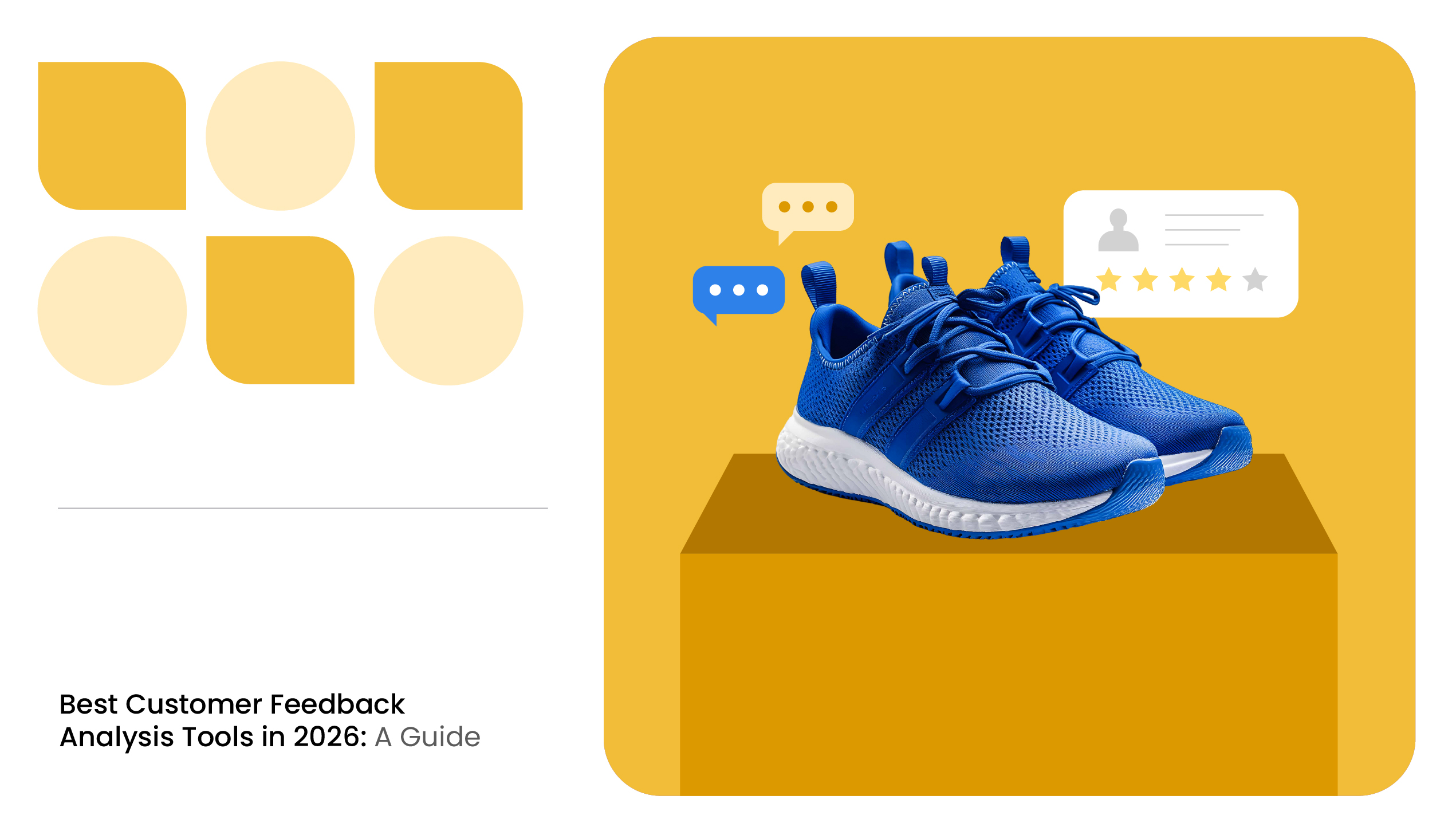
Customer feedback has evolved beyond the traditional reviews and ratings found on product detail pages (PDPs) on e-commerce sites. Today, feedback can be found everywhere, from community threads to comments under product videos, social media discussions, and user-generated content (UGC).
While analyzing ratings and reviews on e-commerce sites remains crucial, it is equally important to gather insights from other platforms, as they significantly influence buying decisions.
Yet, most brands still rely on manual review checking or basic dashboards that summarize star ratings without context. That approach fails at scale and misses the deeper signals hidden inside thousands of customer comments.
This guide breaks down the best customer feedback analysis tools in 2026, explains the critical features to look for, and compares leading platforms to help brands choose the right customer feedback analytics software for growth.
Best Customer Feedback Analysis Tools in 2026
Below are leading customer review analysis software that stand out in the current feedback and review analytics market, each offering different strengths depending on brand size and goals.
MetricsCart
Best for: Digital shelf and consumer insights teams managing large SKU portfolios
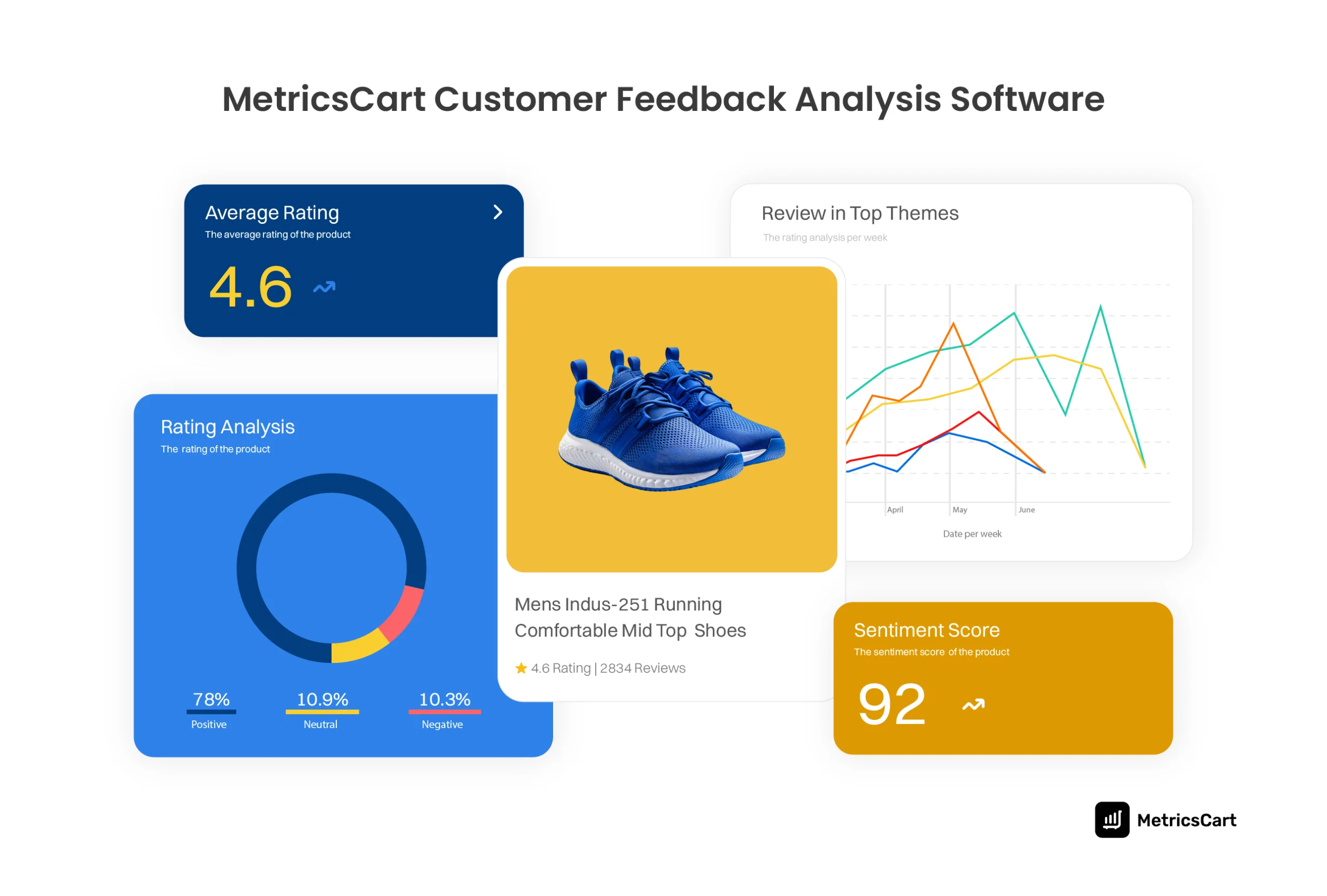
MetricsCart is a purpose-built customer review monitoring and analysis software designed for e-commerce and marketplace brands. Unlike traditional CX platforms focused on surveys, MetricsCart analyzes hundreds of thousands of public reviews directly from Amazon, Walmart, and other 30+ e-commerce platforms and integrates this data with overall market performance metrics.
Moreover, MetricsCart’s consumer insights platform captures shopper conversations and brand mentions across online communities like YouTubeYoutube, turning UGC into actionable intelligence so teams can refine messaging, spot new product ideas, and identify recurring issues early.
Key Capabilities
- Automated data collection and ingestion of marketplace reviews at scale
- AI-driven sentiment detection with theme and sub-theme classification and emotions
- SKU-level, brand-level, and category-level insights
- Competitive benchmarking of review performance
- Trend tracking by platform and region
- Integrated NPS tracking aligned with review sentiment
- Dashboards linking review sentiment to search ranks, pricing pressure, stock availability, MAP compliance, and content execution
What separates MetricsCart is context. Rather than isolating sentiment as a standalone metric, it connects customer feedback analytics software directly to digital shelf performance drivers,; showing how negative sentiment impacts visibility and sales, making MetricsCart one of the best customer feedback analysis tools in 2026.

Qualtrics
Best for: Enterprise customer experience programs
Qualtrics is a global CX platform best known for survey analytics and structured feedback programs. Brands collect customer input through direct surveys and analyze it using advanced sentiment modeling.
Key Capabilities
- Survey-driven voice-of-customer measurement
- Sentiment analysis across open-ended responses
- Experience management dashboards
- Integration across CRM, support platforms, and loyalty programs
- Predictive CX analytics
Qualtrics excels when brands are focused on first-party data, understanding overall customer satisfaction, loyalty drivers, and post-purchase journey feedback.
SentiSum
Best for: Support-heavy businesses needing ticket analysis
SentiSum specializes in consolidating and classifying customer feedback from operational channels like support tickets, chat sessions, emails, and surveys. Its strength lies in unifying support and feedback channels, making it easy to track issues and automate escalation.
Key Capabilities
- Machine learning–based ticket tagging
- Multi-source feedback consolidation
- Issue clustering and root-cause analysis
- Service routing automation
- Dashboarding around service performance drivers
This platform converts service inbound data into insights that CX and operations teams can act on.
SurveySparrow
Best for: Direct customer survey collection
SurveySparrow focuses on survey creation combined with basic sentiment analytics. Instead of passively capturing existing reviews, brands collect targeted feedback using customizable surveys.
Key Capabilities
- CSAT, NPS, CES surveys
- AI sentiment extraction from survey comments
- Workflow automation for digital forms
- Integrations with CRM and marketing tools
Survey-based feedback provides structured insights into what customers say but only from the subset that responds.
MonkeyLearn
Best for: Custom NLP teams needing flexible text analysis
MonkeyLearn is a no-code NLP platform that allows users to train custom models for sentiment detection and thematic analysis. Its flexibility is unmatched: users can train their own sentiment or topic classifiers tailored to their category, product type, or brand language.
Key Capabilities
- Sentiment analysis APIs
- Topic extraction tools
- Custom classifier training
- Multi-language NLP support
- Developer-friendly workflows
Instead of offering a ready-to-deploy marketplace dashboard, MonkeyLearn provides a toolkit for teams to build their own analytics environments.
Key Features to Look for in Customer Feedback Analytics Software
Not all customer sentiment analysis tools are built for modern e-commerce and digital shelf needs. When evaluating the best customer feedback analysis tools in 2026, brands should prioritize these capabilities.
Multi-Source Data Ingestion
Customer voice does not live only in Amazon reviews. It spans:
- Marketplace reviews (Amazon, Walmart, Flipkart, etc.)
- Direct website reviews
- Customer support tickets and chats
- Survey responses (CSAT, NPS, post-purchase surveys)
- Social and UGC mentions
The best feedback management tools in 2026 centralize all sources into one analytics layer. Without unified ingestion, teams operate blind to the full customer story.
Automated Sentiment & Theme Detection
Star ratings alone mean almost nothing without context. Modern customer review analysis software should apply AI and NLP to:
- Classify sentiment (positive, negative, neutral)
- Extract themes and sub-themes — packaging defects, damaged delivery, pricing complaints, feature requests, taste issues, sizing confusion
- Quantify the frequency and severity of issues across SKUs
READ MORE | Performing Review Sentiment Analysis: A Step-by-Step Guide
SKU-Level and Category-Level Insights
Digital shelf performance happens at the SKU level. Customer review analysis software must provide:
- Sentiment trends per product
- Issue detection across pack sizes or variants
- Category-level comparisons to competitors
High-level averages blur product-specific problems that quietly destroy conversion rates.
Real-Time Alerts and Issue Monitoring
When a product receives sudden negative feedback, such as a defective batch, misleading listing, or shipping issues, teams should know immediately.
Advanced alerts help brands:
- Catch early warning signs
- Pause campaigns or promotions if needed
- Trigger fast-operational responses
- Review reaction speed directly impacts sales recovery.
Competitive Benchmarking
Your feedback performance never exists in isolation. Best-in-class customer feedback analytics software benchmarks:
- Average star rating differences
- Review volume vs market leaders
- Sentiment comparison
- Feature-level strengths and weaknesses
This reveals strategic brand disadvantages and competitive opportunities.
Dashboards Built for Action
Data without clarity slows teams down. Strong platforms offer role-based dashboards:
- Category teams track SKU risks
- Marketing monitors brand sentiment shifts
- Product teams examine feature and quality feedback
- Leadership tracks improvement trends
- The goal is decision-ready insights, not raw data exports.
What’s Next: The Next Phase of Review and UGC Intelligence
In 2026 and beyond, customer feedback analytics software is evolving beyond text reviews. Feedback now flows from YouTube reviews, TikTok hauls and product trials, Reddit conversations, creator content , and community forums. Future platforms will ingest multimodal UGC (text, video, audio) and extract sentiment directly from spoken commentary and captions.
Rather than reporting on past damage, next-generation customer sentiment analysis tools will predict future risks. This shifts feedback analysis from reporting to prevention.
Analytics platforms will increasingly connect sentiment data with search visibility,
sales velocity, availability, and fulfillment accuracy, pricing, and MAP compliance events. This creates a true commerce intelligence layer where feedback is interpreted alongside operational market signals.
Platforms are moving toward agent-led insights:
- “Fix this listing image: similar competitors with higher ratings solved this issue.”
- “Customers complain about sizing: adjust size charts or provide comparison photos.”
- “Negative reviews spike after price reductions: investigate quality consistency.”
AI will not simply analyze: it will recommend corrective actions directly.
This evolution is already underway. Platforms like MetricsCart are advancing review and UGC analytics as part of a broader digital shelf intelligence framework, combining sentiment insights with pricing, availability, visibility, and compliance data.
This integrated approach is shaping how leading brands stay ahead of issues before they escalate into lost rankings, revenue, or customer trust.
Monitor Customer Feedback and Protect your Brand with MetricsCart.
FAQs
Customer feedback analysis tools are platforms that collect and analyze reviews, surveys, comments, and UGC to uncover sentiment trends, product issues, and customer preferences that impact sales and brand perception.
Feedback now drives marketplace rankings, conversion rates, and brand trust. Brands use customer feedback analytics software to detect issues early, optimize listings, improve product quality, and maintain competitiveness across online retail channels.
These tools use natural language processing (NLP) and AI models to scan unstructured text or audio, identify sentiment (positive, negative, neutral), group feedback into themes, and highlight emerging product or service trends.
Platforms such as MetricsCart specialize in tracking and analyzing reviews across marketplaces, tying sentiment insights to SKUs, competitors, rankings, pricing, and availability for actionable digital shelf decisions.
Survey tools focus on collecting structured responses directly from customers, while customer feedback analysis tools aggregate and interpret large volumes of existing reviews, UGC, and support interactions at scale using AI.