
A glance at standard industry feeds reveals the heights of tactical marketing fluff masquerading as “innovation” in longevity: Oura rings, prebiotic sodas, sleep patches, and overpriced GLP-1 gummies.
Beneath the surface, where true market orientation lives, a fundamental shift is taking place. Women are no longer waiting for traditional medical research to solve their problems. They are building the systems, brands, and infrastructure required for their specific physiological realities.
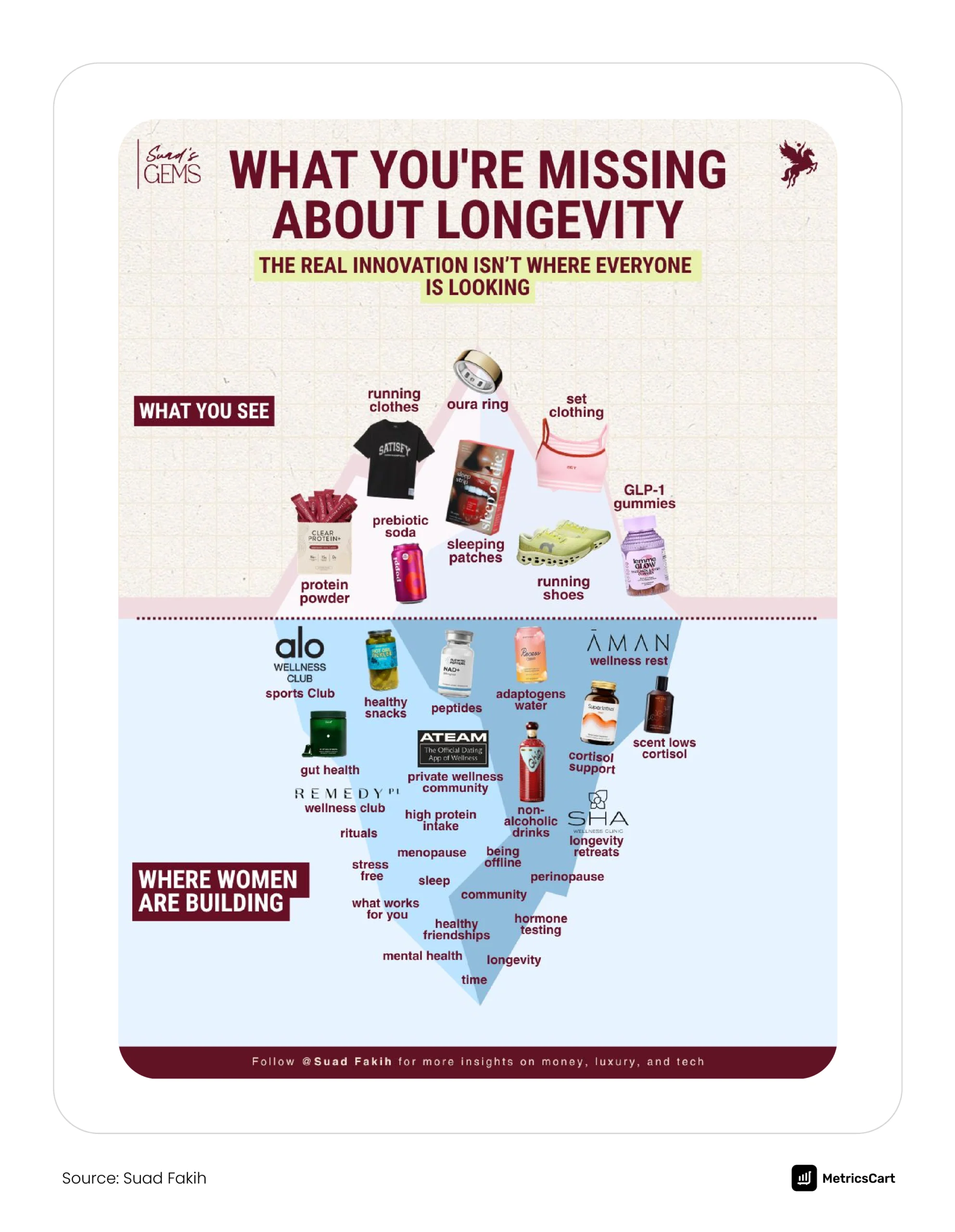
This is proper marketing: identifying an underserved consumer segment through a profound diagnosis, then designing products to meet those needs.
The Reality of Female Biology in Health Data
The clinical and consumer health establishment has historically treated women as “small men,” creating critical knowledge gaps in female biology.
- The Health Gap: According to the McKinsey Health Institute and the World Economic Forum, women spend 25% more of their lives in “poor health” compared to men. This disparity primarily stems from general conditions, such as autoimmune disorders, chronic stress, metabolic issues, and gynecological health that manifest differently in female biology.
- R&D Misalignment: Research reveals up to 10 times higher volume of new therapies in clinical development for common cancers than for debilitating conditions like endometriosis.
- Algorithmic Misreading: A study in npj Digital Medicine highlighted that vital cardiovascular and recovery metrics fluctuate across the menstrual cycle. Tracking algorithms built on male baselines systematically misread a woman’s health state for half of every month.
Translating Consumer Insights into Physical Products
Qualitative insights have evolved into a primary diagnostic tool to turn the Voice of the Customer (VoC) into physical solutions. Founders identifying these operational gaps are building market-facing consumer brands:
- The Honey Pot Company (Beatrice Dixon): Developed a clinically backed feminine care system using plant-derived ingredients to disrupt the retail category.
- Pink Stork (Amy Suzanne Upchurch): Engineered targeted adrenal and cortisol support systems focusing on the gut-brain axis to manage hormonal imbalance and mood.
- Bloom Nutrition (Mari Llewellyn): Built a high-performance greens and gut-support brand addressing digestive issues and severe bloating.
- Gunam Beauty (Elizabeth Issac): Combined French-Indian formulation standards with active peptides to bridge internal cellular nutrition and external skin health.
- Moon Juice (Amanda Chantal Bacon): Formulated remedies utilizing raw plants and adaptogens to target systemic inflammation and endocrine balance.
- Golde (Trinity Mouzon Wofford): Developed accessible superfood CPG products centered on bioavailable botanicals and turmeric for gut and skin health.
Navigating Unit Economics and Digital Shelf Execution
Moving from an emerging brand to an enterprise serving millions requires operational scale and sound unit economics. Modern direct-to-consumer (DTC) models face rising Customer Acquisition Costs (CAC), making an optimized retail channel mix essential for sustainable growth.
Securing shelf space is only the initial step; maintaining visibility across the digital shelf presents ongoing operational challenges:
| Digital Shelf Challenge | Operational Impact |
| Unauthorized Resellers | Map price erosion and brand equity degradation |
| Retail Media Ad Spend | Loss of organic share of voice (SoV) to high-bidding competitors |
| Inventory Out-of-Stocks | Immediate decay in search algorithm rankings and conversion rate |
Data-Driven Scale
Scaling a brand requires lean teams to focus on core product development and market strategy rather than manual data extraction. Partnering with dedicated analytics frameworks, such as those provided by MetricsCart, gives brands visibility into digital shelf blindspots.
Customized digital shelf analytics help teams track availability, protect market share, and optimize unit economics, ensuring products remain accessible to the consumers who rely on them.