Most listing reviews get read one at a time, which is the worst way to understand them. A single five-star review tells you nothing about whether the product is drifting.
This Hamilton Beach 0.9 microwave consumer report takes the opposite approach: MetricsCart’s customer review analysis software monitored 6,598 reviews of the Hamilton Beach 0.9 cu ft 900W microwave, scored them, grouped them into themes, and tracked how they moved.
Highlights
- Health Score: 84/100 (Stable): Four of five metrics are near perfect, but a sentiment score of 69 keeps it just under the “Healthy” threshold.
- Improving Ratings: Recent reviewers are slightly happier, with the trailing-12-month rating (4.2) edging out the all-time average (4.14).
- Polarizing Functionality: Functionality is the biggest driver for both praise (29% of 5-star reviews) and complaints (27% of negative reviews).
- True Friction Point: A September 2025 negative spike was just low-volume noise; consistent fulfillment issues (16% of complaints) are the real concern.
- Surging Momentum: Review velocity more than doubled recently (295 reviews in the last 30 days vs. 128 baseline), earning perfect momentum and freshness scores.
About This Report
MetricsCart built this Hamilton Beach 0.9 microwave consumer report from Walmart.com review data. The headline analysis covers 1,764 reviews from the trailing-12-month window of 1 July 2025 to 24 July 2026, read against an all-time base of 6,598 reviews going back to 2023.
MetricsCart’s ratings and review analysis software aggregates reviews across a retailer, classifies them into themes and sub-themes, scores sentiment, and tracks trends.
Our analysis uses a structured what, why, and so-what methodology: detailing what the consumer review sentiment metrics show, explaining why shoppers react in this manner, and offering concrete recommendations for category managers, retail buyers, and consumers evaluating product reliability.
Instead of requiring teams to read through thousands of customer comments manually, MetricsCart’s automated review intelligence isolates operational bottlenecks and brand drivers across entire online catalogs.
The report moves through three questions in order:
- What the review data shows.
- Why the pattern is appearing.
- What a brand, retail, or insights team should do with it.
Why Appliance Review Sentiment Is a 2026 Competitive Signal
In compact appliances, the review stream is the shelf. Precedence Research puts the global microwave market at roughly $17.55 billion in 2026, growing at a modest 2.71% annually toward $24.92 billion by 2035, with North America holding about 46% of it. Built-in units take 69% of the structural market, which leaves countertop models like this one in the minority.
The offsetting detail is channel: e-commerce already drives close to 63% of microwave sales, and compact countertop demand skews harder to online buyers than built-in does. Through 2027, with category growth in the low single digits, share moves at the listing level, through rating position and review sentiment, rather than through category expansion.
Analysis compiled from Capital One Shopping in January 2026 shows more than 99% of US shoppers read reviews before buying, with a 0.1-point rise in star rating linked to roughly a 25% lift in conversions. The same research reports that 94% of consumers have walked away from a brand after reading negative reviews, and 82% deliberately seek the negative ones out to stress-test a listing.
For a category or digital shelf manager, that makes 6,598 classified reviews a competitive asset, because every lever that moves sentiment also moves conversion.
MetricsCart monitors ratings and review sentiment across 150+ retailers, so the kind of theme-level shift in this report surfaces while there is still time to act. See how customer review analysis works.
Hamilton Beach 0.9 Microwave Walmart Listing Health at a Glance: The Headline KPIs
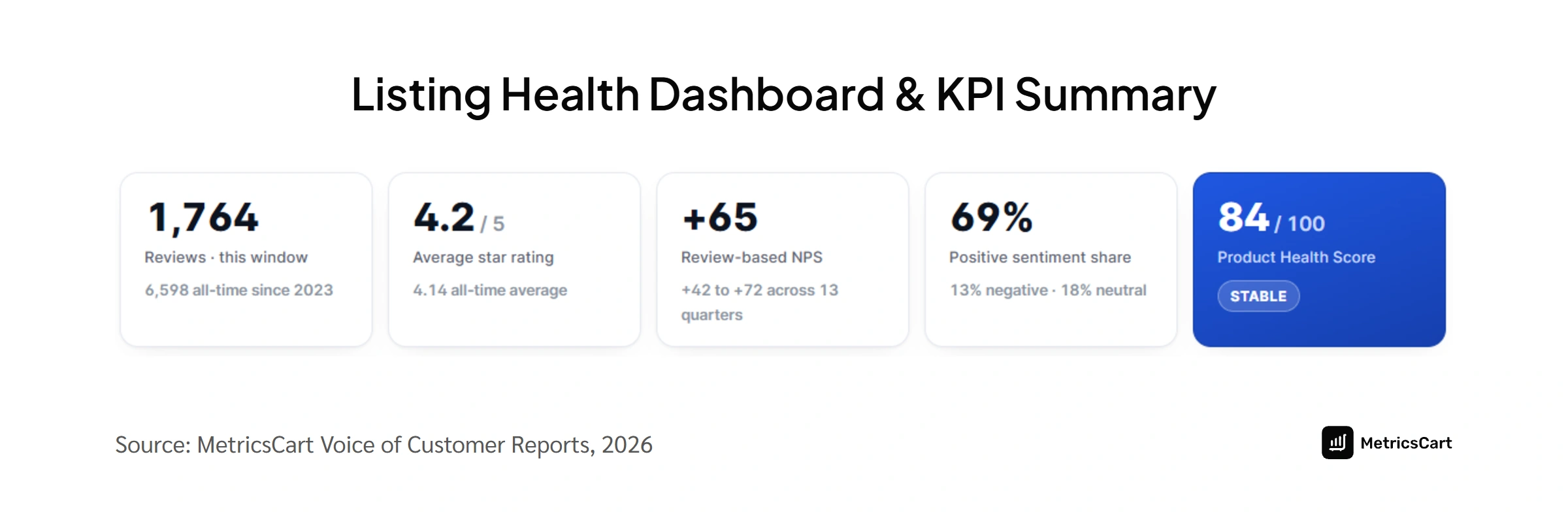
Key performance metrics for the Hamilton Beach 0.9 cu ft 900W microwave demonstrate consistent shopper demand and reliable market adoption. The product maintains a 4.2/5 average rating in the trailing-12-month period and holds a 4.14/5 score across all historical reviews. The listing captured 1,764 reviews during the trailing 12 months, with 295 reviews posted within the last 30 days alone.
The review-derived Net Promoter Score (NPS) sits at +65, maintaining a stable range between +42 and +72 across 13 consecutive quarters. For retail category buyers, these metrics confirm that the appliance maintains strong organic endorsement, making it a dependable option for shoppers asking if the unit is worth it.
High review velocity combined with stable star averages signals to marketplace algorithms that a listing possesses robust organic buyer interest. This ongoing volume protects the product detail page from sudden ranking drops when occasional negative feedback arrives.
Product Health Score: Healthy, Stable, Watch, or At Risk?
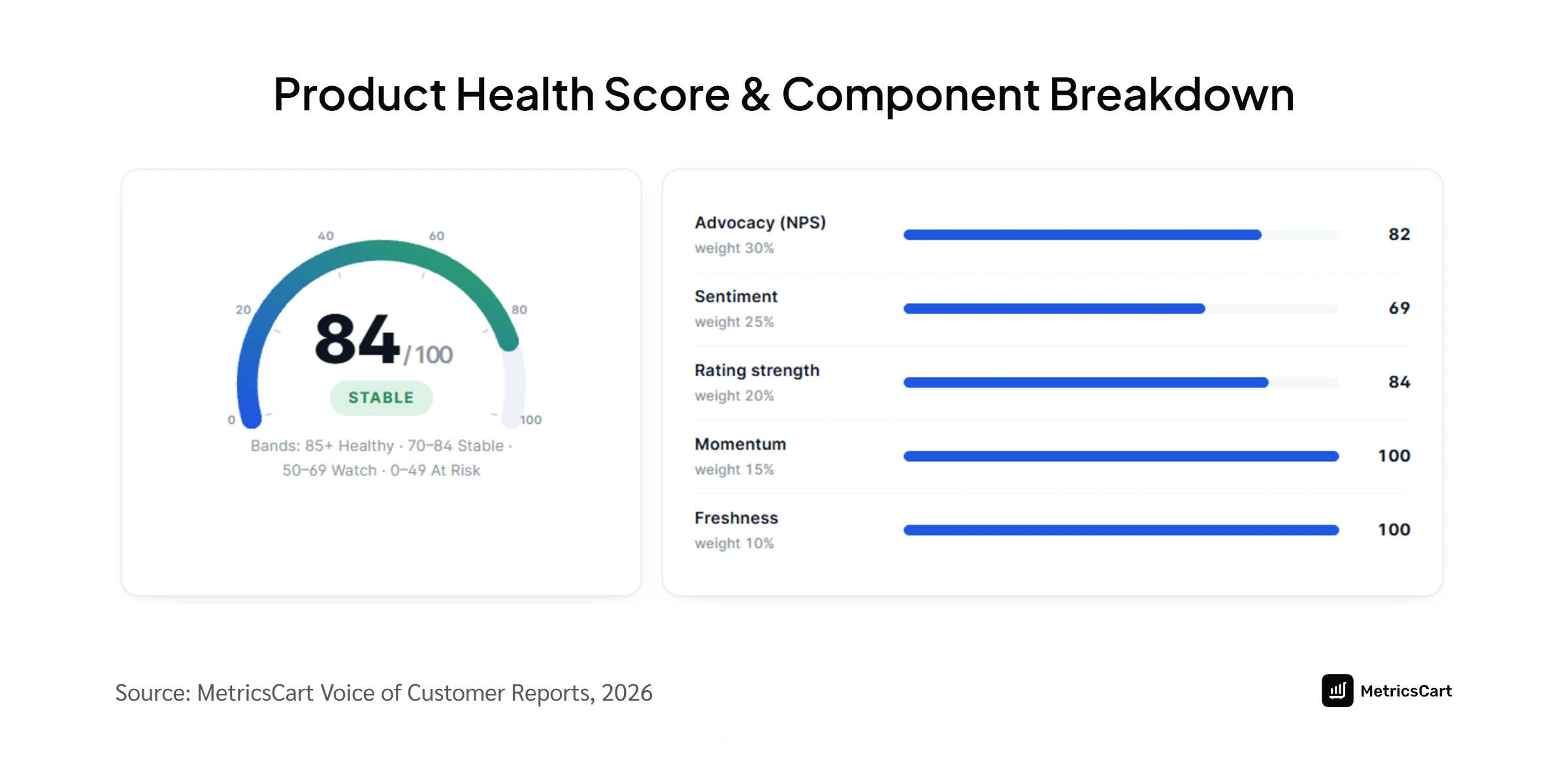
The Hamilton Beach 0.9 cu ft microwave registers an 84/100 Product Health Score, placing it at the absolute top of the “Stable” tier. The score breakdown reflects the following weighted components:
- Momentum (100/100, 15% weight): Demonstrates high recent review velocity and strong market engagement.
- Freshness (100/100, 10% weight): Confirms consistent, steady review submissions without long delays.
- Rating Strength (84/100, 20% weight): Reflects solid baseline star performance across retail listings.
- Advocacy (82/100, 30% weight): Highlights strong willingness among buyers to recommend the product.
- Sentiment (69/100, 25% weight): Serves as the primary operational bottleneck holding the listing back from entering the “Healthy” tier.
While review volume, recency, and customer advocacy remain exceptional, underlying text sentiment represents the sole bottleneck. Addressing specific consumer friction points in customer feedback gives brand managers a clear operational roadmap to elevate this listing into the top-tier “Healthy” category.
What Do Customers Think About Hamilton Beach 0.9 Microwave: Sentiment Split Overview
Evaluating customer feedback requires separating overall star ratings into granular sentiment classifications.
MetricsCart research shows that:
- 69% of reviewers express positive sentiment
- 18% share neutral commentary
- 13% communicate negative experiences
The positive majority centers on budget positioning, compact sizing, and reliable daily operation. Neutral reviews often reflect buyers who consider the appliance functional for simple tasks but unexceptional. Conversely, the 13% negative segment isolates specific product performance issues and carrier fulfillment damage.
Categorizing sentiment at this level prevents brand teams from overreacting to isolated negative feedback while ensuring persistent quality issues receive proper attention. By aligning marketing strategies with positive drivers and addressing root causes behind negative feedback, brands can optimize customer acquisition costs. Automated sentiment tracking provides continuous visibility into these proportional shifts over time.
Customer Sentiment Trend: Reading the Monthly Swings
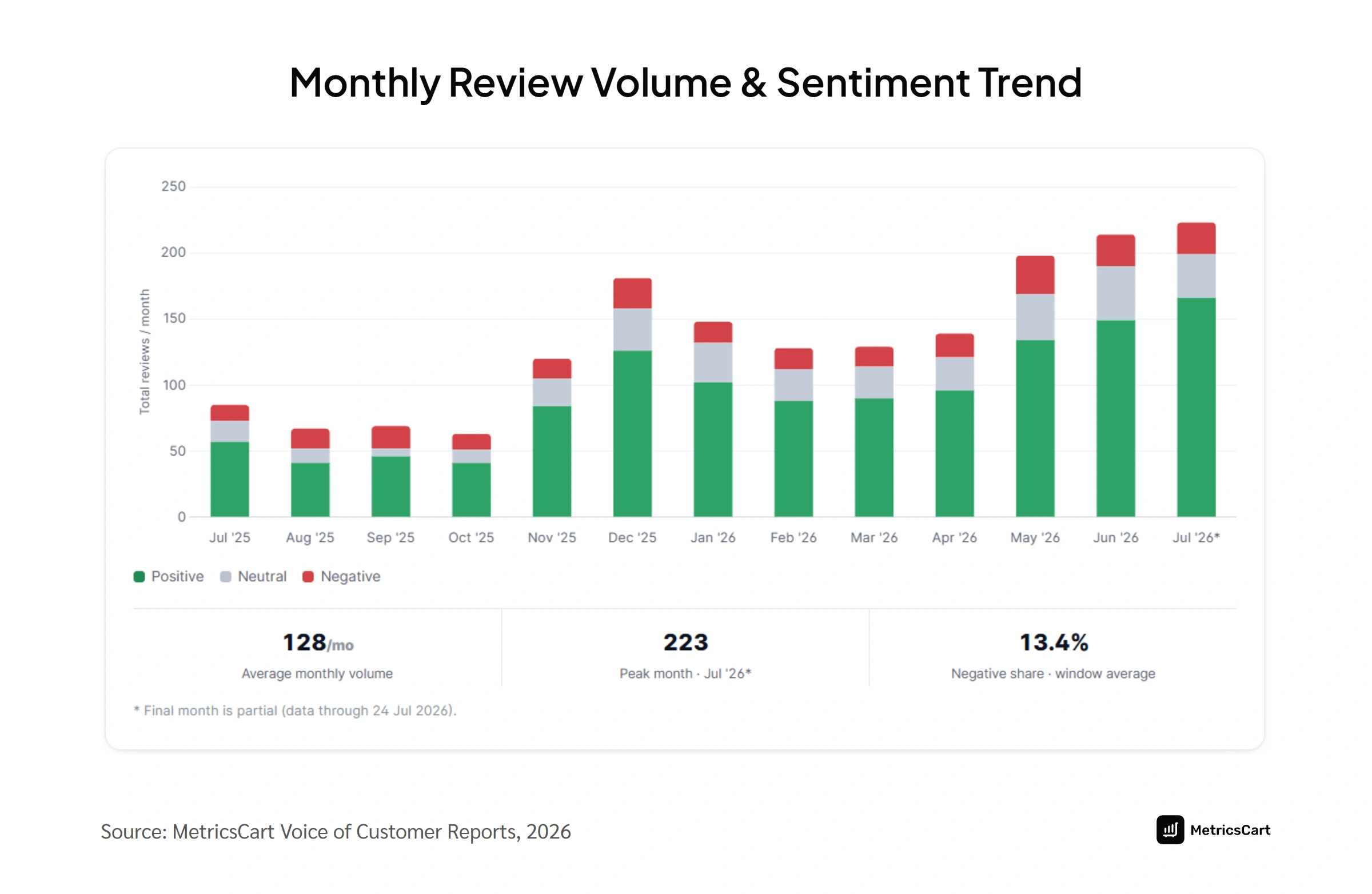
Review submissions average 128 posts per month, reaching a peak volume of 223 reviews in July 2026. Tracking these monthly sentiment drivers helps brand teams distinguish between systemic product defects and temporary logistics issues.
Negative review sentiment ranged from a low of 10.8% to a peak of 24.6% in September 2025. Significant sentiment spikes usually indicate localized shipping problems or temporary manufacturing batch variations. A sudden jump in negative sentiment during high-volume months signals that operational teams must inspect carrier packaging or factory quality control.
Brand teams equipped with trend monitoring can coordinate directly with supply chain partners to isolate compromised production runs or carrier routes. MetricsCart real-time tracking ensures that category managers receive automated alerts during unexpected sentiment dips.
Brand Value Drivers: What’s Working for Hamilton Beach 0.9 Microwave
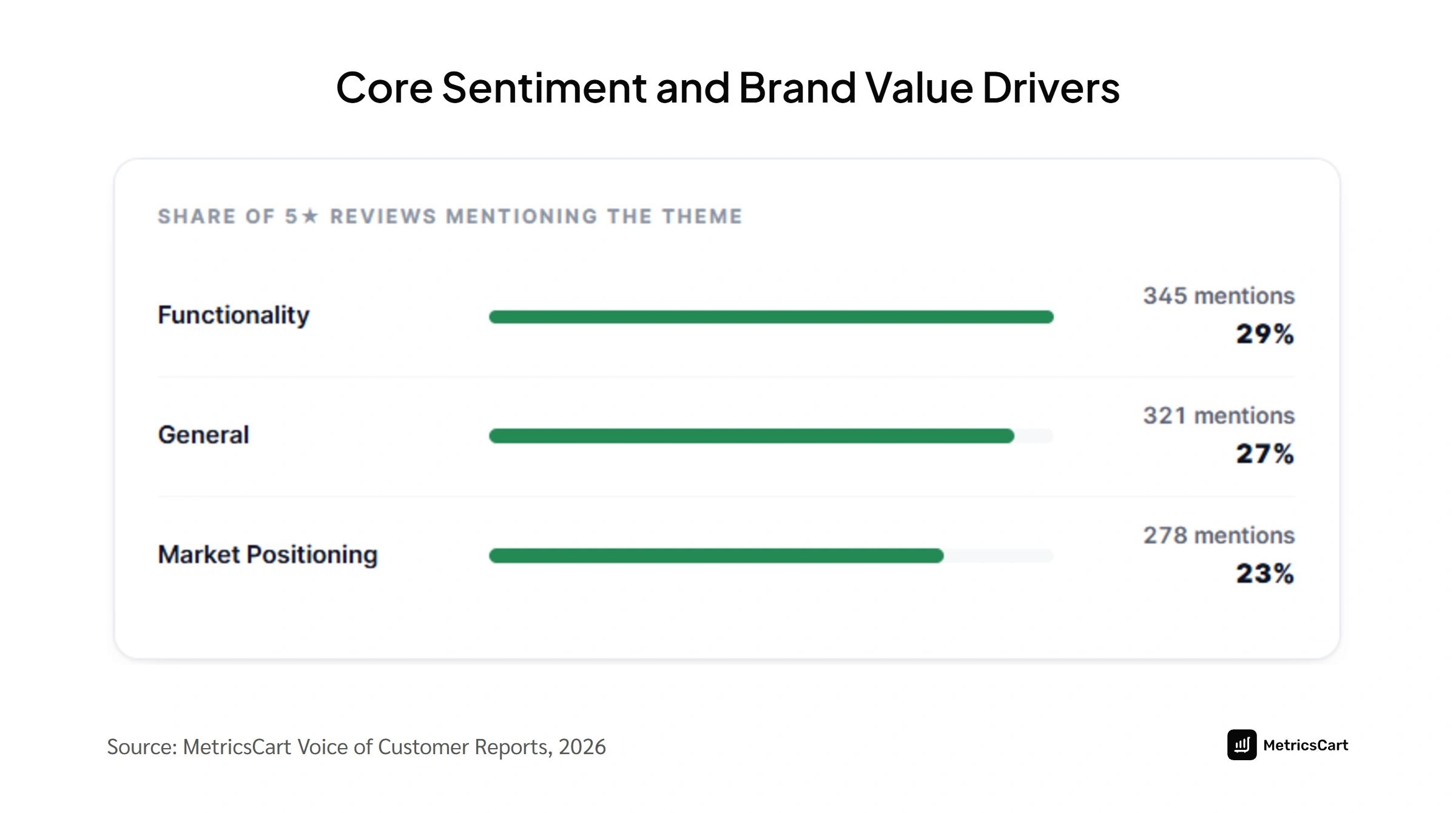
Analyzing positive review themes clarifies what product features drive shopper satisfaction, providing valuable guidance for marketing copy and digital shelf assets.
Functionality and Product Integrity
Core operational performance drives positive review volume. MetricsCart found that general functionality serves as the top 5-star theme, accounting for 29% of all praise within top-tier reviews. Product Integrity generated 1,500 mentions (60% positive). Reviewers consistently validate that the appliance reliably meets daily kitchen expectations.
Consumers frequently highlight intuitive control layouts, reliable defrost settings, and compact counter footprints. This strong functional foundation validates that the appliance satisfies its primary design mandate. Merchandisers can feature these functional trust signals directly within product listing bullet points to reassure hesitant buyers.
Price and Perceived Value
Competitive pricing remains the product’s strongest competitive asset. MetricsCart research found 474 mentions covering commercial value and pricing, with an overwhelming 90% expressing positive sentiment. Shoppers consistently report receiving excellent utility relative to purchase price, driving high recommendation scores among budget-conscious households.
This high value for money perception creates a strong defensive moat against higher-priced competitors in the countertop category. Highlighting cost-to-performance utility in digital marketing campaigns reinforces customer acquisition across price-sensitive market segments. MetricsCart value-driver tracking helps brands monitor whether price adjustments affect customers’ perceptions of value.
Friction Points: Where Does Hamilton Beach 0.9 Microwave Go Wrong?
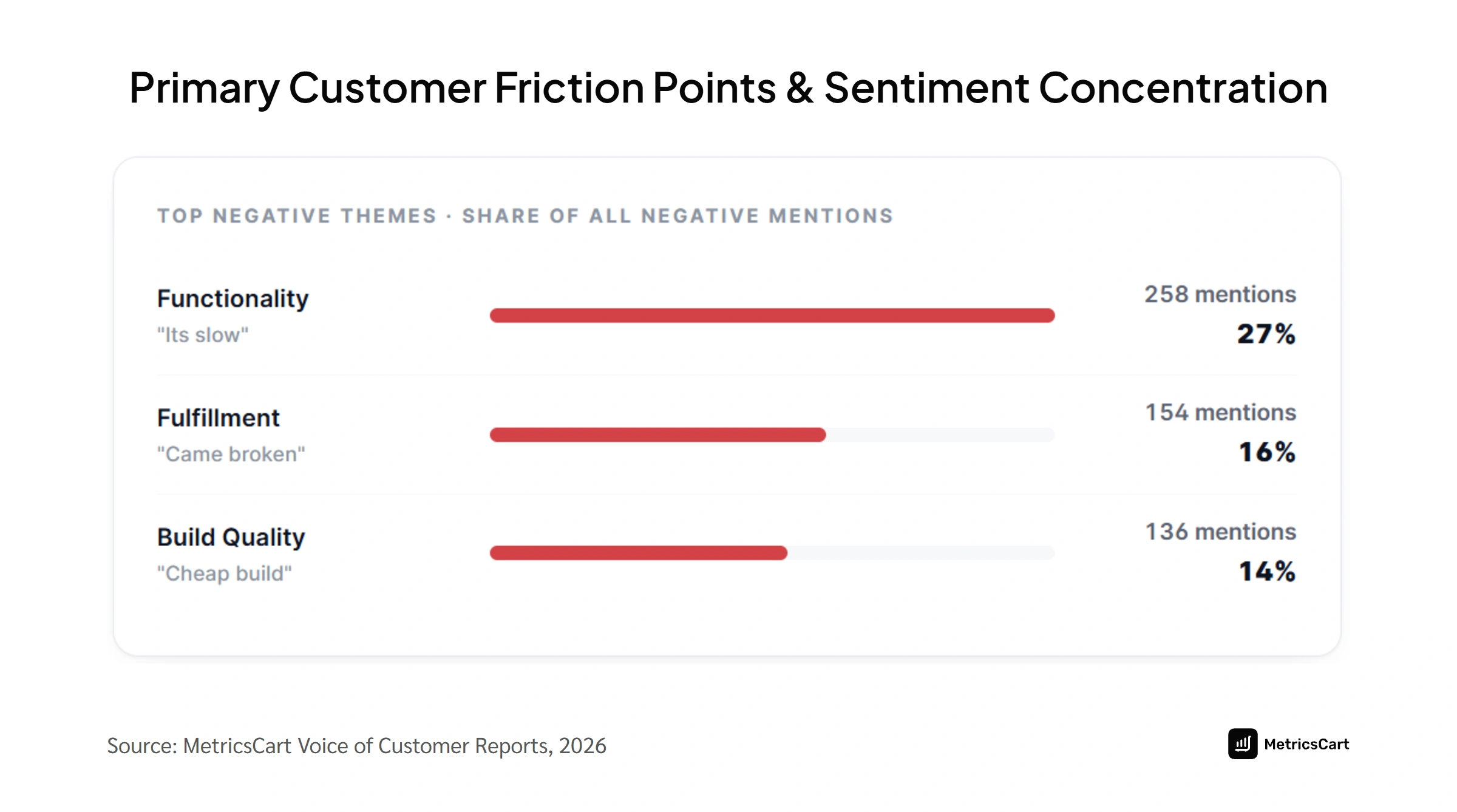
Categorizing negative feedback helps teams direct solutions to engineering, packaging, or carrier partners. Identifying sentiment leakage points provides a roadmap for targeted product and supply chain improvements.
Speed and Heating Performance
Heating performance serves as the largest product-level complaint, accounting for 27% of negative sentiment. Reviewers specifically state that the unit cooks and reheats food more slowly than expected for a 900 watts appliance. This feedback highlights a clear expectation gap between listed technical wattage and real-world heating speed, leading dissatisfied buyers to question the unit’s thermal efficiency.
Brand managers can address this expectation gap by refining digital shelf content. Providing clear cooking time guidelines for common items directly on detail pages helps align consumer expectations prior to purchase. Engineering teams can also evaluate magnetron performance to ensure consistent wattage output across production cycles.
Arrived Damaged: The Fulfillment and Packaging Signal
Carrier handling severely impacts digital shelf performance, with fulfillment / arrived damaged issues accounting for 16% of negative feedback. MetricsCart found that customers penalize product listings for transit damage, lowering ratings due to logistics issues. Dented exterior housing and shattered glass turntables represent frequent packaging complaints.
Resolving transit damage requires supply chain intervention rather than product redesign. Brands should audit standards for parcel shipments. Working with retail logistics partners to improve last-mile handling protects product detail page ratings.
Build Quality and Materials
Perceptions surrounding build quality drive 14% of negative complaints. Reviewers occasionally cite light exterior casing, thin door handles, or rigid push-button latches. While lightweight construction is standard in compact countertop appliances, these physical touchpoints shape initial user impressions upon unboxing.
Addressing material complaints involves setting realistic expectation baselines through imagery. Providing high-resolution close-ups of door mechanisms and interior capacity helps set appropriate quality expectations. Continuous component monitoring helps identify recurring hardware defects early.
Noise and Aesthetics
Operational sound level represents a smaller portion of negative feedback, totaling 132 mentions. Users mention noise during operation, though these concerns rarely lead to product returns. Monitoring acoustic complaints ensures minor annoyances do not escalate into broader product issues.
Consumer Intent: What Reviewers Came to Say
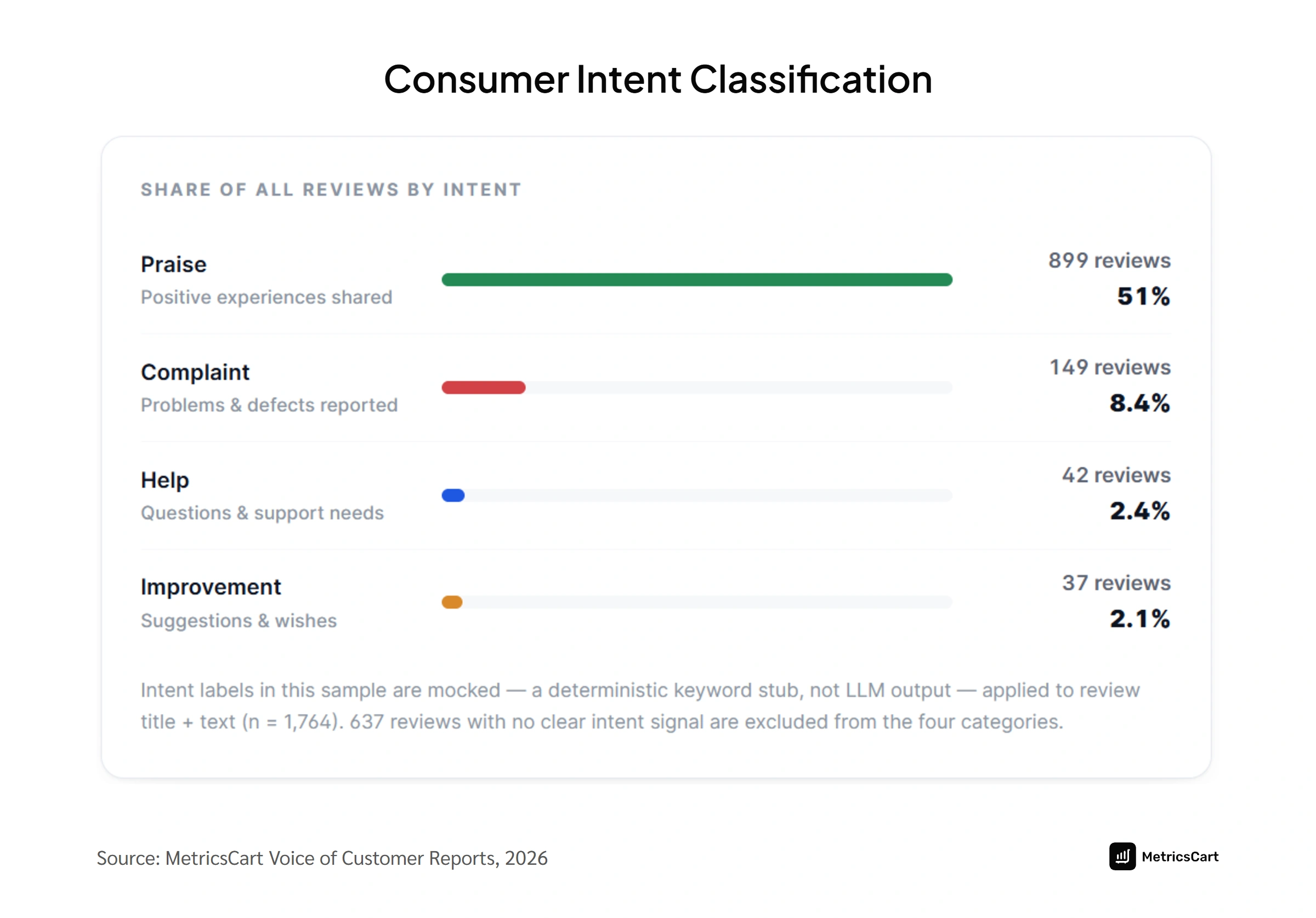
MetricsCart Hamilton Beach 0.9 microwave consumer report shows that more than half of reviewers (51%) posted to share positive praise, while 8.4% submitted complaints. A smaller group requested help and support (2.4%) or offered direct improvement suggestions (2.1%). This high ratio of praise relative to complaints reinforces the listing’s strong momentum rating.
Understanding intent distribution informs customer service resource allocation. Seeing that 2.4% of reviewers seek post-purchase assistance indicates an opportunity to add downloadable user manuals and troubleshooting FAQs directly to product detail pages. Providing accessible support resources reduces unnecessary product returns.
What Brands and Retailers Should Do with Review Intelligence
Applying review insights allows brand managers and retail buyers to protect market share and improve conversion rates. Implementing MetricsCart digital shelf tracking tools enables teams to convert these findings into actionable daily workflows. Data-driven optimization protects brand equity across major e-commerce marketplaces.
Close the Damaged-on-Arrival Gap First
Reducing shipping damage provides immediate rating upside. Because fulfillment / arrived damaged complaints account for 16% of negative sentiment, improving transit packaging directly protects conversion rates. Brand teams should evaluate packaging drop-test standards, while retail partners review distribution handling to minimize transit damage.
Eliminating transit damage removes a major source of non-product negative reviews. Upgrading internal foam padding and re-testing carton burst strength prevents units from denting during parcel transit. Protecting units in transit stabilizes star ratings and reduces return processing costs.
Protect and Amplify the Value Message
The 90% positive sentiment surrounding price positioning represents a primary marketing strength. Digital shelf managers should highlight value and daily reliability across product listing images, bullet points, and sponsored ad copy. Emphasizing practical functionality directly addresses the criteria shoppers use when selecting a compact / countertop microwave.
Merchandisers can feature customer praise regarding affordability prominently in A+ content and brand stores. Positioning the unit as a high-value entry model establishes clear market differentiation against premium competitors. Reinforcing value perception drives conversion among price-sensitive buyers.
Watch Momentum Before It Dips
Search algorithms weigh recency heavily when determining listing placement. Unchecked spikes in negative review sentiment can quickly lower search rank and reduce sales velocity. Automated customer sentiment tracking alerts category teams to quality or shipping issues early, allowing rapid intervention before star ratings decline.
Establishing automated sentiment thresholds ensures brand managers are notified immediately when negative feedback trends upward. Early intervention prevents temporary fulfillment issues from harming long-term search placement. Continuous voice-of-customer tracking maintains listing health across all retail touchpoints.
Continuous voice-of-customer monitoring works best when paired with multi-channel price visibility. Explore MetricsCart Buy Box and pricing intelligence reports.
Track Your Digital Shelf Health with MetricsCart
Static star ratings rarely capture the operational friction that drives shopper churn in the home appliance market. Brands that win on the digital shelf monitor review sentiment dynamically; spotting packaging failure trends early, tracking how competitors land product updates, and evaluating product health scores across every stock-keeping unit (SKU) and sales channel.
MetricsCart delivers customer review monitoring across 150+ worldwide retailers. From granular thematic classification to real-time sentiment alerts, our platform turns unstructured customer feedback into clear, actionable revenue protection strategies.
Protect your brand equity and eliminate revenue leakage across e-commerce marketplaces. Schedule a demo with MetricsCart today to analyze customer reviews and sentiment trends to optimize your digital shelf performance.
Disclaimer: MetricsCart is the exclusive owner of data used in the Consumer POV reports. Any kind of third-party usage entails due credit to the source material.