90% of online shoppers compare prices across multiple platforms before making a purchase. Which means your price is evaluated before your brand.
In the US, shoppers do not rely on a single retailer. They compare Amazon with Walmart. They check D2C websites. They look at third-party sellers. Even the price history is reviewed before buying.
In recent months, Amazon has adjusted how its pricing system works. It is no longer simply reacting to major competitors. It is scanning more retailers, more categories, and more signals. In many situations, Amazon sets pricing expectations rather than follows them.
This shift has meaningful consequences. It affects margin structure, MAP enforcement, vendor negotiations, and Buy Box ownership. As a result, Amazon competitor price monitoring has become an important part of the pricing strategy for brands.
In this guide, we will break down what has changed, how Amazon’s pricing systems influence brands and sellers, and what structured monitoring should look like in 2026.
Highlights
- Amazon is evolving from a price follower to a price leader, influencing pricing trends across the marketplace. This shift requires brands and sellers to adapt their pricing strategies accordingly.
- Amazon now compares prices from a wider range of retailers, bundles, and DTC promotions. This ensures that even small price differences are quickly addressed to maintain competitiveness.
- Small price gaps on Amazon can lead to broader marketplace alignment, influencing overall pricing. This creates a ripple effect as sellers adjust to stay competitive.
- Competitor pricing impacts both Buy Box share and vendor margins. Sellers need to track these changes to avoid margin erosion and maintain Buy Box visibility.
- Structured competitor price monitoring is vital for brands, 3P sellers, and 1P vendors. It helps detect price gaps early and ensures consistent pricing across platforms.
Amazon as a Price Follower or Leader: How Has It Changed?
For many years, Amazon mostly adjusted its prices in response to major retailers’ visible price changes. If Walmart reduced the price of a high-volume SKU, Amazon would align shortly after. If a nationwide promotion ran across large chains, Amazon followed to maintain price consistency.
This made pricing movements easier to understand. When prices shifted, the reason was usually clear.
Over time, that pattern has changed. Amazon now reviews a wider group of retailers, including regional sellers and online specialty stores. It also compares effective prices; not just list prices, which include coupons, bundle pricing, and promotional offers.
Why did this change happen?
Because shopper behavior changed first. Customers began comparing more sources before making a purchase. If Amazon appears noticeably higher than another retailer, even by a small amount, it risks losing conversion. To reduce that, Amazon quickly closes visible pricing gaps.
Amazon has also increased price transparency by making price history charts clearer. When shoppers can see price trends, maintaining consistent pricing becomes more important. The result is a system in which price alignment occurs more frequently and across more retailers than before.
READ MORE | Amazon Pricing Strategy: A Complete Guide for 2025
How Do Amazon’s Pricing Algorithms Impact Brands?
Let’s look at how Amazon’s pricing algorithms play out in several situations.
Buy Box Loss
When Amazon adjusts its prices, third-party sellers and other retailers often respond by lowering their prices to maintain their Buy Box share. What began as a localized discount can slowly affect broader pricing expectations. This happens because pricing visibility has expanded. Smaller retailers now influence national comparisons more than before.
Without structured Amazon competitor price monitoring, brands may not see how these localized changes influence overall pricing patterns.
Price Consistency Signals
Amazon’s pricing systems also evaluate how consistent a product’s price is across retailers. If a product appears significantly cheaper on another website, Amazon may reduce the listing’s visibility or adjust how it competes in search and for Buy Box placement.
For brands, this means pricing decisions made outside Amazon can influence how the product performs on the marketplace. A lower price on another retailer or a temporary promotion elsewhere can weaken the product’s competitiveness on Amazon.
Monitoring cross-retailer pricing helps brands maintain price consistency and avoid situations where external price differences affect performance on the platform.
Matches Promotions from DTC Websites
Direct-to-consumer pricing used to operate separately from marketplace pricing. That separation has narrowed. When a brand runs a promotion on its website, the lower price becomes visible. Amazon may detect this difference and align its listing.
From Amazon’s perspective, the brand website is part of the customer’s comparison process. If shoppers see a lower price directly from the brand, Amazon risks losing that purchase. As a result, Amazon adjusts its price to remain aligned. Third-party sellers may then further reduce prices to maintain their Buy Box share.
Without coordination between DTC and marketplace strategy, short-term promotions can create longer-term pricing instability.
Price Undercutting Risks & MAP Violations
Price erosion usually does not begin with a major discount. It may start with:
- A reseller applying a small coupon
- A regional seller clearing inventory
- An unauthorized seller listing below the MAP
- A temporary discount was offered quietly
Individually, these actions may not appear significant. However, once they are visible online, they become part of Amazon’s pricing comparison process.
If Amazon identifies a meaningful price gap, it may adjust its listing price to stay aligned with it. When that lower price appears on Amazon, it reaches a larger customer base. Other sellers may then adjust their prices to maintain Buy Box share. Over time, repeated small adjustments can lower the overall price level within a category.
The larger issue is customer expectation. When shoppers consistently see a product at a lower price, that price becomes their reference point. If the price increases later, conversion may slow because customers compare it with recent pricing.
Amazon competitor price monitoring allows brands to identify early signs of undercutting before wider alignment occurs. MAP compliance is more effective when deviations are detected quickly and addressed properly.

Amazon Competitor Price Monitoring: Why is It No Longer Optional?
Amazon’s pricing system now includes a broader set of data points. This includes smaller and regional ones. Even minor price changes can initiate adjustments across the marketplace. Brands that don’t track these changes risk losing pricing control, leading to misalignment with customer expectations.
Real-time Amazon competitor price monitoring is essential because price shifts happen rapidly. Small gaps in pricing can quickly escalate, too. Without constant tracking, these shifts can go unnoticed until they significantly affect your pricing structure.
Competitor price monitoring also offers strategic advantages. It provides insight into competitors’ pricing behavior, enabling brands to anticipate price changes and adjust accordingly. This data empowers brands to refine their pricing strategies, strengthen vendor negotiations, and protect their margins from erosion.
Best Practices for Amazon Competitor Price Monitoring
Track Key Competitors Across All Retail Channels: Keep an eye on key competitors not just on Amazon, but across multiple retail platforms. This helps identify pricing trends and ensures your brand stays competitive across different channels.
Monitor Buy Box Ownership and Price Volatility: Regularly track Buy Box ownership to understand how pricing impacts visibility and sales. Price volatility can affect your share price, so being proactive is key to consistent performance.
Set Up Real-Time MAP Alerts and Violation Tracking: Implement real-time alerts for MAP violations to ensure pricing consistency. Early detection of violations helps prevent broader market alignment and margin erosion.
Analyze Promotions and Bundled Offers: Regularly analyze promotions and bundled offers across Amazon and competitor listings. Understanding how discounts and bundling affect consumer behavior can help refine pricing strategies.
Segment Pricing Insights by Product Tier: Segment your product catalog into tiers and monitor pricing across each tier. This enables more granular insights into pricing performance and helps optimize pricing across different product categories.
Audit Third-Party Seller Activity Regularly: Keep a close watch on third-party sellers who may be undercutting your prices or violating MAP policies. Regular audits help prevent unauthorized pricing behavior that could damage brand value.
READ MORE | Amazon MAP Enforcement: A Complete Guide for Sellers and Brands
Bring Your Price Strategy Full Circle
Pricing isn’t just a number on a listing. It affects how your brand is perceived, how your partners operate, and how confident you feel about your margins.
A small discount elsewhere can gradually affect your sales on Amazon. A short promotion can change what customers expect to pay. These changes don’t always feel urgent in the moment. But, over time, they add up.
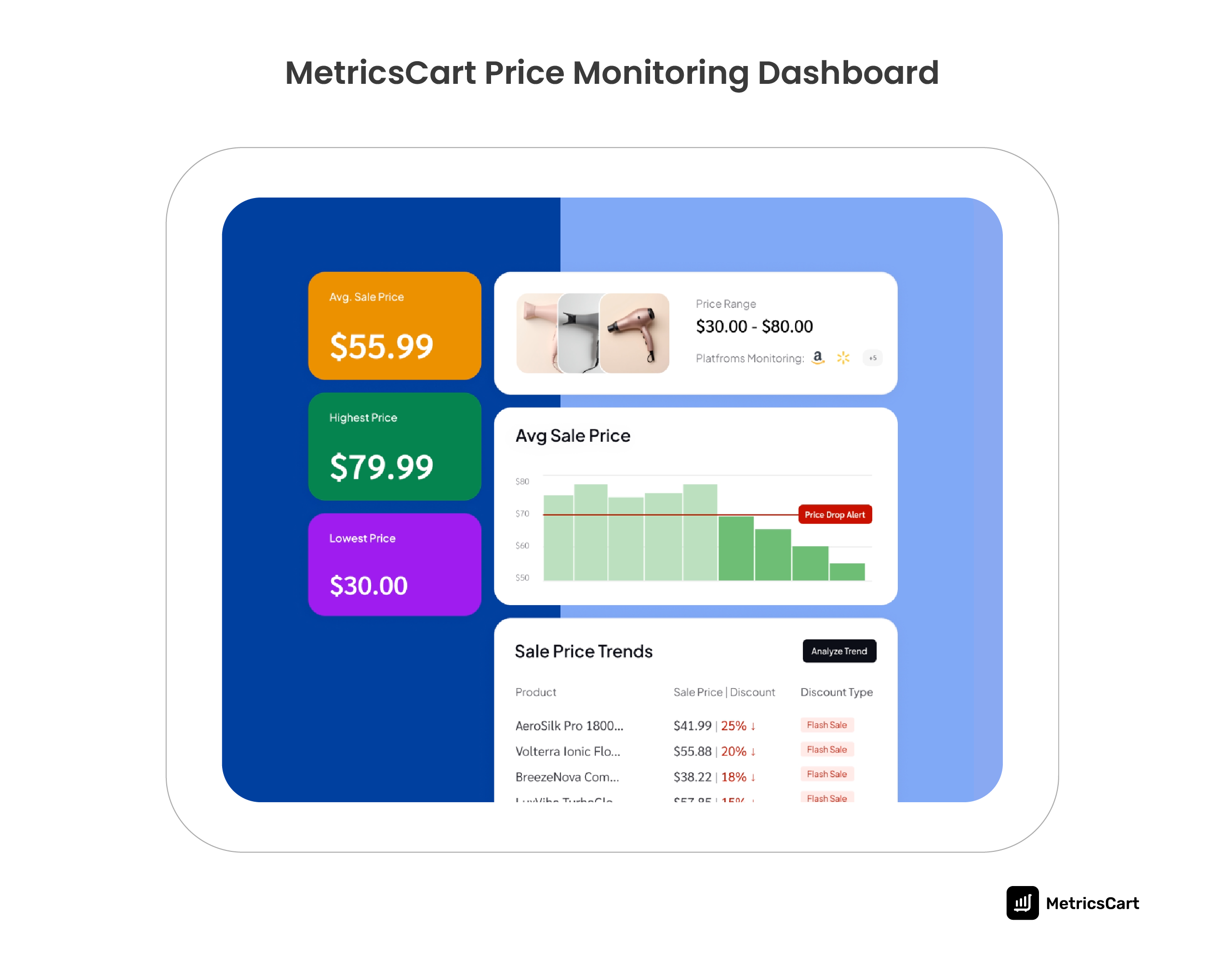
The difference is visibility.
At MetricsCart, we help brands, 3P sellers, and 1P vendors see competitor pricing clearly, spot MAP gaps early, and understand how price changes move across Amazon, Walmart, and DTC.
Monitor and Align Your Amazon Pricing Strategy with Competitor Trends.
FAQs
The best tool is one that provides real-time SKU-level tracking, detects effective prices including coupons, monitors Buy Box changes, and tracks MAP thresholds. Comprehensive platforms offer cross-retailer visibility rather than Amazon-only snapshots.
In high-volume categories, competitor pricing should be monitored continuously or multiple times per day. Manual weekly checks are rarely sufficient.
Price differences directly influence Buy Box ownership when seller metrics are similar. Tracking competitor pricing helps sellers understand why Buy Box share shifts.
MAP compliance protects brand value and prevents price erosion. Early detection of violations prevents broader alignment that can lower category pricing over time.
Brands typically use automated monitoring tools that track SKU-level prices across Amazon, Walmart, and other online retailers. These systems capture list prices, coupons, bundle pricing, and promotions to reveal the effective price shoppers see.