About the Report
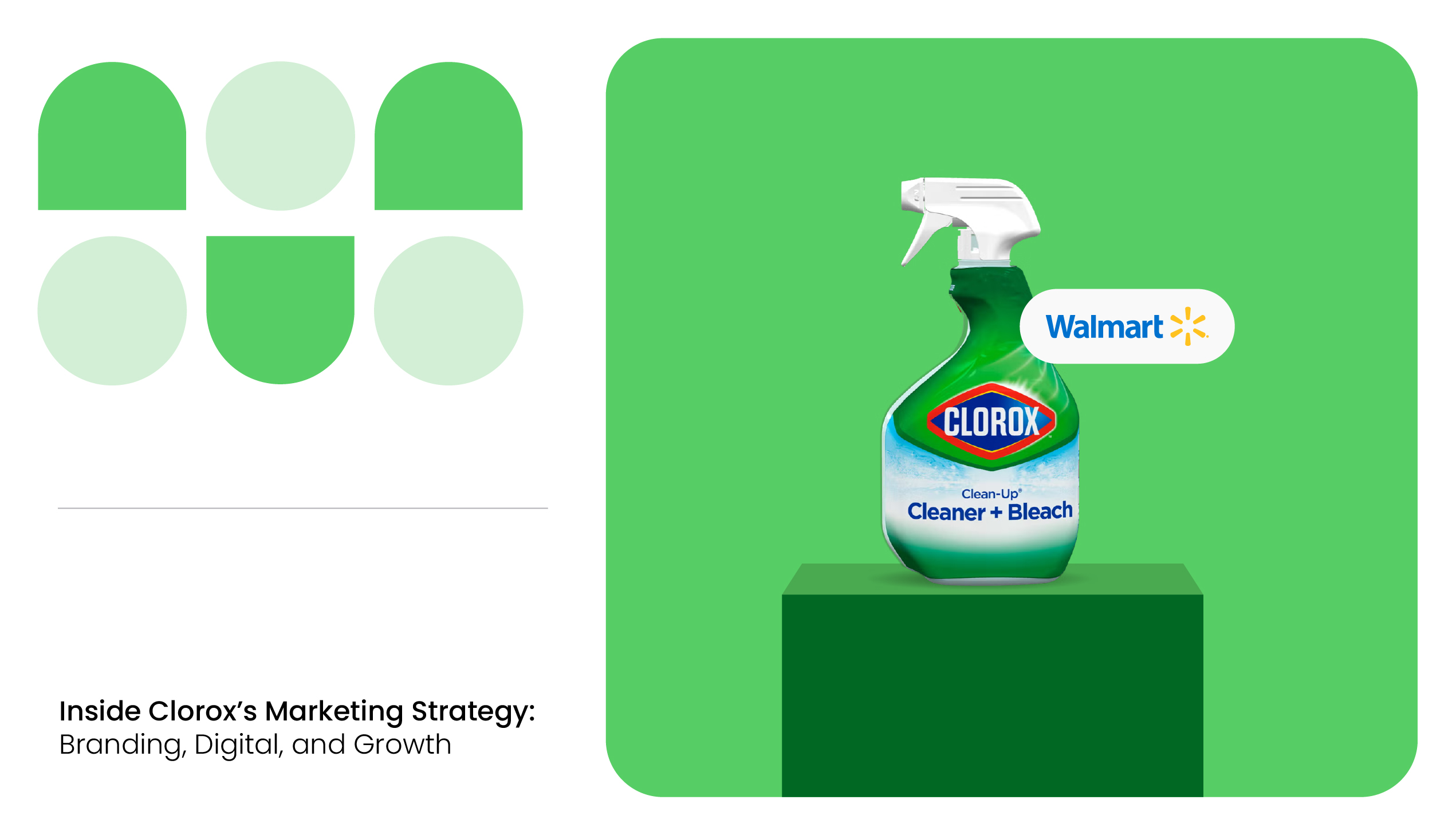
This Digital Shelf Insights (DSI) report examines Clorox’s marketing strategy on Walmart from November 4 to December 2, 2025.
Using the insights from the MetricsCart app, we analyze Clorox’s business model, brand strategy, pricing, consumer engagement, and promotions to understand how the brand performs on Walmart and stays competitive in the digital marketplace.
Introduction
In 2025, the global cleaning products market reached $248.11 billion. And it’s easy to see why. Cleaning now means doing more. It shapes how households think about health, hygiene, and daily living.
Initially, it started with basic products like bleach and surface cleaners. Now, it’s grown to include eco-friendly and time-saving solutions for every household need.
As the category expanded, consumer expectations shifted. People still want strong performance. But they also look for products that feel easier to use and quicker to understand.
After the pandemic, these expectations pushed brands to rethink how products appear on the digital shelf. Refill-friendly formats, clearer ingredient messaging, and simpler packaging became more common.
Clorox, founded in 1913, built its reputation on reliable cleaning performance. Over time, acquisitions like Glad, Burt’s Bees, and Brita expanded their reach beyond bleach. This helped them create a broader household cleaning ecosystem.
Today, Clorox holds a strong position across key cleaning categories. Several products rank #1 or #2 in US retail. Walmart remains a major driver of that presence and visibility.
As digital commerce changes how cleaning products are compared and purchased, Clorox continues to adjust its strategy. The brand focuses on performance, clear positioning, and strong retail execution to stay competitive.
Highlights
- The average price of Clorox products on Walmart is $27.07, with products ranging from $1 toilet cleaning gels to $610 disinfecting wipes, catering to both budget and premium market segments.
- The Clorox Disinfecting Wipes on the go (Fresh Scent) have the most reviews, reflecting strong consumer trust and engagement.
- Clorox maintains an aggressive discounting strategy on bathroom cleaners, with discounts of over 30%, resulting in significant visibility and sales during promotions.
- Weekly sales data show significant variability across Clorox products, with top sellers like the Clorox Clean-Up All-Purpose Cleaner Spray reaching 505K units.
- Clorox’s Walmart portfolio is well-rounded, with 388 products analyzed, ensuring consistent availability and visibility, and averaging 633.09 in weekly sales over the tracked period.
Clorox Marketing Strategy: Why Is It One of the Most Trusted Household Brands
Clorox’s marketing did not grow overnight. The brand started with bleach, but early on, it understood that households were not just buying cleaning products. They were buying peace of mind. That shift shaped how Clorox built its messaging over decades.
Instead of selling “clean,” Clorox sold certainty. Its products were positioned as everyday helpers that make homes feel safer and easier to manage.
Moving from one bleach product to bundled cleaning solutions allowed Clorox to stay present across multiple household moments, not just a single task.
Clorox’s marketing strategy also made the brand a familiar name in US households. Campaigns like “Mama’s Got The Magic of Clorox 2” helped the brand stay top of mind by showing real-life cleaning situations. These campaigns worked because they focused on everyday problems rather than technical product claims.
In 2019, The Clorox Company introduced the IGNITE strategy to guide growth. From a market perspective, this was about staying relevant in a crowded digital shelf. The core factors of this strategy included:
- Fuel focused on efficiency: Clorox ramped up its operations through cost-saving strategies, pricing actions, and tech investments. These changes, including digital upgrades, helped the company recover from the challenges of 2023, resulting in a 560 bps increase in gross margin in Q4 FY23.
- Innovate on new product ideas: Clorox continues to innovate with products like Disinfecting Wipes and eco-friendly lines such as Green Works and EcoClean. These match the growing demand for convenience and sustainability.
- Transform in digital marketing: Clorox has increased its digital marketing efforts over the years, targeting younger and eco-conscious consumers. The brand’s digital spend continues to evolve. Now, they focus on expanding their online presence to reach consumers through more efficient digital channels.
- Execute fast testing of campaigns: Clorox employs fast-paced, agile testing methods to refine marketing campaigns. For instance, conducting quick consumer research (often within 7 days) to gather insights helps Clorox adapt and optimize its campaigns for maximum impact.
In addition, sustainability became a clear part of the brand story. Goals such as cutting virgin plastic use by 50% by 2030 and moving toward fully recyclable packaging gave Clorox a stronger reason to stand out online.
The pandemic changed the category overnight. Disinfecting wipes and sprays moved from occasional purchases to weekly essentials. Clorox benefited because shoppers already trusted the brand; when demand surged, they chose what felt familiar rather than experimenting with new labels.
Partnerships and category expansion also helped Clorox remain visible beyond the cleaning aisle. Collaborations with brands and organizations, including those with United Airlines, demonstrated how Clorox positioned itself within the broader hygiene ecosystem.
Today, Clorox’s marketing strategy works because it clearly connects three things: strong product performance, simple messaging, and a consistent presence across retail platforms. On Walmart and other marketplaces, that balance helps the brand remain easy to recognize and choose.
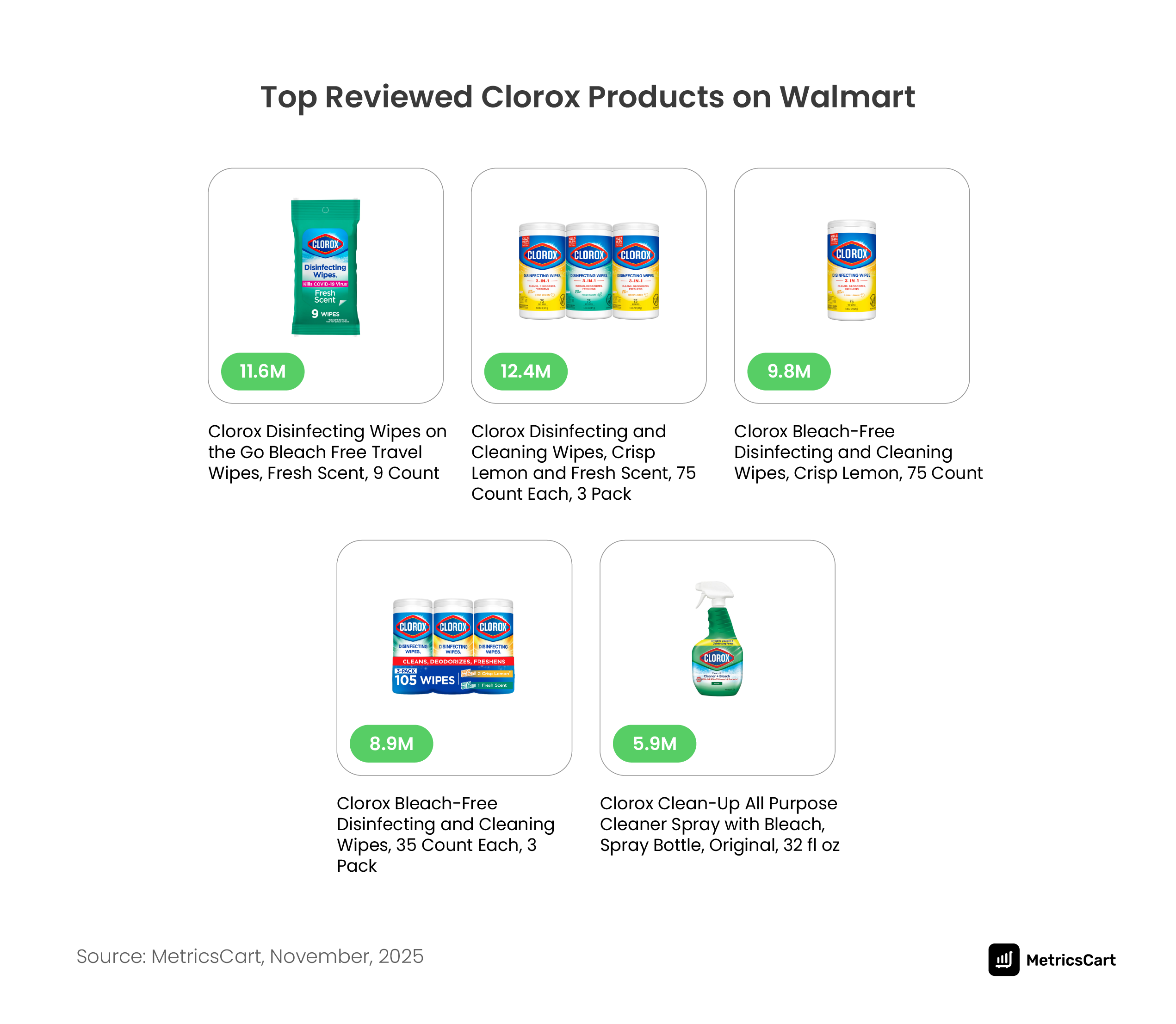
The Clorox Disinfecting Wipes (Fresh Scent) are the most-reviewed product on Walmart, with 13.6 million reviews. This volume of reviews underscores the brand’s ability to engage a broad customer base, indicating a strong preference for convenient disinfecting solutions.
The success of these wipes can be attributed to several factors:
- Post-Pandemic Demand: The surge in demand for disinfecting wipes during and after COVID-19 boosted consumer engagement. Wipes have become essential for maintaining cleanliness at home and on the go, with Clorox a trusted name in this category.
- Convenience and Portability: Clorox Disinfecting Wipes offer portability, making them ideal for families and professionals. The compact packaging and single-use design make it easy for consumers to keep them handy, driving repeat purchases.
- Brand Trust: Consumers have a long history of relying on Clorox for disinfecting, especially given its long-standing reputation for germ-killing efficacy. The trust in the Clorox brand is evident in the product’s high number of reviews and frequent repeat purchases.
Following Clorox Disinfecting Wipes, products like Clorox Clean-Up Spray and Toilet Bowl Cleaner also appear on the top-reviewed list. The Clorox Clean-Up All-Purpose Cleaner Spray, which ranked in the top 5 with 5.9 million reviews, is popular for its multi-surface versatility.
This shows that while convenience products like wipes dominate, multi-use solutions also attract substantial consumer attention.
MetricsCart app findings also reflected that weekly pricing patterns show little fluctuation, indicating that Clorox maintains a consistent shelf strategy rather than experiencing repeated price swings. Stable assortment and pricing help reduce shopper uncertainty, which is critical for repeat-use categories like cleaning.
READ MORE | Want to Know About Other Popular Categories on Walmart? Check out Digital Shelf Insights: Women’s Health Category at Walmart.
Clorox Pricing Strategy: Covering Everyday and Bulk Buyers
From the MetricsCart app insights, it is evident that Clorox uses a wide range of prices to serve multiple market segments, including both everyday consumers and bulk buyers. This strategy allows Clorox to remain visible and relevant across a diverse customer base while also sustaining its market leadership in the cleaning industry.
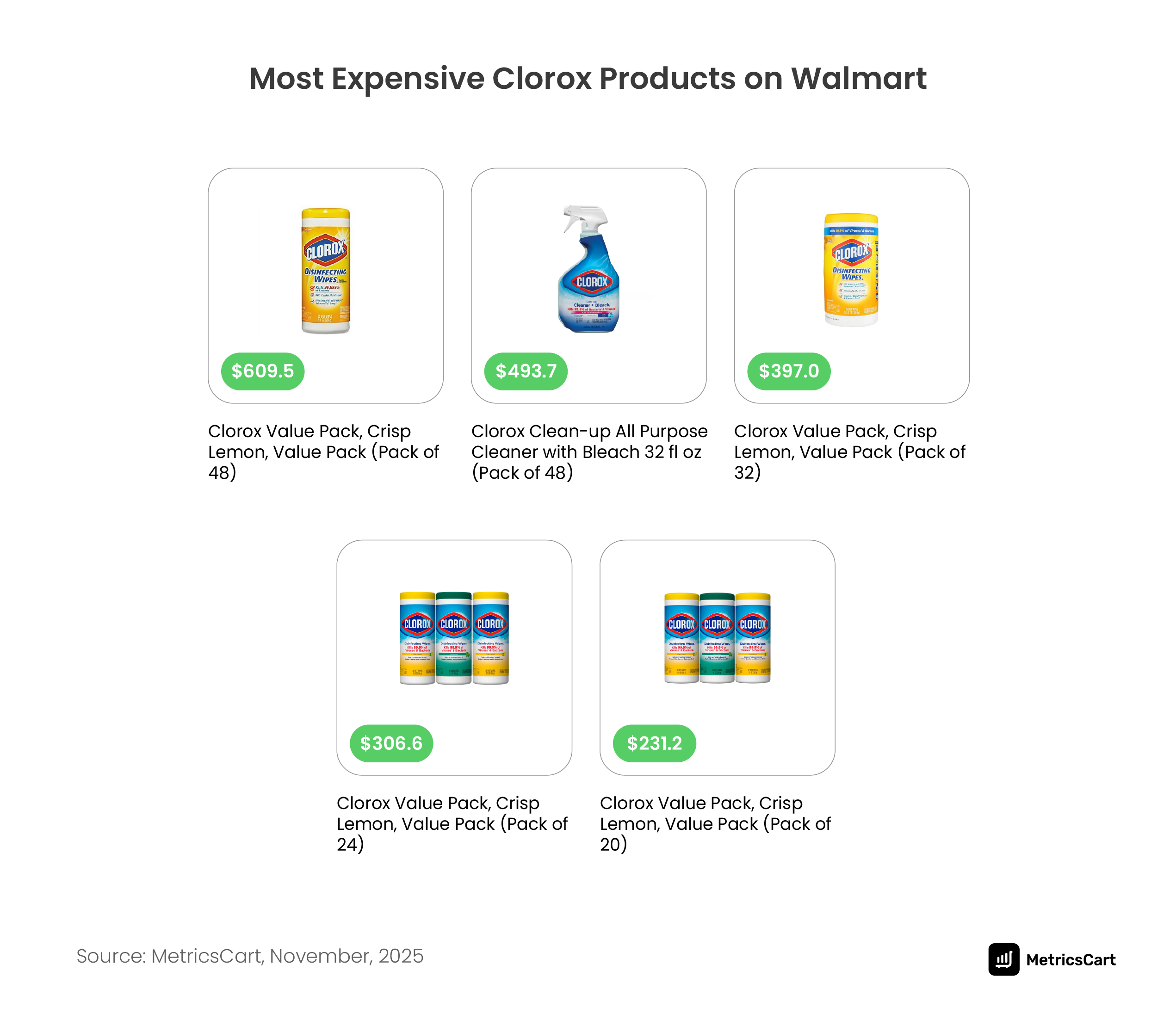
Clorox Clean-Up All-Purpose Cleaner Spray ($493.7) and Clorox Value Pack – Crisp Lemon ($397.0) lead the high-end segment in price.
These higher-priced products are positioned as value-driven purchases, offering long-term savings per use, making them particularly attractive to businesses or larger households that use cleaning supplies frequently.
The larger pack sizes ensure customers get better value per unit, a key driver of sales for Clorox in the bulk-buy market. This pricing structure positions Clorox as a practical, cost-effective choice for consumers.
The availability of these bulk options in the Walmart marketplace further solidifies Clorox’s position, as businesses and resellers can make bulk purchases through a trusted platform that meets their regular cleaning needs. This helps Clorox extend its reach in the commercial segment, where price sensitivity and volume are crucial to purchase decisions.
Clorox’s mid-range products, such as multi-surface sprays and refill packs, play a pivotal role in driving consistent sales. These products offer a strong balance between price and performance, meeting the need for reliable, everyday cleaning solutions.
Consumers perceive them as a cost-effective choice for regular use, making them a key part of Clorox’s strategy to capture a broad market. Mid-range items like these encourage habitual purchases, ensuring that consumers keep returning for refills.
This repeat-buy behavior not only ensures ongoing sales but also strengthens Clorox’s presence in homes, making it a go-to brand for consistent cleaning needs.
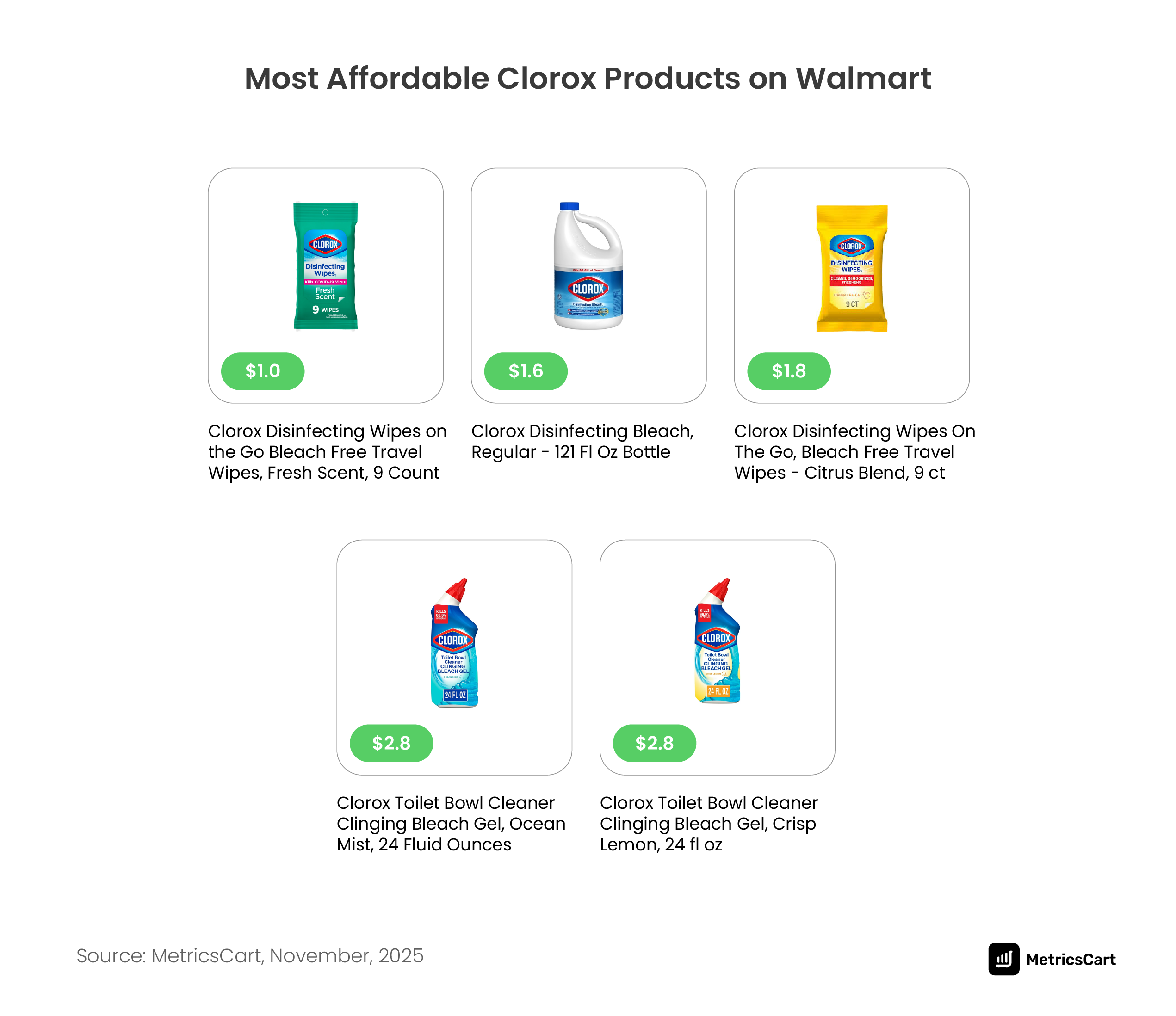
Clorox’s low-cost items, like Toilet Cleaning Gels and smaller Disinfecting Wipes priced between $1 and $3, serve as powerful entry points for the brand. These products are designed to be easily accessible to a broad consumer base, particularly those on a budget or new to the brand.
By offering high-quality yet affordable cleaning solutions, Clorox reduces the barrier to entry, making it more likely that consumers will choose their products in-store or online.
From a market-behavior perspective, these low-cost items drive volume by encouraging frequent, smaller purchases. Consumers view these products as everyday essentials, which makes them more likely to replenish their stock regularly.
Moreover, the pricing strategy of these items also facilitates impulse buys. Low-cost products are often purchased on the spot because they don’t require much decision-making and their price point encourages quick, repeat purchases.
This is especially important in a high-volume retail environment like Walmart, where consumers often opt for convenient, cost-effective solutions for basic cleaning tasks.
Top Weekly Sellers: Why Clorox Clean-Up Spray Leads on Walmart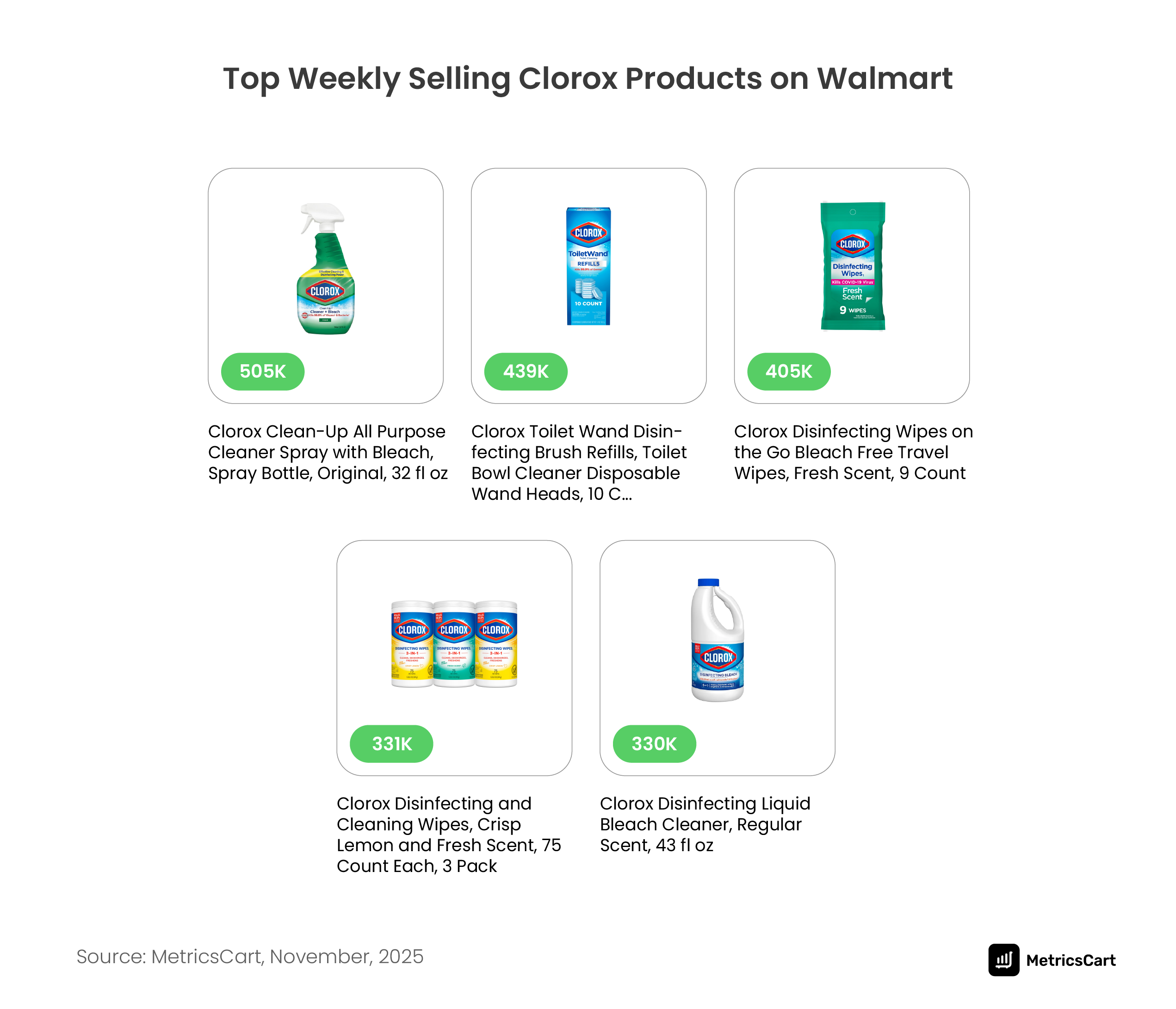
Clorox Clean-Up All-Purpose Cleaner Spray ranks first with nearly 505K weekly units, and its leadership comes from its true all-purpose positioning.
Instead of forcing shoppers to choose between kitchen, bathroom, or disinfectant sprays, this SKU covers multiple cleaning tasks in a single purchase. On Walmart, where shoppers often build large baskets quickly, a single spray that handles grease, stains, and germ-kill reduces comparison time and increases conversion.
The bleach-based formula also plays a role. Consumers associate it with stronger cleaning results, which matters for households balancing everyday messes with hygiene concerns. This mix of versatility and perceived strength makes the product a default choice rather than a niche cleaner.
Behind it, Clorox ToiletWand Refills (10 ct) show strong weekly demand because refill systems drive repeat buying once the cleaning tool is adopted. Their ranking reflects how Walmart shoppers prefer efficient, touch-free cleaning solutions that reduce effort in routine tasks, such as toilet cleaning.
Clorox Disinfecting Wipes On-the-Go travel wipes also remain near the top 3, driven by portability and frequent replenishment. Smaller wipe packs align with quick trips and everyday carry habits, making them a steady performer even when larger cleaning formats dominate overall volume.
Weekly trends also show that strong reviews do not always translate into immediate sales lifts. Even when review volume peaked, total weekly sales declined, suggesting that factors like promotion timing and price visibility play a stronger role in short-term demand shifts.
Discounting Strategy: Why Bathroom Foam Cleaners Lead Promotions
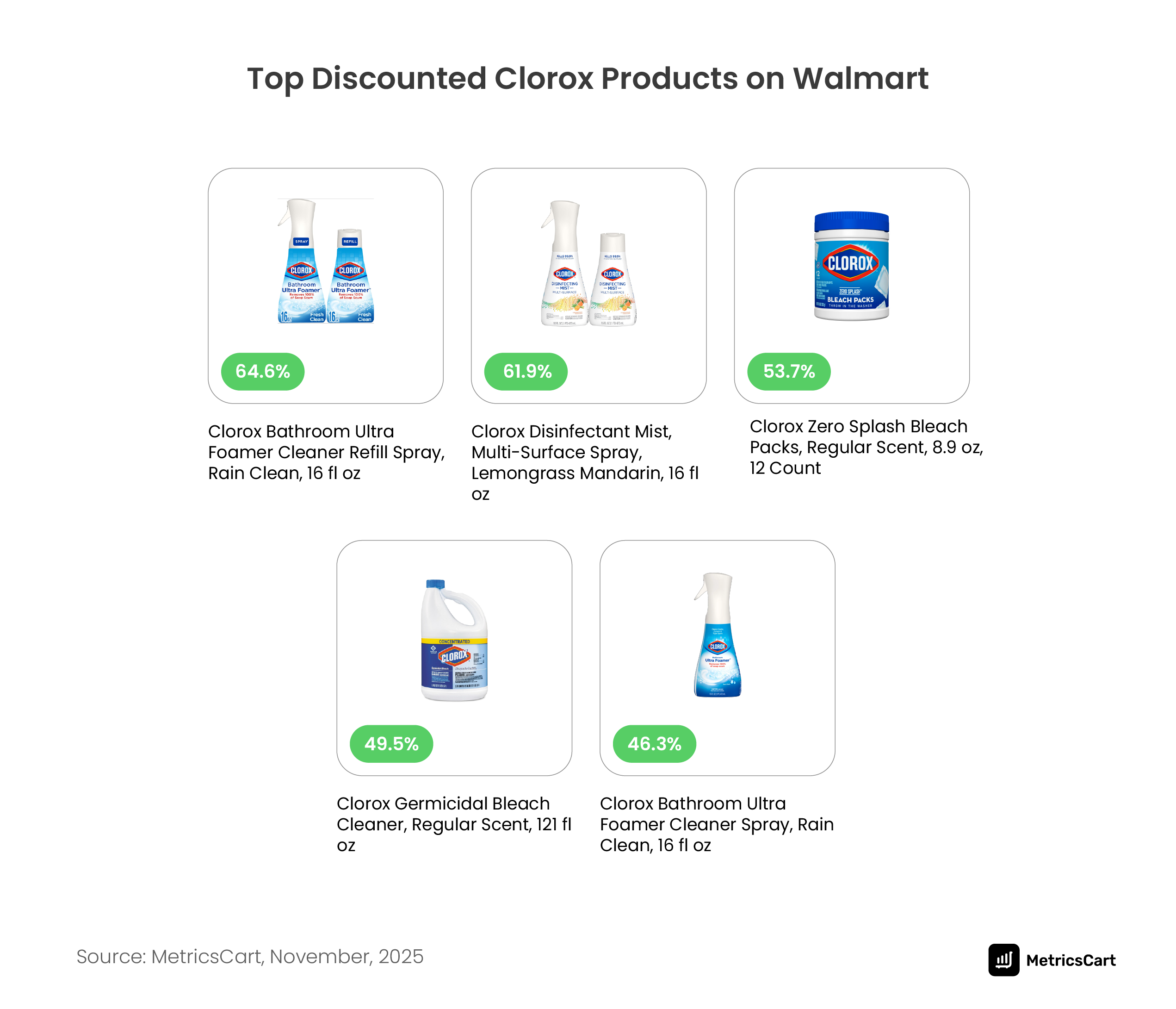
Clorox Bathroom Ultra Foamer Cleaner Spray stands out with discounts up to 64.6%, signaling a clear push in the bathroom-cleaning segment.
Foam cleaners often compete with private labels and lower-priced alternatives at Walmart. Here, deeper discounts help Clorox secure shelf visibility and drive faster conversion in a highly price-sensitive category.
The foam format also explains why this SKU leads promotions. Bathroom cleaning is a frequent, repetitive task, but shoppers often switch brands based on price.
By heavily discounting a specialized spray, Clorox increases trial and encourages households to move from generic cleaners to branded solutions that promise stronger performance on soap scum and hard-water stains.
Other discounted products, such as Clorox Disinfecting Wipes and Multi-Surface Cleaner Sprays, typically fall in the 35–62% range. These SKUs already have strong organic demand, so promotions here serve more as basket expansion than as discovery, encouraging shoppers to add extra units during routine restocking.
Even standard bleach cleaners see markdowns of 37–50%, reflecting a defensive pricing strategy. Bleach is a core category where price comparison is common on Walmart, and periodic discounts help Clorox maintain volume leadership while protecting long-term brand preference.
Clorox Business Model: What “More Than Clean” Really Means
Clorox builds trust by staying consistent across product performance, pricing, and messaging. Instead of changing direction often, the brand focuses on clear cleaning benefits, familiar formats, and a steady shelf presence that shoppers quickly recognize.
For e-commerce teams looking to strengthen their own digital shelf strategy, Clorox’s approach highlights several practical lessons:
- Lead with one clear job-to-be-done: Products that address multiple cleaning needs in a single purchase tend to convert faster. Shoppers respond better to simple, versatile solutions than to complex product choices.
- Design for repeat behavior, not one-time sales: Refill systems and refillable formats help create steady demand. When products fit into a routine, they stay in the cart longer.
- Use tiered pricing to reach different shopper mindsets: entry-level items encourage impulse purchases, while bulk or value packs serve households with higher usage. A layered price structure helps expand reach without diluting brand value.
- Focus promotions where competition is tightest: Deep discounts work best in crowded subcategories. Strategic markdowns can improve visibility without relying on constant price cuts across the entire range.
- Keep digital shelf messaging clear and consistent: Simple benefit-driven titles and visuals reduce hesitation during fast browsing. Clear communication helps shoppers understand value within seconds.
For brands on Walmart and other marketplaces, success depends less on shelf space and more on repeat-purchase design, and how quickly products convert in search.
MetricsCart helps brands track digital shelf signals early, so momentum becomes clear before it impacts sales.
From pricing changes and consumer review trends to category movement and promotion strategies, MetricsCart gives your team the visibility needed to compete and grow online.
Disclaimer: MetricsCart is the exclusive owner of the data used in these Digital Shelf Insights reports. Any third-party usage must include proper credit to the source.
Ready to Win the Cleaning Category on Walmart?