Highlights
- Functional beverages are shifting from general wellness claims to specific consumer needs like hydration, gut health, energy, protein, and mood support.
- Low-sugar beverages have become a baseline expectation, with consumers prioritizing taste, trusted ingredients, and product quality alongside nutrition.
- Taste, flavor innovation, and ready-to-drink convenience are becoming major differentiators across functional and non-alcoholic beverage categories.
- Flexible drinking habits, including zebra drinking, are expanding consumption occasions beyond traditional alcohol replacement.
- Digital shelf signals like bestseller rankings, reviews, pricing, search visibility, and assortment changes help brands spot emerging beverage trends before competitors do.
Grand View Research reports that the global non-alcoholic beverages market, valued at $1391.4 billion in 2025, will grow from $1488.6 billion in 2026 to $2551.1 billion by 2033.
Citing this massive opportunity, beverage conglomerates like Coca-Cola and PepsiCo have begun expanding their portfolios into the non-alcoholic beverage category through new product launches and acquisitions. Meanwhile, more challenger brands are entering the market almost every day, using sharper positioning and consumer trends to win their own space.
So, how can a brand stand out and succeed in such a crowded market? The answer starts with understanding where consumer demand is heading. Brands that identify emerging trends early can make smarter decisions around product innovation, positioning, pricing, and digital shelf strategy before the competition catches up.
This article explores the top 5 non-alcoholic beverage trends shaping 2026 and what brands need to do to stay ahead.
Top 5 Non-Alcoholic Beverage Trends of 2026
The non-alcoholic beverage category is evolving rapidly, driven by consumer demand for health, innovation, and premium experiences. But trends don’t just appear on social media. They show up in marketplace behavior through bestseller rankings, product launches, reviews, pricing, and assortment expansion.
Using the MetricsCart digital shelf analytics platform, we analyzed Amazon bestseller listings across US and UK grocery categories, along with category-specific beverage reports, to understand how these trends translate into actual consumer purchases.
1. Functional Beverages Are Moving From “Healthy” to Specific Need States
Consumers increasingly expect beverages to do more than provide refreshment. FMI’s 2026 Power of Beverage report found that function is becoming a primary purchase driver, with shoppers looking for beverages that offer benefits such as hydration, energy, protein, digestive health, and mood support. The report also found that beverage choices are increasingly tied to specific occasions and personal needs.
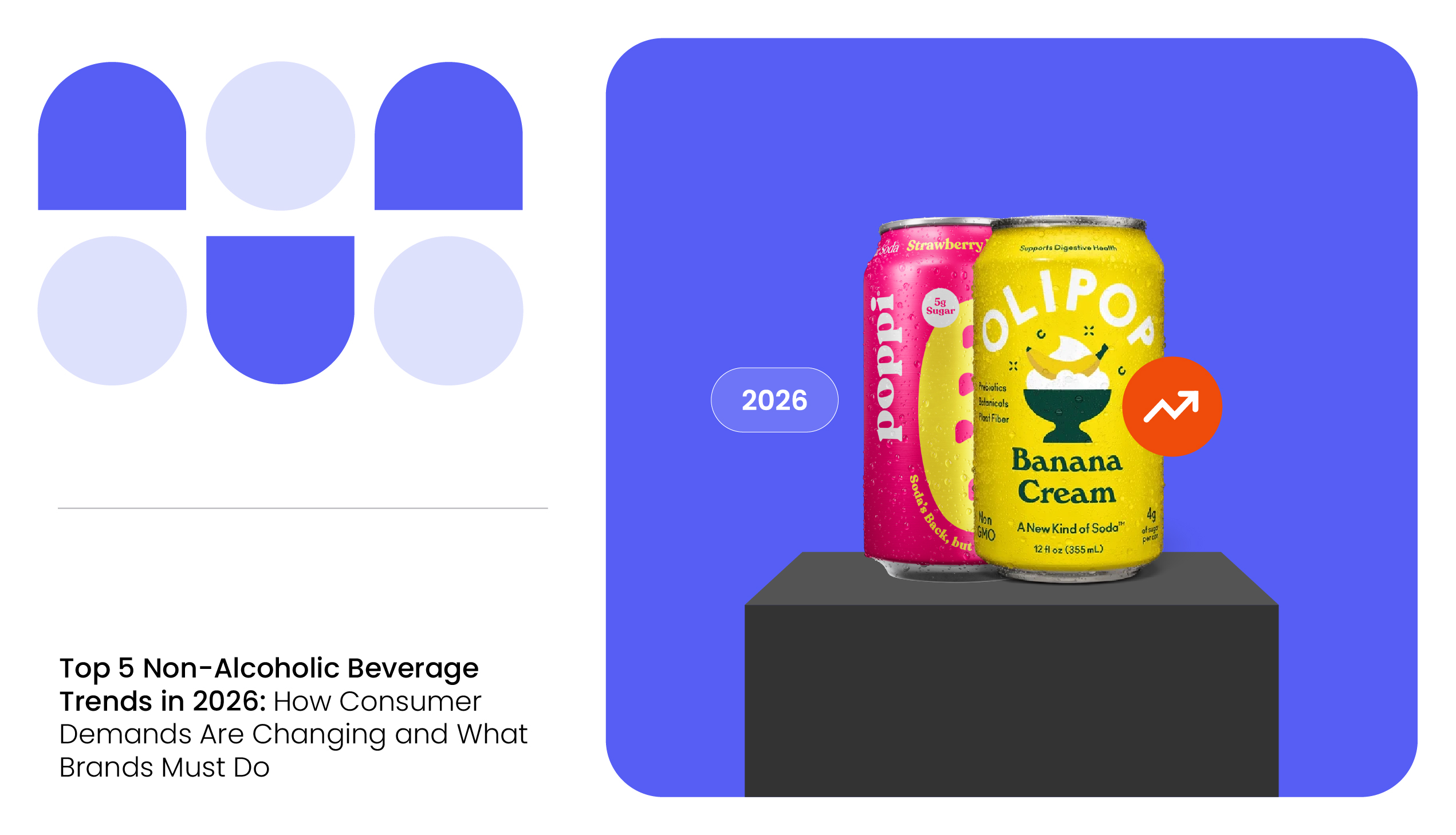
You can see this shift across the category. Brands like Olipop and Poppi have built their entire proposition around gut health through prebiotic sodas. Liquid I.V. owns hydration, Celsius owns energy and performance, and David has expanded high-protein nutrition into ready-to-drink beverages.
|
Consumer need |
Beverage positioning |
|
Hydration |
Electrolytes and functional hydration |
|
Gut health |
Prebiotics and probiotics |
|
Energy |
Functional energy drinks |
|
Nutrition |
Protein beverages |
|
Mood and focus |
Adaptogens and nootropics |
Also, according to MetricsCart’s Amazon Grocery Bestseller Report, functional beverage brands like Poppi, Liquid Death, Prime Hydration, Gatorade, and Red Bull are among the top-performing brands on Amazon US, competing directly with traditional beverage giants rather than occupying a niche wellness category.
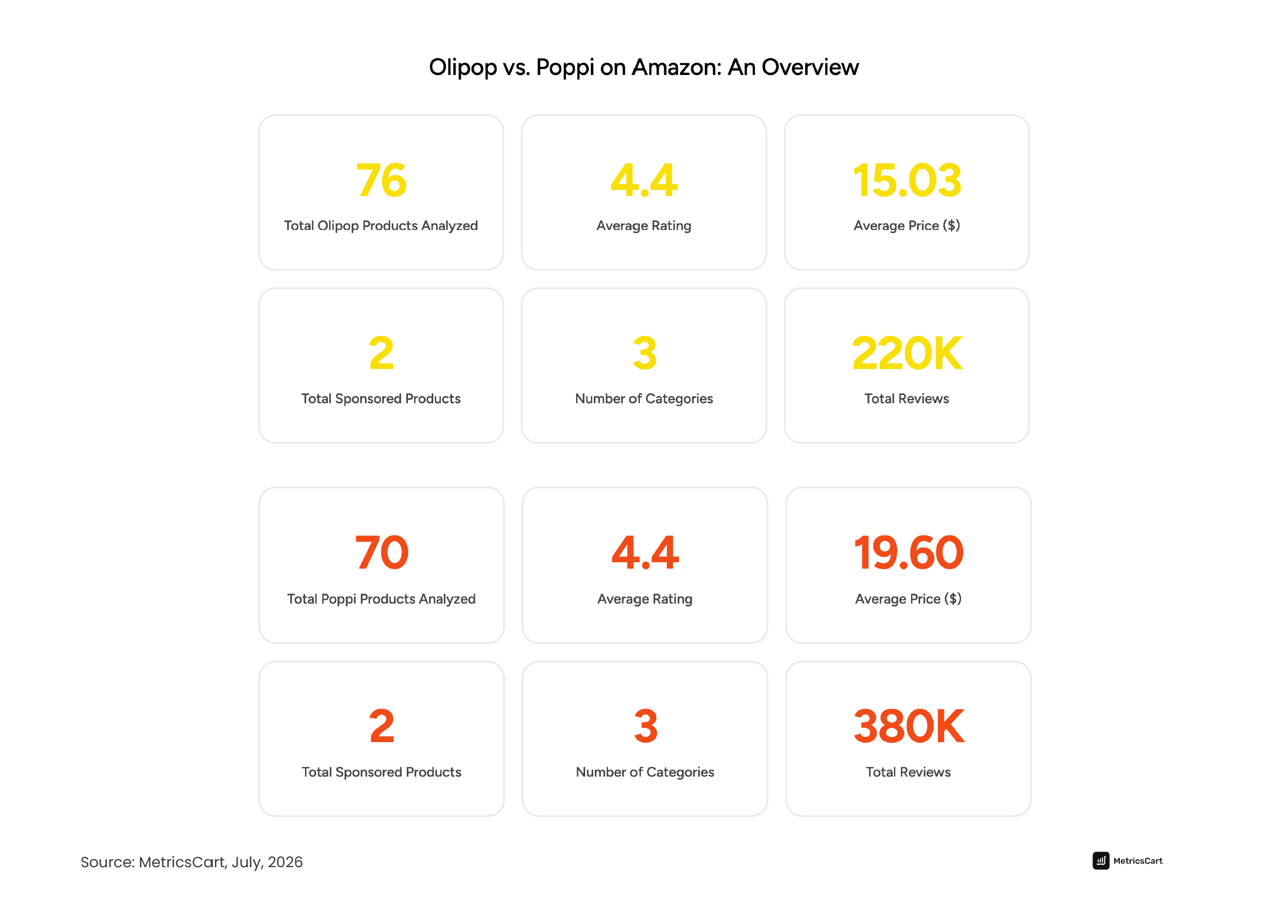
The Olipop vs Poppi report by MetricsCart reinforces how quickly this category is growing. During the July 2026 tracking period:
- Poppi generated approximately 3.34 million monthly Amazon sales.
- Olipop generated approximately 1.55 million monthly Amazon sales.
- Both brands maintained an average 4.4-star rating, indicating that consumers reward products that combine functionality with taste.
For NPD teams, this means asking a more specific question than “What functional beverage should we launch?” The better question is “Which consumer need is underserved, and can our product solve it convincingly?”
READ MORE | Bestselling Grocery brands on Amazon UK in July 2026
2. Low Sugar Is Becoming a Baseline Expectation
Health-conscious consumers are paying greater attention to what goes into their beverages, particularly sugar and calories. This is pushing brands beyond traditional “diet” positioning toward products that deliver taste and enjoyment with less sugar.
Low-sugar and zero-sugar products are appearing across categories including soda, energy drinks, hydration, ready-to-drink coffee, and functional beverages. But reducing sugar alone does not guarantee success. Consumers still expect good taste, recognizable ingredients, and a product that delivers on its promise.
FMI’s 2026 Power of Beverage research mentioned above highlights this balance as well. While 61% of shoppers define good value through low price, 46% point to taste, 40% to trusted quality, and 39% to a trusted brand. For beverage brands, that means a lower price or lower sugar content cannot compensate for a product consumers do not enjoy.
This means brands must treat sugar reduction as part of a broader product proposition. The opportunity is not simply to make beverages lower in sugar, but to deliver a product that combines better nutrition with taste and a clear reason to buy.
3. Taste, Flavor, and Convenience Are Becoming as Important as Function
Functional claims can attract attention, but consumers still need to enjoy the product. As more brands enter functional and non-alcoholic categories, taste and sensory experience are becoming important points of differentiation.
2026 beverage industry trends point toward more sophisticated flavor profiles, recognizable cocktail-inspired flavors, botanical combinations, and ready-to-drink formats.
This matters particularly for non-alcoholic beer, wine, spirits, and mocktails. Consumers increasingly expect these products to provide an enjoyable drinking experience rather than simply reproduce the appearance of an alcoholic beverage.
Convenience also supports this shift. Ready-to-drink mocktails and zero-proof cocktails can fit social occasions without requiring consumers to purchase several ingredients or prepare a drink themselves.
Brands therefore need to balance three elements:
- A credible functional or lifestyle benefit,
- A flavor profile that encourages repeat consumption, and
- A format that fits naturally into the intended occasion.
READ MORE | Digital Shelf Insights: Walmart Beverages Category Analysis Report
4. Non-Alcoholic Drinks Are Becoming Part of Flexible Drinking
The non-alcoholic drinks market no longer depends entirely on consumers who want to stop drinking alcohol. Many consumers now move between alcoholic and non-alcoholic drinks depending on the occasion.
NIQ’s 2026 research illustrates this behavior clearly. It found that 47% of on-premise visitors mix alcoholic and non-alcoholic options during the same occasion, while 93% of non-alcohol buyers also purchase alcohol.
This behavior has helped popularize the idea of zebra striping, also known as zebra drinking, where consumers alternate between alcoholic and non-alcoholic drinks rather than committing exclusively to either category.
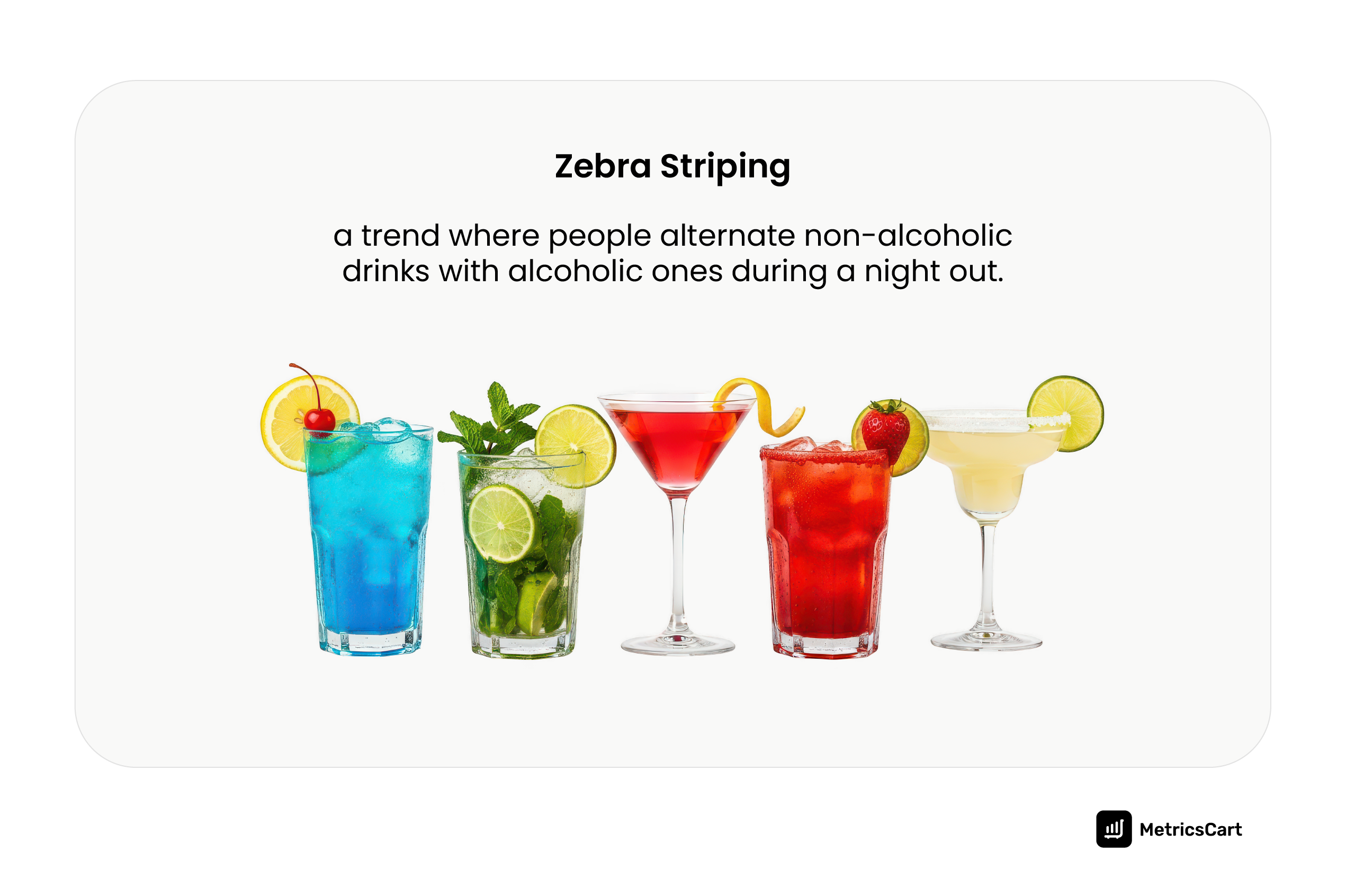
That shift creates more opportunities for NA beverages across dinners, social gatherings, weekday routines, fitness occasions, driving occasions, and nights when consumers simply want to moderate their alcohol intake.
For brands, the implication is straightforward. Compete for occasions rather than treating every consumer as someone looking for an alcohol replacement.
A sophisticated zero-proof cocktail can serve a dinner occasion, while an electrolyte drink can fit a workout or recovery occasion. The product does not need to imitate alcohol to earn the same consumer’s attention.
READ MORE | What’s Brewing on Amazon: A Data Deep Dive into Non-Alcoholic Beverages
5. The Digital Shelf Is Becoming a Trend-Detection Engine
Consumers, especially Gen Z and those after, discover beverages through search, marketplaces, social media, retailer websites, and product reviews. That makes the digital shelf more than a sales channel. It can also provide early signals about changing demand.
ListeningMind’s 2026 analysis identified more than 127,000 keywords related to non-alcoholic beverages from the US, generating approximately 1.72 million monthly searches. Its analysis also identified significant growth in searches related to non-alcoholic craft beer.
FMI’s research similarly highlights the growing influence of e-commerce and social discovery on beverage purchases, particularly among younger consumers.
So, to keep up with the trend and stay updated, brands must treat the digital shelf as a live consumer-intelligence system.
Monitor search trends alongside bestseller movement, reviews, assortment changes, pricing, and availability to distinguish viral moments from sustained marketplace demand as:
- Bestseller rankings reveal emerging category winners before traditional retail reports.
- Product launches signal where competitors are investing.
- Review volume indicates growing consumer trust.
- Pricing trends show whether premium positioning is holding.
- Assortment and Prime availability reveal how brands expand demand across more shopping occasions.
Turning Beverage Trends Into Business Decisions
Brands should validate every beverage e-commerce trend before committing significant resources to product development or repositioning. A practical framework is:
Consumer signal → search demand → marketplace assortment → competitor activity → consumer reviews → product decision
MetricsCart digital shelf analytics can help teams monitor the signals throughout that process. Brands can track search visibility, pricing, promotions, ratings, reviews, assortment, availability, and product content across marketplaces. These insights can be used to decide whether to launch a new functional SKU, reformulate an existing product, change its positioning, adjust pricing, improve product-page content, or expand marketplace distribution.
The key is to treat trends as hypotheses that require evidence. A beverage trend becomes commercially meaningful when consumer interest translates into measurable marketplace activity.
See the next beverage opportunity before your competitors do with MetricsCar.
FAQs
The biggest trends include functional beverages built around specific needs, low-sugar formulations, greater demand for taste and convenience, flexible drinking occasions, and digital-first beverage discovery. Together, these trends show that consumers are choosing beverages based on specific health goals, occasions, preferences, and lifestyles.
The market is growing as consumers seek more choices beyond traditional alcoholic and sugary beverages. Demand for functional benefits, lower sugar, convenient formats, mindful drinking, and premium experiences is creating new consumption occasions. At the same time, social media, e-commerce, and digital marketplaces are making it easier for emerging brands to reach consumers and compete with established beverage companies.
Functional sodas, electrolyte and hydration drinks, energy beverages, protein drinks, zero- and low-sugar beverages, and non-alcoholic beer, wine, and spirits are among the categories attracting significant consumer and brand interest in 2026. Growth varies by market, making regional search, sales, assortment, and marketplace data important when evaluating individual categories.
Beverage brands should track KPIs across sales, search visibility, share of search, pricing, promotions, ratings and reviews, assortment, availability, and product content. Looking at these metrics together helps brands understand how products are performing, why performance is changing, and where competitors may be gaining an advantage.
Ratings and reviews influence consumer trust, product consideration, and marketplace visibility. For beverage brands, review analysis can also reveal recurring feedback about taste, flavor, packaging, ingredients, and functional benefits. Tracking review volume, ratings, sentiment, and recurring themes helps brands identify both product opportunities and potential issues that could affect sales.
Brands should benchmark competitors across price, promotions, search visibility, assortment, product launches, ratings, reviews, availability, bestseller rankings, and product content. Comparing these signals over time provides a more complete view of competitive performance than looking at sales or market share alone. It can also reveal where competitors are gaining visibility, launching new products, or responding to emerging consumer demand.