Walmart’s marketplace has over 200,000 active sellers as of 2025, a 30% rise in just five months. At this pace, the seller count could easily cross 300,000 by year-end. While that’s great news for Walmart’s expansion, it also means tougher competition and higher chances of price instability.
For brands, this surge demands greater vigilance over how their products are priced and represented online. Even one unauthorized discount can trigger a wave of price drops that erode margins, upset distributors, and weaken brand perception.
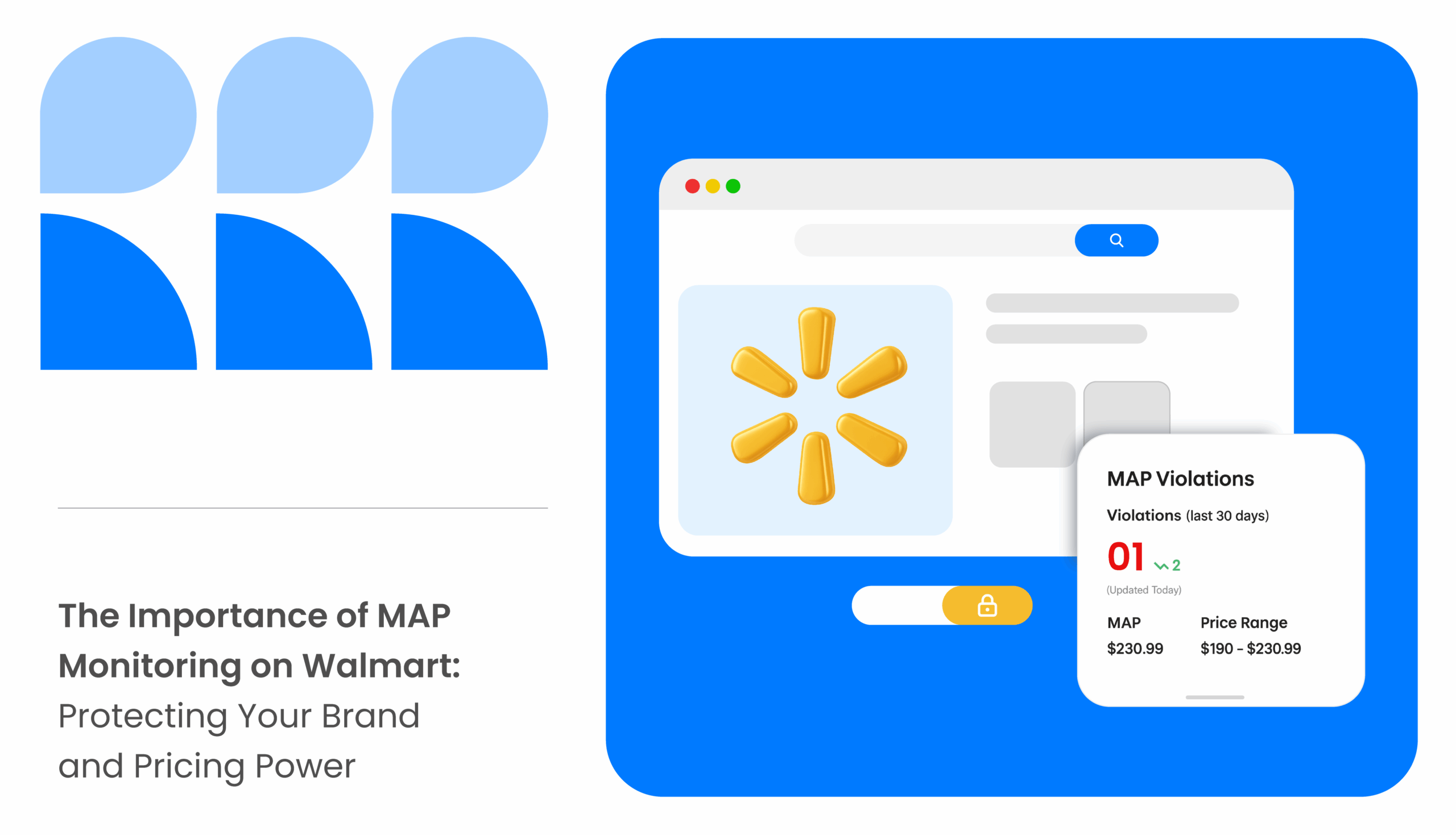
That’s where the importance of MAP monitoring on Walmart comes in. By tracking pricing in real time, detecting violations, and identifying unauthorized sellers, MAP monitoring tools help brands maintain control of their pricing power and protect their long-term brand value in an increasingly crowded marketplace.
This article explores MAP policies CPG brands follow, why MAP monitoring matters on Walmart, and more.
Understanding the MAP Policies of CPG Brands
Consumer Packaged Goods (CPG) brands operate in one of the most complex marketplace environments on Walmart. Their products move through a long chain of distributors, wholesalers, authorized retailers and third-party marketplace sellers, each with its own pricing strategy. Without proper controls, this creates price instability that can quickly spread across channels.
To maintain a consistent price floor and protect long-term brand value, most leading CPG brands use well-defined Minimum Advertised Price (MAP) policies.
A typical MAP policy outlines:
- The lowest publicly advertised price allowed for each SKU.
- Where pricing can appear, such as product detail pages, storefronts or bundles.
- Which promotional periods are authorized.
- How coupons, loyalty discounts or temporary offers may be displayed.
- The difference between genuine promotions and unauthorized price cuts.
- What enforcement steps follow a violation.
MAP policies do not control the actual selling price. They control the publicly displayed price so that the product’s perceived value is not weakened by sudden undercutting.
Large CPG manufacturers such as Procter & Gamble, Unilever and Johnson & Johnson consistently apply MAP policies across marketplaces to prevent unauthorized sellers from discounting high-volume SKUs in personal care, beauty, health and household essentials. These categories are especially sensitive to pricing signals. When shoppers see a price that is unusually low, they often assume the product is expired, grey-market inventory or counterfeit.
For CPG brands built on trust and repeat purchase behavior, MAP is not just a pricing rule. It is a safeguard for brand reputation, retail relationships and long-term pricing power.
READ MORE | 7 Reasons Why MetricsCart Is the Best for MAP Monitoring & Enforcement: A Brand’s Perspective.
Why MAP Monitoring Matters on Walmart?
The rise of online marketplaces and e-commerce platforms has made it more challenging for brands to control pricing and protect their value.
Without effective MAP monitoring, retailers and manufacturers risk seeing their products discounted beyond acceptable limits, which can erode brand equity and undermine profitability.
MAP monitoring software offers a powerful solution to this issue, helping businesses track and enforce pricing rules across various platforms. These tools also provide insights into competitor pricing strategies, allowing brands to stay competitive while safeguarding their reputation.
Furthermore, these tools help brands identify unauthorized sellers and marketplaces that violate MAP policies, taking the necessary steps to protect their pricing integrity.
Implementing a MAP monitoring tool is vital for brands on Walmart for several reasons:
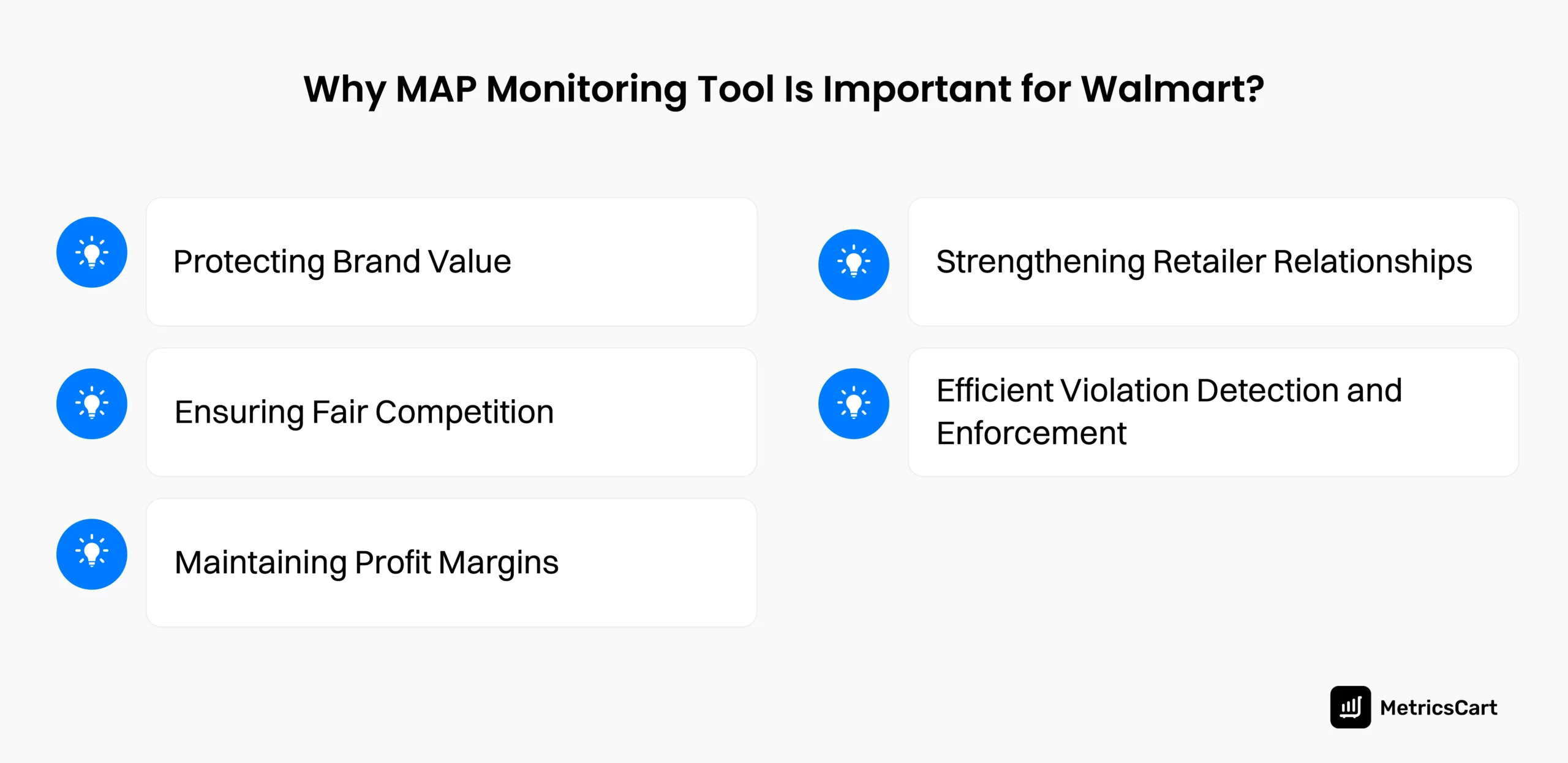
Protecting Brand Value
On Walmart’s platform, where thousands of third-party sellers may list the same product, inconsistent pricing can easily damage a brand’s premium image.
MAP monitoring tools for Walmart allow sellers to track the listed prices of their products across multiple listings, ensuring that their MAP policies are respected.
Real-time alerts enable quick responses to violations, ensuring that pricing consistency is maintained. This is essential for preserving a brand’s value in Walmart’s highly competitive marketplace.
Ensuring Fair Competition
Walmart hosts a range of sellers, from large, established companies to smaller brands. Without MAP enforcement, large sellers with deep discounting power could dominate by undercutting smaller sellers, making it hard for them to compete.
MAP monitoring tool for Walmart allows sellers to ensure that pricing remains fair and compliant with their MAP rules. This encourages a more balanced competitive environment, allowing smaller sellers to compete on quality and service rather than solely on price.
Maintaining Profit Margins
Sellers at Walmart often face competition from numerous other vendors who sell the same or similar products. If MAP violations are not addressed, sellers risk a downward spiral of constant price cuts that erode profit margins.
MAP monitoring tools track all product listings in real time, identifying any violations and enabling quick enforcement.
This ensures that the products are sold at a price that maintains a healthy profit margin for both the seller and their retail partners, preventing unnecessary price reductions that could hurt long-term profitability.

Strengthening Retailer Relationships
Walmart sellers often rely on authorized retailers to maintain brand equity and distribution standards. If unauthorized sellers undercut the price of products, the relationship with authorized retailers who follow the MAP guidelines can be strained.
By using MAP monitoring tools, sellers can quickly identify and address these pricing violations on Walmart, ensuring their authorized partners are not undermined.
This fosters trust and collaboration with retail partners, reinforcing the brand’s commitment to its legitimate channels and supporting ongoing growth.
Efficient Violation Detection and Enforcement
Manual monitoring of pricing across Walmart’s vast marketplace is impractical. MAP monitoring tools automate this process, providing real-time alerts on violations, capturing evidence, and facilitating swift enforcement actions to address non-compliance.
This enables sellers to take immediate action, such as sending warnings or reporting the MAP violation to Walmart’s Seller Support team.
With automated monitoring, brands can ensure compliance across all product listings on the marketplace without dedicating significant resources to manual checks.
READ MORE | Want to know how to do MAP monitoring for Amazon? Check out our blog on Amazon MAP Monitoring: What Every Amazon Seller Needs to Know.
Benefits of MAP Monitoring on Walmart
MAP monitoring offers Walmart sellers a strategic edge by protecting brand integrity and stabilizing pricing across the marketplace. This enhances brand perception and builds trust with consumers, partners, and authorized online sellers.
Here are some of the main benefits of MAP monitoring for Walmart sellers:
- MAP monitoring ensures consistency across all channels, preserving perceived value and prestige.
- With everyone following the same pricing guidelines, there’s no incentive to undercut competitors to win short-term sales.
- A well-maintained MAP strategy demonstrates professionalism and control, which builds trust with partners, suppliers, and customers.
- By preventing below-MAP listings, sellers can hold firm on pricing.
Conclusion
Maintaining control over product pricing is paramount for brands aiming to protect their value, ensure fair competition, and sustain profitability.
Implementing a robust MAP monitoring tool like MetricsCart is not just a strategic advantage but a necessity. By automating the detection and MAP enforcement policies, brands can navigate the complexities of the marketplace effectively, fostering strong retailer relationships and upholding their market position.
Outsmart Competitors with Advanced MAP Insights.
FAQs
MAP monitoring tools alert sellers when unauthorized sellers are advertising their products below the minimum price. This helps identify and remove these unauthorized sellers, ensuring pricing integrity and protecting against brand dilution.
Yes, MAP monitoring ensures that products are sold at or above the minimum advertised price, preventing competitors from undercutting. By maintaining consistent pricing, sellers can protect their margins and avoid price erosion that could negatively affect profits.
By ensuring all sellers follow MAP guidelines, you can maintain a consistent brand image and avoid the negative perception that comes from fluctuating or excessively discounted prices. This helps build consumer trust and strengthens your brand’s position on Walmart.
When a MAP violation is detected, you can issue warnings to violators, request price adjustments, or take legal action if necessary. Walmart allows brands to report such violations through its Seller Support team to address non-compliance.
It’s recommended to monitor MAP violations daily or weekly, depending on your product volume and your category’s competitiveness. Real-time monitoring helps ensure quick action and timely resolution of issues.