It is 2026, and your LinkedIn feeds are full of AI-generated posts and overly polished images. So is your Instagram and TikTok, flooded with optimized, sterile and slick brand ad campaigns. AI-slop has made e-commerce frictionless, so much so that now, it’s slipping out of our hands!
Brand identities have felt flat. AI-powered this and AI-driven that sounds great in boardrooms, but customers are all quite tired of it. Aren’t we all? This collective burnout feeling is AI fatigue.
Consumers are tuning out of the digital noise and turning to something more real, more human: sensory marketing, the antidote to the AI overdose.
In episode 41 of the Digital Shelf Insider podcast by MetricsCart, Nourhan Wahdan, Founder of Pew Design Bureau, walks us through a critical shift toward emotional and sensory branding in 2026 and why it is essential for the future of brand design in an already-on-its-way anti-digital world.
Watch the full episode here:
The Great Marketing Hangover
As Wahdan puts it, we are currently living through a hangover of the “mass consumer consumption syndrome” of the early 2020s.
We spent months locked inside, panic-buying from our couches, and optimizing our lives through our phones. We told ourselves that utility and convenience were the ultimate brand drivers.
She also points out that since 2020, we’ve lived in a state of “perma-crisis”, a relentless cocktail of global instability, economic unrest, and a digital world that feels increasingly synthetic. She notes that the desire for comfort began to manifest during the pandemic lockdowns with the explosive rise of “cozy gaming” and the Nintendo Switch, where anxious adults sought solace in tending to digital farms.
Today, that anxiety has compounded. The marketing hangover is the collective consumer realization that digital utility alone cannot sustain us. When the macro-world feels terrifyingly out of control, humans instinctively seek “micro-stability” through physical touch and nostalgic comfort.

If your brand only exists as pixels on a screen, if it has no weight, no scent, no tactile resistance, it essentially does not exist in the consumer’s emotional reality. Sensory branding in 2026 is the process of sobering up.
Sensory branding is the process of building a brand identity through the five human senses, sight, sound, smell, touch, and taste, rather than relying solely on visual logos or written claims. It is when your brand shifts from “what a brand says” to “how a brand feels” to the consumer.
It requires moving from the frictionless (which the human brain immediately forgets) to the tactile (which the human brain anchors to). We’ve spent so much time making e-commerce “easy” that we entirely forgot to make it “felt.”
READ MORE | Consumer Confidence: Trends, Indicators, and Market Impact
Toyification in Marketing, Play Is Now Serious Business
The trend of hanging labubu dolls as bag charms is an example that will immediately give you an idea about what toyification in marketing is. It is the most disruptive psychological trend of the decade.
“In my own mind, the reason I picked toyification as a term is because it feels like everything has become a toy.” says Wahdan.
Now, before we dismiss it as a juvenile, fleeting TikTok aesthetic, there is consumer psychology at play behind toyification.
There’s a booming consumer category in the toy industry called kidults. As Wahdan highlights, kidults are adults 18 and older who buy toys for themselves and drive a massive share of the toy market. Kidults are enveloped in nostalgia, craving for things that cater to their inner child, and they come with serious buying power.
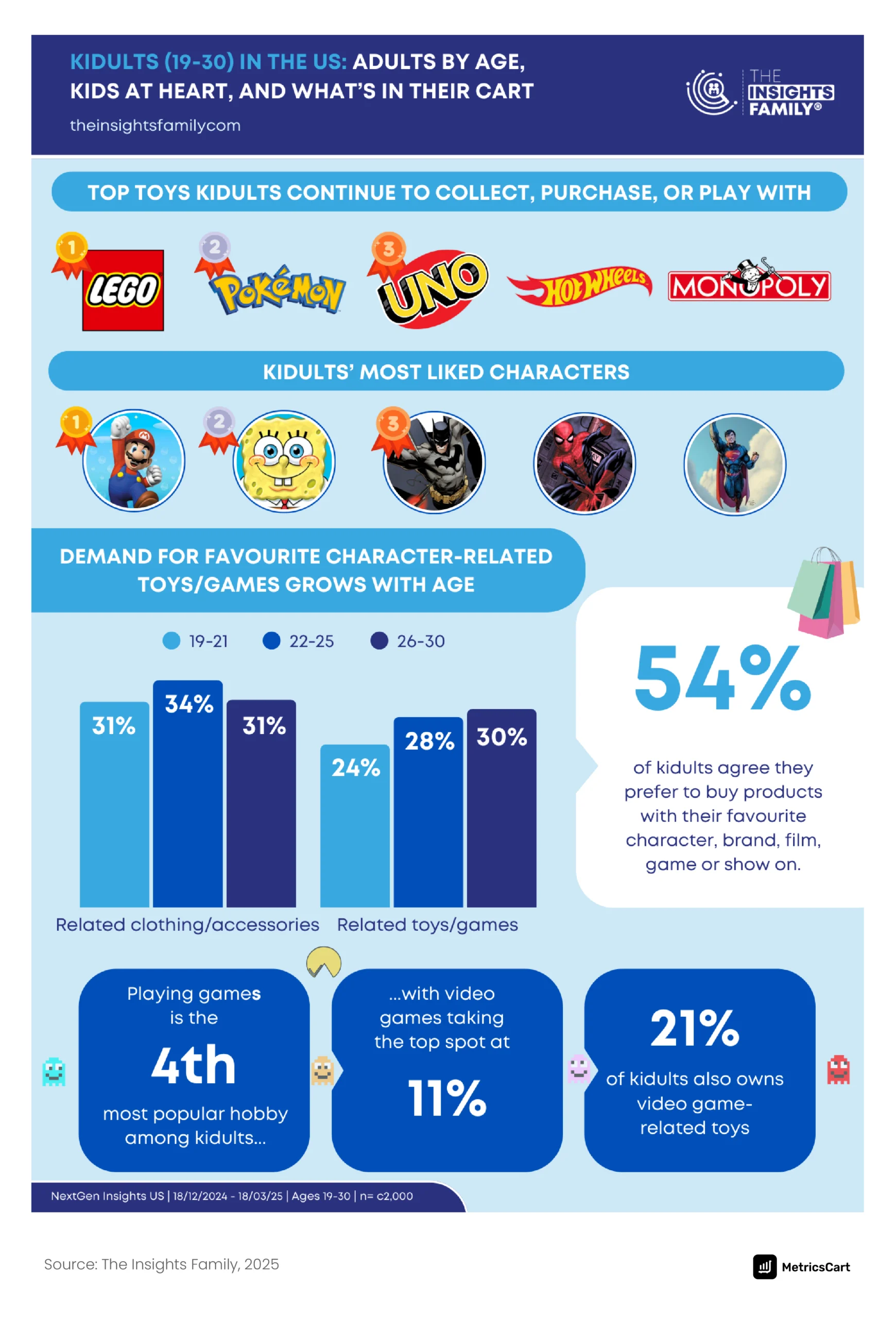
Wahdan points to the evolution of the Stanley Cup craze and the viral explosion of Pop Mart’s Labubu plush charms to highlight the rise of toyification across industries. Consumers stickered up and accessorized them, creating highly tactile, personalized rituals around these products.
We see this spilling into high fashion and everyday consumption:
- Tactile Couture: JW Anderson’s clutches shaped like realistic pigeons or slices of cake.
- The Bratz Renaissance: High-end eyewear brand Gentle Monster’s collaboration with Bratz dolls proves that luxury and play are no longer mutually exclusive.
- Edible Play: The rise of latte art featuring 3D miniature foam cats and dogs.
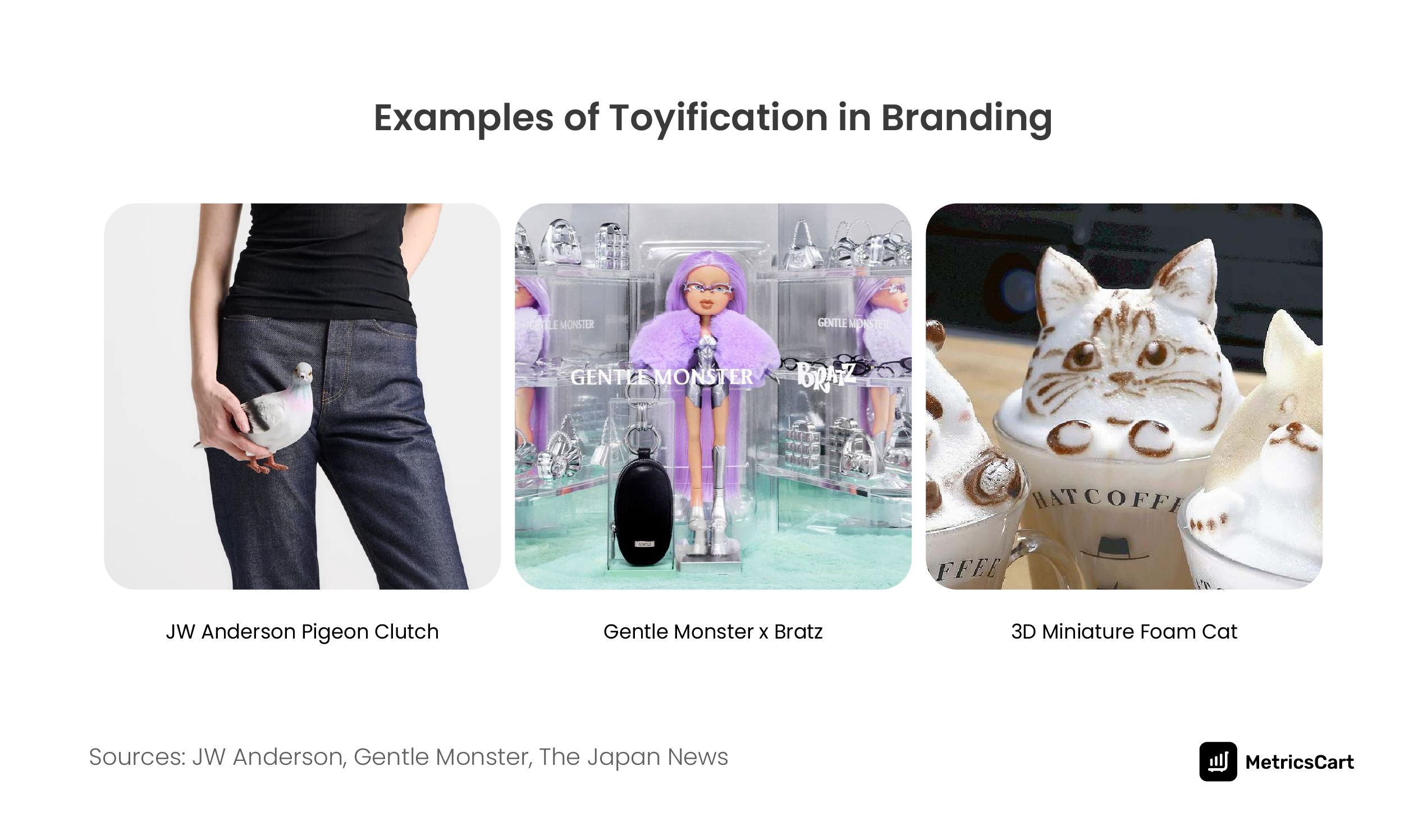
Why does toyification in branding work so effectively? Because it acts as regression therapy for a burnt-out workforce. Introducing “groomable” products, squishy textures, or blind-box surprise elements provides a fidget-like interaction that actively caters to the growing factor of nostalgia in consumers.
If your product’s sensory branding strategy doesn’t invite the consumer’s inner child to reach out and play with it, you are ignoring the most lucrative coping mechanism of 2026.
READ MORE | Exploring Phygital In E-commerce with Industry Examples
Quiet Luxury, Soft Logos, and the Death of Yelling Your Brand
The 2010s were defined by the loud, abrasive aesthetic of “blanding”, the flattening of every brand identity into a bold, black, sans-serif font that screamed, “We are a disruptive, venture-backed startup!”
In 2026, that aesthetic is dead, buried, and universally cringed at. Consumers have developed what Wahdan brilliantly terms “logo fluency”.
They are hyper-literate in marketing tactics. They recognize your brand codes, your color palettes, and your silhouettes. The need to slap a giant, high-contrast monogram across the chest of a sweater or the front of a digital storefront has vanished.
For brands developing a distinctive visual identity, a logo maker can be a practical starting point for creating a mark that aligns with their colors, typography, and overall brand aesthetic.
In fact, in 2026, high-decibel branding is the ultimate signal of a low-trust product. If you have to scream your name, you are practically admitting you have no substance.
“More so they want the quality. They want the fabric. They want the leather… but they don’t necessarily want to have like the logo. I think there’s an appreciation of quality of the items and this kind of silent luxury category.” says Wahdan.
This quiet luxury movement, propelled by the exhaustion of fast-fashion giants like Shein and Temu, demands that your brand identity be baked directly into the material reality of the product.
For your sensory branding strategy, this means prioritizing inconspicuous minimalism:
- The substrate is the brand: Think of Jacquemus or Bottega Veneta. Bottega’s Intrecciato leather weave is a sensory signature so distinct it requires no nameplate. You know it by how the light hits the texture.
- Softening the mark: Brands are actively softening their visual identities, rounding out sharp edges, and utilizing blind debossing or embroidery. The goal is to look embedded and organic rather than stamped and manufactured.
- The rise of olfactory signatures: Fragrances and distinct scent notes have gained massive popularity because scent operates silently. It is the ultimate quiet luxury; it announces a brand’s presence directly to the brain’s memory center without requiring a single pixel of screen real estate.
Cultural Literacy: Why Posting Memes Won’t Save Your Brand
Here is a painful reality check for brand founders and social media teams: posting a low-resolution meme about Moo Deng, Punch, the monkey, or the viral Dubai pistachio chocolate three weeks after it peaked does not make you “culturally relevant.” It makes you look like a corporate chaperone crashing a teenager’s basement party.
Wahdan is mercilessly accurate on this point. Legacy brands frequently mistake “trend-chasing” for true “cultural literacy”. They skim the surface of internet culture without ever bothering to understand the underlying psychological currents driving it.
She says, “Your audience are probably smarter than you think they are. They are hyper aware. They’re living in the same reality as you are.”
If you ignore the material reality of your audience, their financial anxiety, their political fatigue, their desire for escapism, because you are afraid of “negative associations”, you will inevitably create a brand that is hopelessly bland.
Here’s how you do cultural literacy for sensory branding in 2026, right:
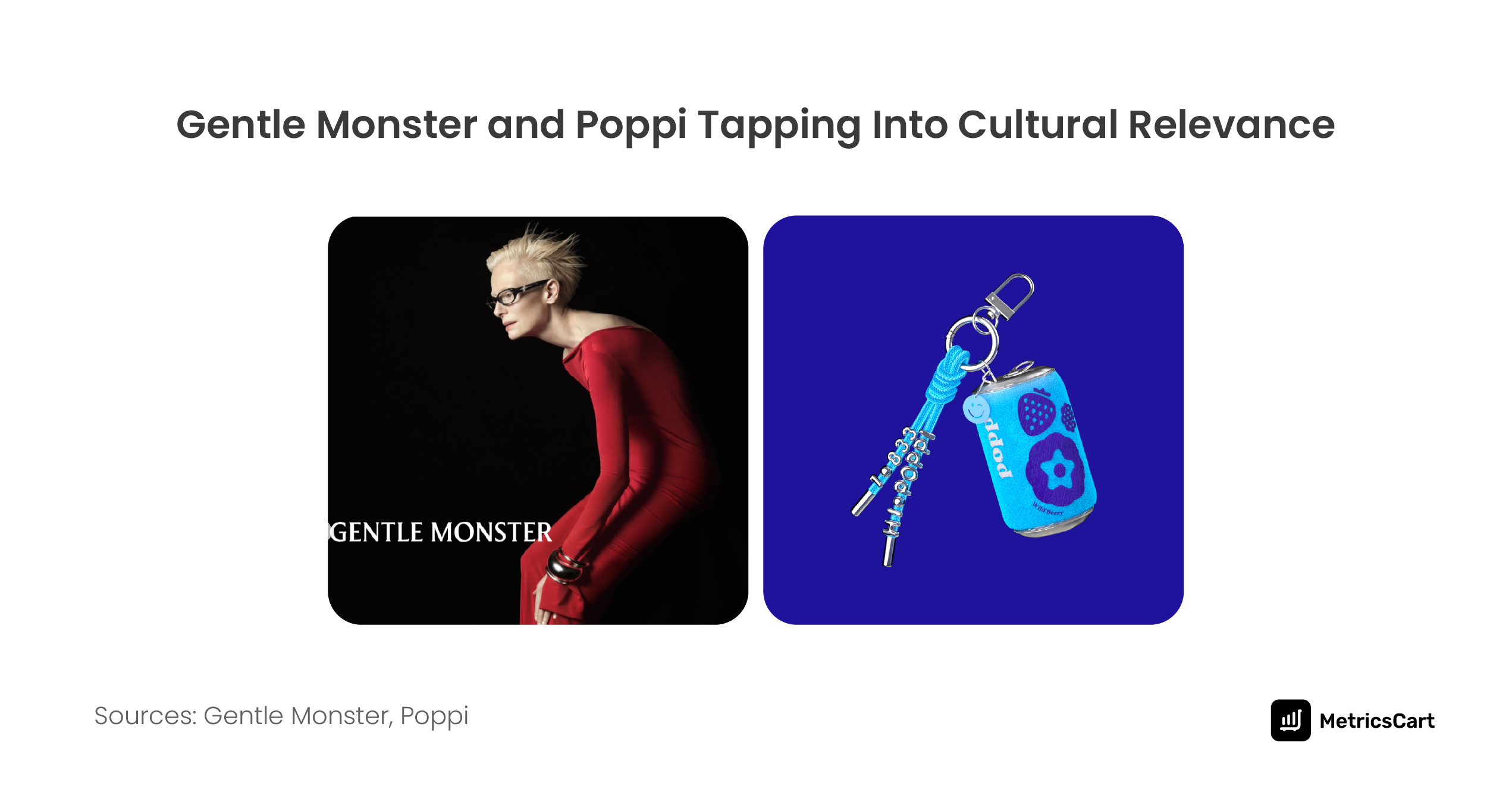
The Gentle Monster Approach: When eyewear brand Gentle Monster launched a campaign featuring Tilda Swinton, it wasn’t just about slapping her face on a billboard. They leaned into a theatrical exploration of a futuristic theme, blending performance, design, and conceptual art.
The Poppi Execution: Wahdan points out that better-for-you soda brand Poppi didn’t just tweet a few memes on Labubu and call it a day. They leaned into the physical manifestation of the trend by creating plush, toy-like cans and custom key charms, authentically participating in the tactile culture of their audience.
True cultural literacy is empathetic and rooted in authenticity. It is understanding why a texture, a sound, or the sight of a product feels comforting at a specific moment in time. If you are taking notes for your sensory branding strategy, highlight this one in neon green!
READ MORE | 5 Best Customer Insight Tools Smart Brands Swear By
The Post-AI Mood Shift: Hey! Is This 100% Human-Made?
The world is utterly choked up with AI-slop. We have reached the pop of the AI bubble. Hyper-polished, mathematically perfect, soullessly efficient generative content is in such abundance that the idea of what is premium has completely changed.
The sheer over-saturation of automated assistants and synthetic imagery is creating a massive counter-movement. The imperfect, the physical, and the undeniably human are what count as premium now.
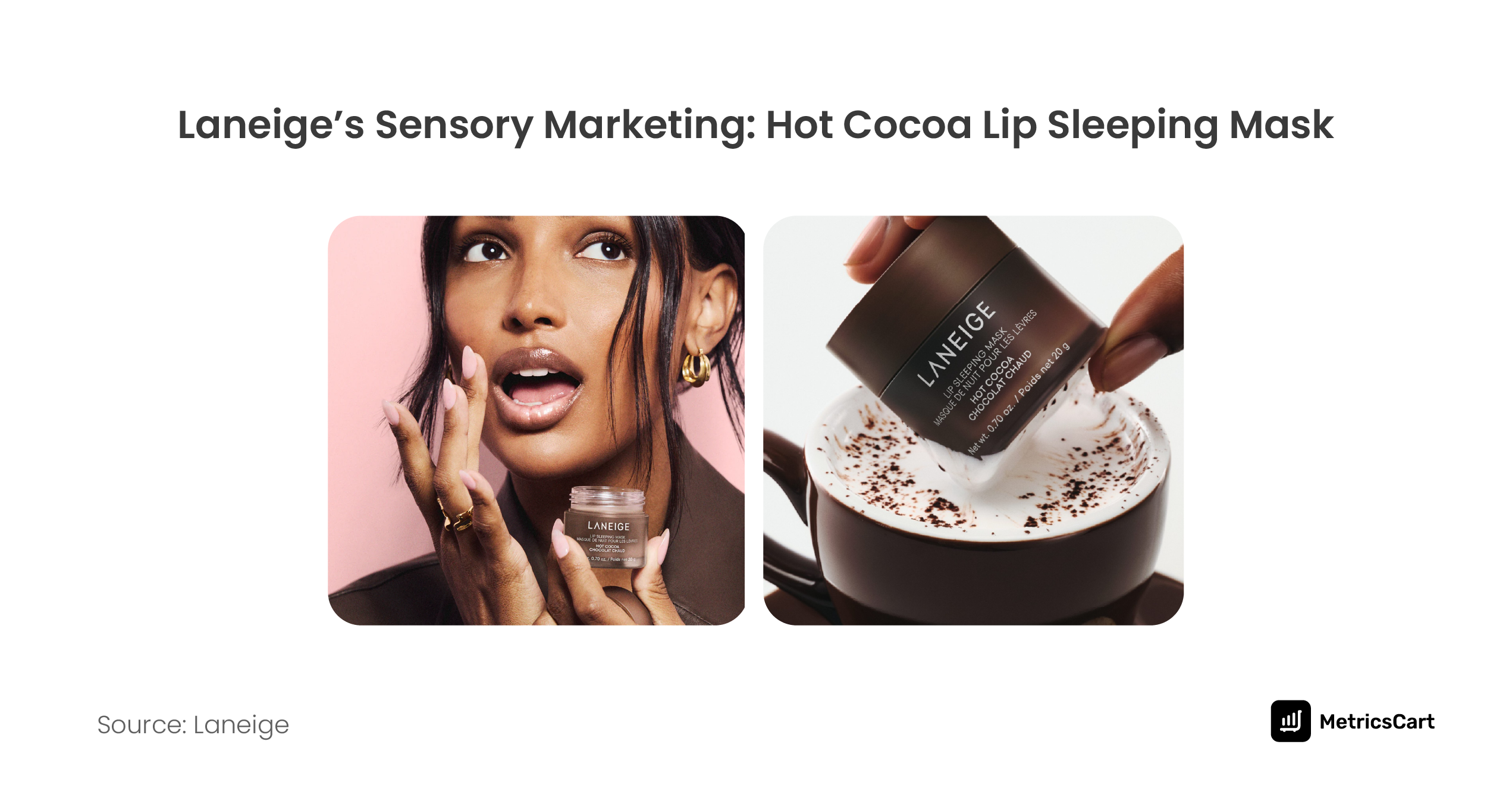
The reason ASMR product-tapping videos dominate social media feeds is that consumers are starving for physical verification. They want to hear the thwack of the glass, the crackle of the paper, and the snap of the plastic to confirm that the object is real.
In 2026, if your brand feels like it could have been entirely generated by a prompt, it will be discarded as cheap. The ultimate luxury is proof of human hands.
Nourhan Wahdan made some really sharp points there, didn’t she? Read the full show notes to know more about how toyification and sensory branding are redefining brand identity in 2026.
How to Build a Sensory Branding Strategy Without Looking Desperate
A desperate brand tries to buy attention by screaming louder. A smart brand earns loyalty by infiltrating the senses. You cannot retrofit a sensory marketing strategy onto a bland product right before launch; it must be intrinsically woven into the R&D and creative processes from day one.
To determine if you are ready for the 2026 consumer, subject your brand to the blindfold test:
If a consumer were completely blindfolded and could not see your logo, your typography, or your website, would they still be able to identify your brand?
If the answer is no, start executing this sensory audit checklist immediately:
- Haptic Hierarchy (The Sense of Touch): Audit the physical weight and texture of your product and packaging. In human psychology, physical weight correlates directly with perceived value. If your unboxing experience feels light, flimsy, or hollow, you are subconsciously signaling that your product is disposable. Incorporate soft-touch mattes, cold-pressed metals, or textured organic papers that AI cannot simulate.
- Auditory Architecture (The Sense of Sound): Define your brand’s mechanical sound. We are not talking about a digital jingle or a TikTok audio trend. What is the physical sound your product makes? The heavy, vault-like “thud” of a luxury car door closing, or the sharp, satisfying “click” of a magnetic cosmetic lid. If your product operates in silence, it fails to anchor itself in the consumer’s physical reality.
- Olfactory Anchoring (The Sense of Smell): Scent is the only human sense that bypasses the rational brain and wires directly into the memory center. Use this ruthless biological loophole. Whether it is a signature ambient scent in your retail spaces or a specific unboxing fragrance sprayed on your packaging tissue paper, scent is an unskippable ad.
- Strategic Toyification (The Ritual of Play): Give the consumer something to do with their hands. Can your product be customized, groomed, or fidgeted with? Integrate magnetic closures, satisfyingly squishy components, or collectible charms. Turn the utilitarian act of using your product into a micro-moment of play.
READ MORE | How to Measure Brand Awareness: 10 Metrics You Must Know
The Point Is, Get Back To Your Senses
The shelf might be digital, but the person reaching for your products is craving a product experience beyond the screen. Sensory branding in 2026 is your brand renaissance. Build your strategy and brand design to cater to what the consumer truly wants.
The great marketing hangover is soon going to be over. Stop trying to out-optimize the algorithms, and start designing for the human nervous system. But how do you know which texture will soothe their perma-crisis anxiety, or which toyified ritual will turn a one-time buyer into a lifelong collector?
At MetricsCart, we bridge the gap between digital data and human desire. Our consumer insights platform tracks consumer conversations beyond your PDP, tapping into the psychological sentiment shifts and emotional undercurrents that drive the “add to cart” moment. We help you understand the material reality of your customers.
Before you design your next sensory experience, let us show you the data behind the feeling.
Bridge the Gap With Data-Driven Insights for the Sensory Era.
FAQs
Toyification is the practice of designing products or packaging to mimic the tactile and aesthetic qualities of toys. It moves beyond simple utility to invite play and customization. This trend transforms everyday items into interactive objects that provide comfort and emotional regulation for adults and children alike.
Sensory marketing is a strategy that targets at least one of the five senses, sight, sound, smell, touch, and taste, to create a positive emotional association with a brand. Unlike traditional marketing that focuses on features and benefits, sensory marketing aims to create a “physical memory” of the product. By engaging the senses, brands can influence a consumer’s perception of quality, trust, and brand persona.
Sensory branding bypasses the rational, logical part of the brain and speaks directly to the limbic system, which processes emotions and memories. By engaging multiple senses like the satisfying “click” of a lid or a signature scent, brands create a deeper, subconscious connection that increases perceived value and drives brand loyalty more effectively than traditional ads.
Following high digital fatigue, playful brands offer a much-needed emotional escape. Elements of play help reduce consumer anxiety and foster a sense of safety. When a brand invites interaction, it feels more approachable, human, and memorable compared to sterile, corporate competitors.
Examples range from the specific “new car smell” used by manufacturers to the heavy, high-quality “thud” of a luxury car door. Other examples include the unique crinkle of premium unboxing paper, the weighted feel of a skincare bottle, or the ASMR-friendly “snap” of a magnetic lipstick cap.