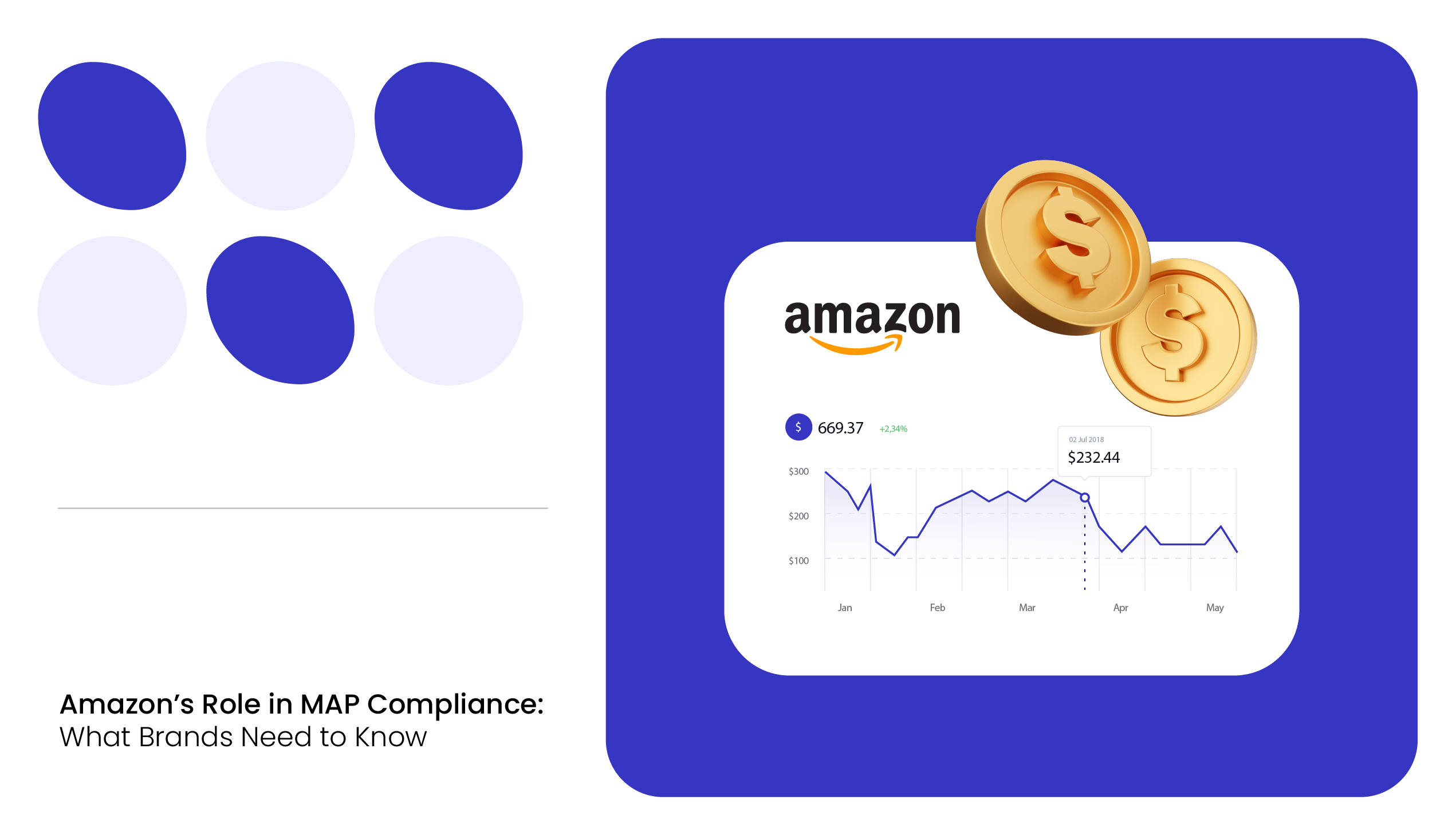
Many of us consider Amazon only as a marketplace, a neutral venue for buyers and sellers. But now, Amazon is increasingly being seen as a distributor as well. Last year, the US Consumer Product Safety Commission (CPSC) confirmed this, reminding Amazon that it is not simply a platform hosting sellers but is also responsible for the products moving through its ecosystem.
This upgraded status has important implications for brands trying to enforce Minimum Advertised Price (MAP) policies. MAP compliance has always been challenging in traditional retail, but when you factor in Amazon’s scale, third-party sellers, and dynamic pricing, the challenge grows significantly.
In this article, we break down Amazon’s role in MAP compliance and what brands must understand when shaping or updating their Amazon MAP policy.
How Amazon’s Marketplace Structure Complicates MAP
Amazon is built for scale, speed, and open participation. This makes it a powerful sales channel but also a challenging environment for MAP enforcement. Unlike traditional retail, where a brand manages a defined group of authorized partners, Amazon brings together thousands of sellers with different incentives, pricing strategies, and levels of accountability.
Recent Amazon data highlights the scope of the issue:
- About 9.7 million sellers are registered worldwide, with 1.9 million active in 2025.
- More than 60% of sales on Amazon come from independent third-party sellers.
- In 2024, over 55,000 sellers generated more than one million dollars in annual sales.
With so many sellers making independent pricing decisions, one listing below MAP can cause a rapid market-wide price drop. Competing sellers match or undercut the lower price, sometimes using automated pricing tools that accelerate the decline. Once this price spreads across a shared listing, it becomes difficult for brands to trace the source or restore control.
These challenges make Amazon and MAP monitoring tightly connected because brands cannot maintain pricing stability without continuous visibility across sellers and listings.

Amazon’s Influence on MAP as a Distributor
Amazon’s influence on MAP did not change because the company shifted its priorities. It changed because the 2024 ruling classified Amazon as a distributor in specific situations. A distributor participates directly in the supply chain, which carries greater responsibility for the products being sold.
Once Amazon is seen as a distributor, it can no longer claim a passive role when unauthorized sellers, diverted inventory, or inaccurate listings distort market pricing. Distributors are expected to respect MAP policies. This gives brands more leverage when requesting accountability and clearer adherence to MAP terms.
The ruling also encourages more direct conversations between brands and Amazon about seller management, listing hygiene, and controlling unauthorized supply routes. Brands can begin pushing for tighter oversight and more decisive action when MAP violations appear on shared listings.
For brands, the next step is watching how Amazon adjusts its internal processes. With this updated legal context, enforcement strategies, documentation of violations, and coordinated communication with Amazon, teams now carry more weight than ever before.
READ MORE | Amazon MAP Monitoring: What Every Amazon Seller Needs to Know
The Impact of Amazon’s Dynamic Pricing on MAP Compliance
Amazon’s pricing engine is built for real-time competitiveness. Its automated pricing system monitors prices across the marketplace and the wider internet and adjusts Amazon’s listings accordingly.
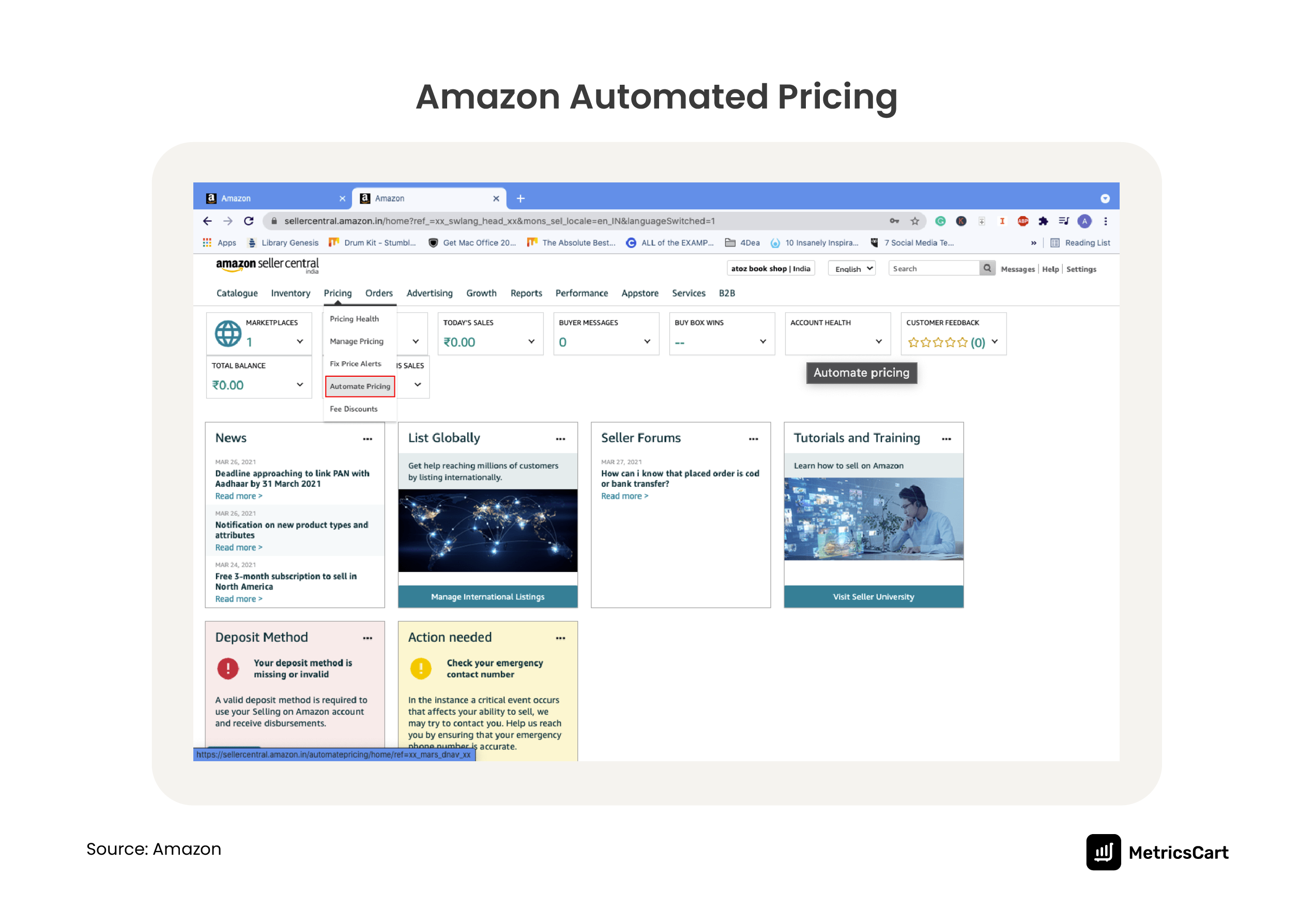
While this benefits shoppers, it creates challenges for MAP because the system reacts to price movements rather than MAP thresholds.
Several factors contribute to this conflict:
- External Price Matching: Amazon tracks prices across other retailers. If a lower price appears anywhere online, Amazon may reduce its own price to match it. This response is automated and doesn’t account for MAP policy.
- Internal Marketplace Competition: When a third-party seller lists below MAP, Amazon’s algorithm sees it as a benchmark and may lower its own retail offer to stay competitive.
- Buy Box Optimization: The algorithm evaluates which price point is most likely to improve conversions. If dropping the price increases the probability of winning the Buy Box, the system may push the listing downward.
- Speed and Scale: These adjustments occur in real time. A small violation can spread across multiple sellers and Amazon Retail within minutes. The outcome is a pricing loop that reinforces the lowest visible offer. One MAP breach sets off a chain of automated responses. Sellers match it. Repricers pull prices down further. Amazon aligns its retail price to stay competitive. And the MAP floor collapses.
Amazon’s automated pricing rewards aggressive pricing, not adherence to minimum advertised prices. Stronger monitoring and clear enforcement frameworks are essential to counter the speed of these algorithmic shifts.
READ MORE | Amazon Pricing Strategy Explained: The Ultimate Guide
How Grey Market Supply Fuels MAP Violations on Amazon
Grey market supply is one of the most common reasons MAP breaks down on Amazon. These issues begin long before a product appears on a listing. They start when inventory leaves authorized channels and reaches sellers who have no pricing agreements with the brand.
Grey market sellers source inventory through routes such as bulk liquidators, international distributors, or wholesalers operating outside the brand’s official network. Because these sellers are not bound by any MAP policy, they price purely for volume and speed. Lower advertised prices are common, and there is no contractual mechanism for the brand to correct its behavior.
The risk increases when diverted products enter Amazon’s fulfillment system. Amazon mixes units from multiple suppliers in its warehouses, which makes it difficult to distinguish authorized stock from unauthorized stock. When grey market sellers place their inventory into FBA, they gain the appearance of legitimacy and can influence the price of the entire ASIN.
Stronger distributor controls, regular audits, and clear restrictions on resale routes help limit access to inventory and address this challenge. When fewer unauthorized sellers can acquire stock, the chances of MAP violations decrease significantly.
What Effective MAP Enforcement on Amazon Actually Looks Like
MAP enforcement on Amazon works only when brands treat it as an ongoing operational process rather than a one-time action. Amazon’s scale and seller diversity require a structured approach that reduces ambiguity and removes opportunities for sellers to undercut pricing.
Here are a few core elements you can combine to form the foundation of an effective MAP enforcement system on Amazon.
Get Clear Visibility Into Sellers
Effective MAP enforcement begins with understanding who is selling the product on Amazon. Brands need accurate visibility into authorized partners, recurring violators, and grey market sellers. A clear seller map policy allows early intervention and prevents violations from spreading across the listing.
Maintain Strong MAP Policy and Documentation
A precise MAP policy, consistent enforcement history, and well-organized records create the foundation for action. Documentation gives brands authority when approaching sellers or engaging Amazon, and it reinforces that MAP compliance is not optional.
Ensure Direct and Consistent Communication
Structured violation notices and clear escalation steps help set expectations for sellers. Predictable follow-through builds credibility. When brands act consistently and remove leniency for repeat offenders, sellers take compliance more seriously.
Get Channels and Distribution in Control
MAP enforcement is difficult when unauthorized sellers can easily access inventory. Brands need tighter controls over distributors and wholesalers, regular audits, and clear limits on where the product can be resold. Reducing leakage in the supply chain strengthens MAP stability on Amazon.
Ensure Fast, Daily Monitoring and Response
Amazon moves fast. A violation can spread across sellers and listings within hours. Brands that monitor daily and act immediately are far more successful at containing violations before they reset the market price.
Do Coordinated Action With Amazon
When violations persist, brands can escalate to Amazon for listing reviews, IP-based takedowns, and supply route investigations. With Amazon recognized as a distributor in certain cases, brands now have a stronger position when requesting corrective steps.
READ MORE | MAP Violation Email Templates: How to Communicate with Retailers?
The Path to MAP Stability on Amazon
Amazon’s role in MAP compliance is no longer limited to hosting listings. Its marketplace scale, distributor classification, and dynamic pricing engine shape how quickly violations surface and spread. Brands that rely on outdated enforcement tactics lose pricing stability fast, especially when hundreds of sellers and automated repricers respond to every price change in real time.
This is why MAP enforcement on Amazon must be structured, proactive, and backed by reliable data. Brands need a system that combines visibility, channel control, documentation, and daily monitoring. But even the most disciplined teams cannot handle this manually at Amazon’s speed.
MetricsCart gives brands the visibility and enforcement workflow they need to protect pricing integrity. It enables you to do real-time MAP monitoring on Amazon, automatically detect violators, maintain historical violation proof, and ensure instant escalation that helps you contain a drop before it becomes a marketplace-wide issue.
Prevent MAP Violations on Amazon.
FAQs
Amazon’s role in MAP compliance has expanded since the platform was classified as a distributor in certain cases. This means Amazon may carry responsibility for how products move through its ecosystem. Brands must now consider Amazon as part of the supply chain, not just a marketplace, when shaping or updating their Amazon MAP policy.
Amazon does not provide an internal “MAP service.” Amazon does not enforce MAP pricing rules for brands. Sellers are free to choose their own systems to ensure Amazon’s MAP compliance. Brands typically use third-party MAP enforcement software, such as MetricsCart, to track and address violations.
No. Amazon does not enforce MAP on behalf of brands. MAP enforcement is the brand’s responsibility. Amazon only removes sellers for violations tied to IP misuse, counterfeit behavior, or other policy breaches. MAP enforcement requires ongoing monitoring and direct action by the brand.
Brands need structured monitoring, clear documentation, strong distributor control, and fast follow-up. Effective MAP enforcement combines daily Amazon and MAP monitoring, prompt communication with violators, and coordinated action with Amazon when unauthorized sellers breach listing or IP rules.
Product compliance on Amazon refers to the safety, regulatory, and documentation requirements that products must meet before they are sold. It includes safety certificates, labeling requirements, testing standards, and adherence to category-specific rules. Product compliance is different from Amazon MAP compliance, which deals with pricing and policy enforcement.