In an online marketplace where prices shift by the minute, even a small deviation can ripple across your entire retail network. One misplaced discount can trigger repricers, undercut competitors, and erode years of brand equity overnight. For brands selling on Amazon, Walmart, or other large platforms, maintaining price consistency is no longer optional—it’s essential.
That’s where structured pricing policies such as Minimum Advertised Price (MAP) and the Unilateral Pricing Policy (UPP) come in. Though both aim to protect a product’s value and prevent margin erosion, they work in fundamentally different ways.
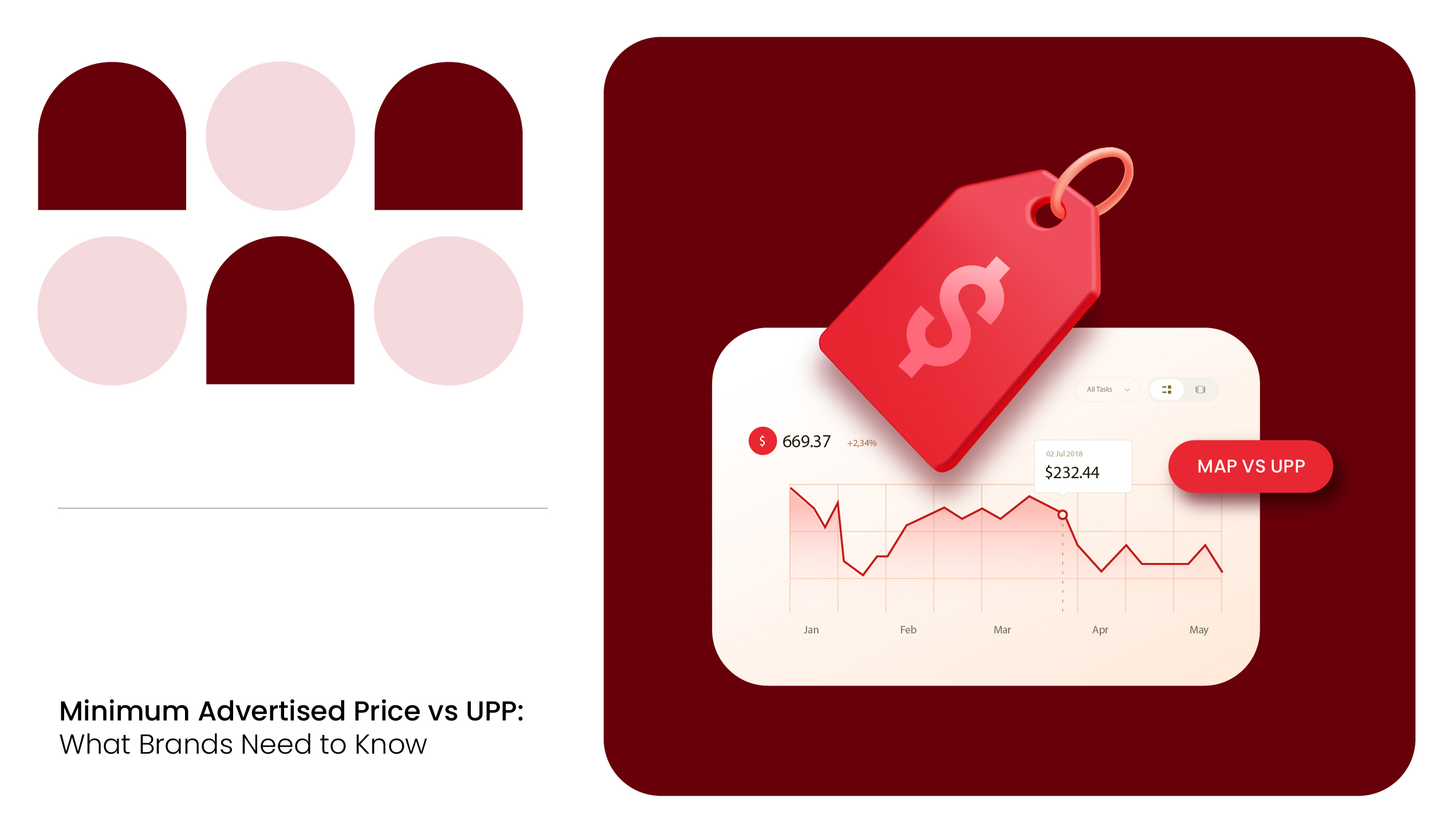
This guide breaks down Minimum Advertised Price vs UPP in clear terms—what each policy means, how they differ, and when to use them. You’ll learn how MAP protects your public price perception, how UPP enforces consistent selling prices, and how choosing the right approach can safeguard both your brand reputation and retailer relationships.
What Is a Unilateral Pricing Policy (UPP)?
A Unilateral Pricing Policy (UPP) is a pricing strategy where the manufacturer or brand sets a recommended retail price for a product that retailers must adhere to when selling it. However, unlike MAP, a UPP is not enforceable by law. Instead, it’s a suggested price that reflects the brand’s desired market positioning.
How It Works: A UPP applies a price that the brand or manufacturer sets for its products. Retailers are free to sell the product at the UPP price or at a lower price. While brands cannot legally enforce compliance with a UPP, they can influence retailers to follow the policy through incentives, such as offering them exclusive rights or withholding supply to non-compliant retailers.
Why Brands Use UPP: Brands often implement UPP to maintain consistent pricing and protect the value of their product in the marketplace. It is instrumental in preventing significant price erosion, which can occur when retailers aggressively discount a product.
However, it’s important to note that UPPs can face legal scrutiny, particularly if they are perceived as an attempt to fix prices.
What Is a Minimum Advertised Price (MAP)?
Minimum Advertised Price (MAP) sets the lowest price at which a retailer may advertise a product. Unlike UPP, MAP does not restrict the actual sale price. Retailers can sell below the advertised MAP price, but they cannot publicly advertise it at a price lower than the set minimum.
How It Works: Brands set the MAP price to protect their product’s perceived value and ensure that all retailers advertise it at a consistent, agreed-upon price. Retailers must comply with the MAP policy when advertising, but they are free to sell the product at any price, whether below or above the MAP price. This provides retailers with some flexibility in how they price the product while maintaining the brand’s image.
Why Brands Use MAP: Brands use MAP to maintain pricing integrity and ensure that products are not undersold by online retailers, which can harm the brand’s overall value perception. By enforcing a MAP policy, brands can maintain a competitive edge, support retail partners, and ensure consistent customer expectations.
READ MORE | Best MAP Monitoring Software Available Right Now
UPP vs. MAP: Key Differences
While both UPP and MAP aim to ensure pricing consistency, they differ in significant ways.
|
Aspect |
UPP (Unilateral Pricing Policy) |
MAP (Minimum Advertised Price) |
| Enforcement Mechanisms | Not legally enforceable in the same way as MAP. Brands can impose consequences for non-compliance (e.g., refusing to supply products to non-compliant retailers). | Often supported by legal agreements. Brands can implement contractual penalties or restrict benefits (e.g., discounts or product supply) for non-compliant retailers. |
| Flexibility in Retailer Pricing | Allows retailers to sell below the set price, but discourages advertising at a lower rate. Focuses more on pricing relationships than on specific advertising tactics. | Restricts only the advertised price, allowing retailers to sell below it, giving them more flexibility in pricing, especially in competitive markets. |
| Scope of Application | Applies to the product’s sale price across all channels, ensuring consistent pricing across platforms. | Focuses specifically on how products are advertised, not on the actual sale price. |
| Legal Implications | It can be seen as price-fixing in some cases if not carefully implemented. Brands need to manage enforcement carefully to avoid legal issues. | Generally, legally acceptable. MAP policies can be implemented and enforced without violating antitrust laws. |
| Best for | Protecting advertised value while keeping the selling price flexible | Tight control of market pricing and preventing price erosion |

Legal Considerations for MAP and UPP
As Michael Murphy points out in episode 40 of the Digital Shelf Insider Podcast:

MAP’s Legal Standing
MAP policies are generally accepted in most markets, including the US, under the Colgate Doctrine. This doctrine allows brands to refuse to sell to retailers that do not adhere to a MAP policy, but the policy mustn’t impede fair competition. Legal challenges typically arise when the MAP policy is seen as interfering with free-market pricing.
UPP Legal Considerations
UPP can be more legally contentious because it may be seen as price-fixing if a brand pressures retailers to adhere to a specific price, mainly when the brand actively controls the entire supply chain. Brands must ensure that their UPP policies are clearly framed as suggestions rather than mandatory prices, thereby reducing legal risk.
Brands must also consider other legal aspects, such as price discrimination and fair competition laws, when implementing either MAP or UPP policies. To mitigate risks, brands should seek legal advice to ensure that their pricing strategies comply with applicable laws.
Minimum Advertised Price vs UPP: Which One Should You Choose
Choosing between MAP and UPP depends on a variety of factors, including legal considerations, the brand’s market positioning, and the level of control desired over retail pricing.
Factors to Consider:
- Brand Positioning: If your brand seeks strong control over how it is presented in the marketplace, a UPP may be the better choice. However, if you want to maintain flexibility for retailers to compete on price while controlling advertising, MAP may be a more practical solution.
- Retailer Relationships: MAP is typically less confrontational with retailers, allowing them some freedom in pricing, whereas UPP may create friction by imposing stricter control over pricing.
- Legal Risk Tolerance: MAP is more widely accepted, while UPP can expose brands to greater legal risks if not implemented carefully.
Brands should consider working with legal advisors to implement the best policy based on their goals and market landscape. Additionally, monitoring and enforcing these policies is critical. This is where MetricsCart’s MAP monitoring and enforcement software can help. By using this tool, brands can track compliance across multiple platforms in real time and quickly address any violations, ensuring consistent brand pricing across the board.
Your Next Step: Turn Pricing Policies into Brand Protection Tools
Both MAP and UPP offer valuable benefits to brands looking to control their pricing strategy, but they each come with distinct differences and legal considerations. MAP offers flexibility for retailers and is generally easier to implement legally, while UPP gives brands more control but may carry some legal risks.
The choice between these policies depends on your brand’s goals, market dynamics, and relationships with retailers. By using the right strategy, you can protect your brand’s value and ensure that your pricing remains consistent.
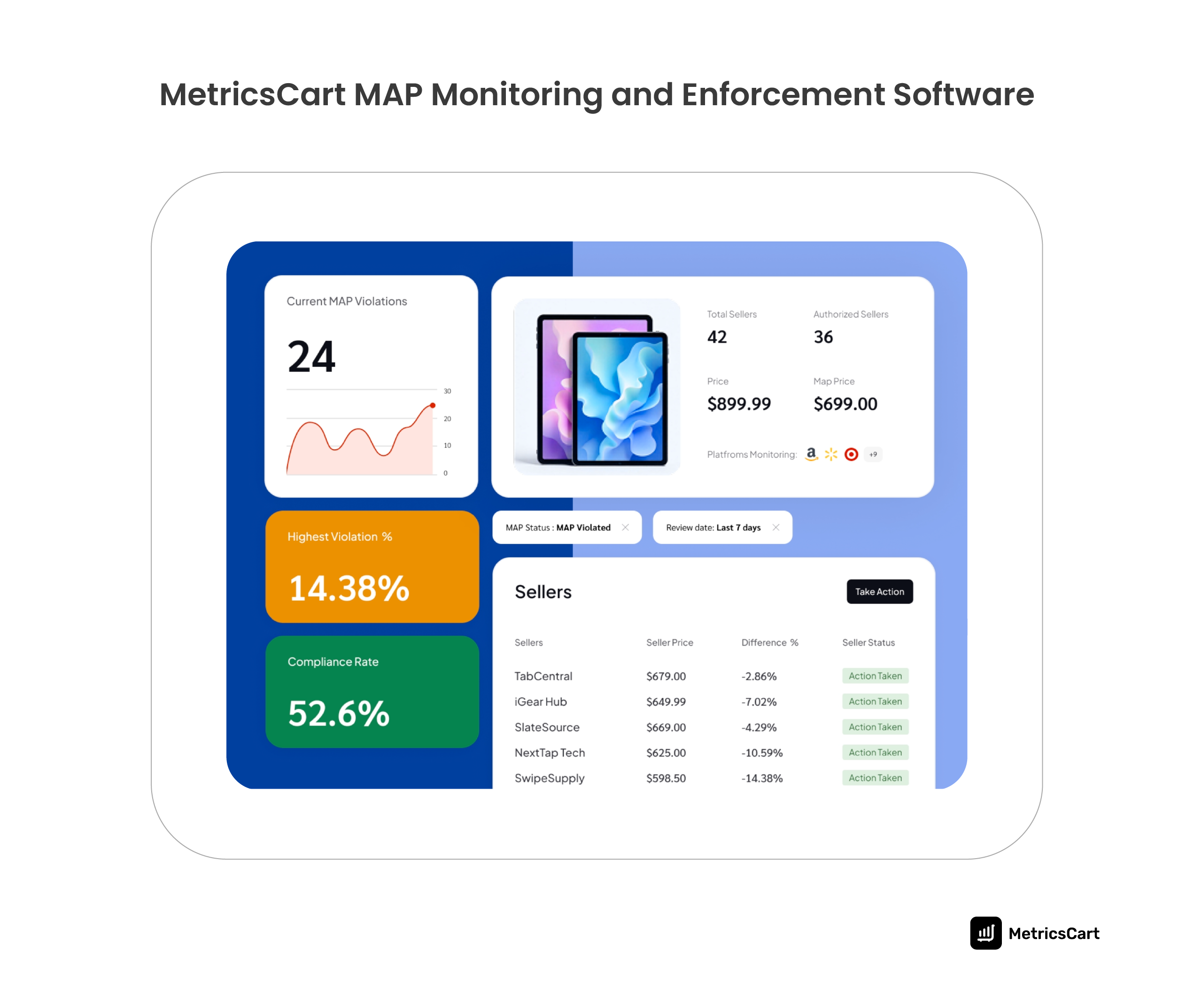
For brands looking to enforce MAP policies effectively, MetricsCart’s MAP monitoring and enforcement software is the solution. Our platform provides real-time, automated monitoring, compliance tracking, and enforcement capabilities to help brands maintain consistent pricing, reduce violations, and safeguard brand integrity.
Ensure Pricing Consistency and Stay Ahead on the Digital Shelf.
FAQs
UPP is a suggested price set by the brand, while MAP is the minimum price that a retailer can advertise a product for. MAP allows flexibility in selling prices, while UPP enforces consistency in pricing across all platforms.
While UPP is not legally enforceable in the same way as MAP, brands can implement consequences for non-compliance, though it may risk being viewed as price-fixing in some cases.
Yes, retailers can sell below the MAP price, but they cannot advertise the product below the set minimum advertised price.
MAP is typically more suitable for online retailers, as it ensures consistent advertised prices while still allowing retailers the flexibility to sell at different prices.
Yes, brands can shift from a UPP to a MAP policy, but it’s important to understand the legal, financial, and retailer relationship implications when making the transition