What if your MAP dashboard isn’t telling you the whole story?
Every week, numbers move: violations logged, sellers flagged, actions taken. The data looks active, the charts look healthy, and it feels like the program is doing its job. But activity can be deceptive.
Just because your MAP program is in motion doesn’t mean it’s delivering real control. Some of the cleanest dashboards hide the biggest inefficiencies, where violations keep repeating, enforcement slows down, and no one stops to ask the harder question: Is this actually working?
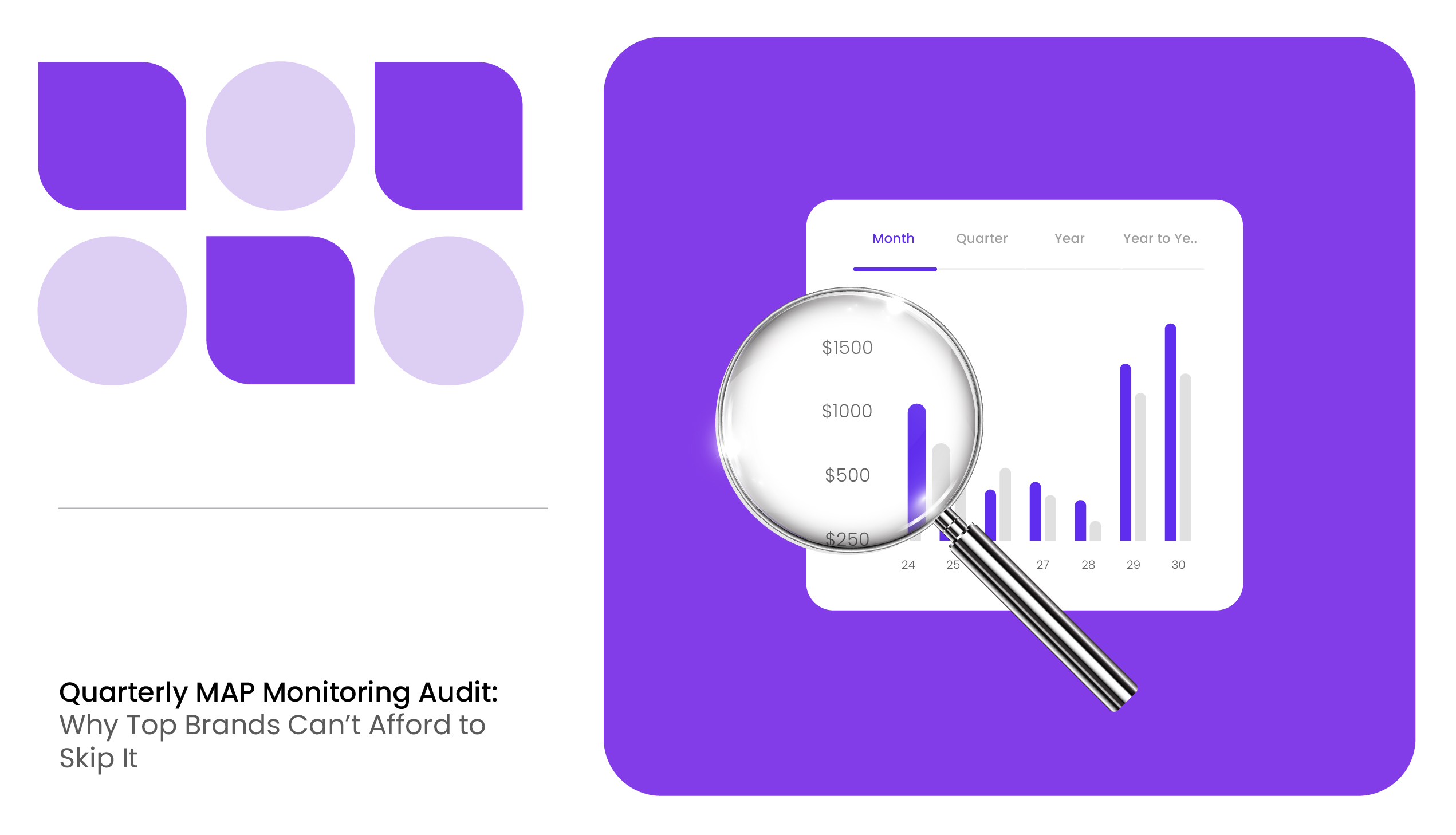
That’s where a Quarterly MAP Monitoring audit makes the difference. It forces you to step back, review the whole picture, and identify whether your MAP monitoring software is truly protecting margin, brand value, and channel discipline or just tracking noise.
Why Annual or Irregular MAP Monitoring isn’t Enough?
Waiting months to audit your MAP policy is a recipe for trouble. By the time an annual or ad-hoc MAP audit rolls around, violators may have already reshaped your price perception. They change storefront names, new unauthorized sellers emerge, and seasonal promotions create fresh pricing pressure.
By then, the damage is done, margins leak, retailer trust weakens, and your brand’s control slips. Below are five critical reasons why irregular MAP monitoring audits fail brands.
Untracked Violators Slip Through the Cracks
Many Minimum Advertised Price monitoring programs focus on how many violations were enforced, not how complete the coverage was. Unauthorized sellers with multiple storefronts or alias accounts often reappear under new names, quietly violating your policies. Most miss this, and you could be chasing the same violator across Amazon, Walmart, and eBay without realizing it.
Your Clean Numbers Might Be a Lie
A low violation count often feels like success. “We only had five violations this month” sounds reassuring. But if your MAP violation detection scope is narrow, or your coverage is limited to certain time windows or websites, those five violations could mask forty others.
Violators evolve just as quickly as MAP compliance tools. Some operate during unmonitored hours, others block detection tools, and some use alternative product listings or hidden SKUs to disguise violations.
If your MAP provider isn’t catching these nuances, your “clean” metrics may be false comfort. The most dangerous MAP issues are invisible; not because they don’t exist, but because your MAP monitoring software can’t see them.
Poor Data Leads to Poor Decisions
Data quality defines the accuracy of the MAP policy. Many providers still rely on scraping prices from search result pages (SERPs), which capture only partial information and can be easily manipulated by retailers through A/B listings or sponsored placements.
Without validating your provider’s extraction methods, your brand risks basing MAP enforcement actions on incomplete or outdated data.
Comprehensive Minimum Advertised Price monitoring requires structured crawling of product detail pages (PDPs), dynamic price tracking, and marketplace-level variation detection. These layers ensure that every price captured reflects real-world visibility, not search artifacts.
A quarterly MAP audit helps analyze your provider’s data quality, which should be non-negotiable; otherwise, you’re not managing compliance but maintaining illusions.
Retail Relationships Quietly Erode

In episode 7 of the Digital Shelf Insider podcast, Matthew Kelly sheds light on the different digital shelf strategies that CPG brands can use to win online. Watch the full episode here:
Authorized retailers expect fairness. When they consistently see rogue sellers undercut MAP and still win Buy Boxes or top search positions, their confidence in your pricing control erodes. They may not always voice it, but this silent frustration builds over time.
In negotiations, it results in tougher terms, reduced marketing cooperation, or reluctance to participate in joint promotions. Once retail partners perceive that you’ve lost control of pricing discipline, rebuilding that trust becomes an uphill battle.
Revenue Leakage Goes Unchecked
MAP enforcement is not just a legal formality; it’s a profit defense mechanism. Every undetected or unenforced MAP violation chips away at your margins and teaches customers to wait for discounts. Retailers, observing this trend, become more aggressive in pushing for lower wholesale prices or additional promotional support.
Unchecked, this behavior shifts price perception. What was once a “premium” product becomes known for volatility and discount dependency. Quarterly MAP monitoring audit catches these leaks early. It ensures promotional discipline, stabilizes consumer expectations, and protects your brand’s ability to command full price across channels.

What to Include in a Quarterly MAP Monitoring Audit?
A quarterly MAP monitoring review is not about scrolling through dashboards or presenting slides filled with last quarter’s numbers. It’s a deeper, strategic checkpoint: an opportunity to ensure your MAP program is not only active, but effective.
This review should go beyond activity tracking and focus on outcomes: Are your policies holding up? Are violations decreasing? Are you catching the right issues in time? The goal of the quarterly MAP policy audit is to align your team, validate your data, and ensure your MAP provider delivers the visibility and accuracy your brand needs.
Here’s what a strong quarterly MAP monitoring review should cover:
Are Your Violation Trends Declining, Holding Steady, or Growing?
If your MAP violation count has stayed the same for several quarters, it’s time to dig deeper. Are the same sellers repeatedly breaking rules? Are improvements limited to specific platforms, while others remain unchecked? A quarterly MAP monitoring audit helps you understand if your enforcement strategy is driving real progress or just maintaining the status quo.
Which Sellers Trigger the Majority of Violations?
Every category has repeat offenders. A detailed quarterly MAP monitoring review should surface the sellers responsible for most violations and highlight patterns such as duplicate listings, alternate storefronts, or marketplace aliases.
The best MAP monitoring software can link these entities across Amazon, Walmart, and other platforms, so you’re addressing the source of the problem rather than chasing the same violator under different names.
Which Marketplaces Are Driving the Most Violations?
Amazon and Walmart remain the toughest environments for MAP compliance. During each audit, confirm you’re still getting a full view of these platforms.
It’s worth doing a quick check of a few key SKUs to verify your MAP monitoring tool hasn’t missed listings or pages due to blocking or data gaps. Many brands find missing data this way, leading to better accuracy and accountability.
What’s Your Average Time-to-Action on Enforcement?
Speed matters. A five-day delay in action can create a snowball effect, leading sellers to assume violations go unnoticed. Quarterly MAP audits are the right time to benchmark how quickly your team moves from MAP violation detection to enforcement.
If vacations or workload cause delays, consider an automated MAP monitoring software that ensures consistent response times year-round.
What Departmental Changes Have You Made to Support Enforcement?
MAP compliance isn’t the responsibility of one small team; it’s a company-wide effort. Sales, marketing, legal, and operations all play a role. Use your quarterly MAP monitoring review to assess whether departments are aligned on enforcement priorities.
For example, are sales teams aware of repeat violators before renewal discussions? Is legal looped in for escalation when warnings fail? A MAP policy backed by executive alignment is always stronger than one led in isolation.
How Well Is Your Team Using the Platform?
Your MAP policy is only as effective as the trust your team places in it. Over time, user confidence can fade if data accuracy slips, such as screenshots fail, timestamps don’t align, or violations appear inconsistent.
During your Quarterly MAP policy audit, look for signs of disengagement or skepticism. If your team has stopped relying on the system, it’s time to address the data quality. Reliable data builds confidence, and confidence drives consistent enforcement.
READ MORE | Want to Select the Right MAP Monitoring Software for Your Brand? Check out the Best MAP Monitoring Software You Should Consider for E-Commerce
Make Quarterly MAP Monitoring Audit a Habit, Not a Hassle
Quarterly MAP monitoring audit isn’t a box to check. It’s a discipline that protects your margins, reinforces your brand’s value, and strengthens your relationships with retailers. When done consistently, these audits turn isolated pricing data into clear signals about what’s working, what’s slipping, and what needs immediate attention.
Brands that treat MAP monitoring as a habit stay ahead of marketplace volatility, keep unauthorized sellers in check, and maintain a level playing field for every partner.
If your team is ready to simplify MAP compliance and bring consistency to your quarterly reviews, MetricsCart gives you the real-time monitoring, seller intelligence, and enforcement support needed to keep your pricing strategy on track. Make quarterly MAP audits a habit, and let the right tools remove the hassle.
Want To Protect Your Brand Reputation From Unauthorized Sellers?
FAQs
A Quarterly MAP Monitoring Audit is a structured review of your brand’s Minimum Advertised Price (MAP) compliance every three months. It evaluates violation trends, data quality, seller behavior, marketplace coverage, and enforcement effectiveness to ensure your MAP program is delivering real results.
Annual audits leave long gaps where violations go unnoticed, unauthorized sellers multiply, and pricing erodes. Quarterly audits maintain consistent visibility, catch issues earlier, and help brands adapt to fast-changing marketplace conditions
Regular audits reveal recurring violators, hidden price drops, and marketplace gaps that directly affect margin. By identifying these issues every quarter, brands can enforce MAP faster and prevent erosion before it impacts revenue.
A complete audit should review violation counts, marketplace coverage, seller aliases, enforcement response times, manual validation checks, and team usage of the MAP platform. These elements provide a holistic view of compliance health.
Quarterly reviews track seller activity across marketplaces, identify duplicate storefronts, reveal alias behavior, and highlight sellers who appear, violate, and disappear quickly. This pattern recognition helps brands target the real sources of disruption.