Highlights
- Zero-party data is information customers choose to share directly with a brand, such as preferences, purchase intentions, and personal context, making it the most accurate and reliable form of customer data available.
- Unlike behavioral data, zero-party data does not require interpretation because the customer tells the brand exactly what they want, removing the guesswork from personalization entirely.
- For CPG brands selling on platforms like Amazon and Walmart, zero-party data is one of the few ways to build a direct understanding of customers on platforms where the retailer owns the relationship.
- Zero-party data is compliant with US privacy regulations, including the CCPA, making it a future-proof foundation for any brand data strategy.
- Brands that combine zero-party data with review monitoring get a complete picture of both what customers want and whether their products are positioned to capture that demand on the shelf.
- The most effective zero-party data strategies are built on a direct exchange: the customer shares a preference, and the brand uses it to deliver something genuinely useful in return.
The Gap Between Customer Data and Customer Intent
Most brands collect a lot of customer data. Purchase history, email clicks, page views, and ad engagement. This data is useful for understanding what customers did. But it does not do a great job of explaining what they actually want next.
That matters because personalization depends on intent, and intent is hard to read from behavior alone. McKinsey found that 71% of consumers expect personalized experiences and are disappointed when brands get it wrong. And the tools brands have used to fill that gap, third-party cookies and cross-site tracking, are becoming less reliable every year.
Zero-party data takes a different approach. Instead of brands trying to infer what customers want from their behavior, customers share their preferences, needs, and buying intentions directly with a brand.
Paired with review monitoring tools like MetricsCart, brands can cross-reference what customers say they want with what they are actually experiencing after purchase.
What is Zero-Party Data?
Zero-party data is information that customers share with a brand directly, knowingly, and on their own terms. This includes product preferences, intention behind a purchase, lifestyle details, and personal context. Customers choose to share this information because they expect something useful in return, like a better recommendation or a more personal experience.
The difference between zero-party data and most other customer data comes down to one thing: who is doing the talking.
With behavioral data, the brand watches what a customer does and tries to read between the lines. A customer viewed three moisturizers for dry skin. Does that mean they have dry skin? Maybe. They could just as easily be shopping for a friend. With zero-party data, that isn’t necessary. The customer selected “dry skin” in a product quiz and told you what they need.
That difference shows up in results:
- Product recommendations built on what customers directly told you are more accurate and more likely to convert than recommendations inferred from browsing behavior.
- Email and ad campaigns segmented by declared interests reach the right audience from the very first send, without the warm-up period that behavioral targeting requires.
The data is simply more reliable because the customer gave it with a clear purpose in mind.
At its core, zero-party data runs on a simple exchange. Customers share what they need. Brands use that to deliver something relevant. When brands follow through, trust builds over time. When they collect preferences and do nothing with them, customers stop sharing.
For CPG and e-commerce brands selling across multiple retailers, zero-party data fills a gap that behavioral tracking alone cannot. It tells you what customers want, in their own words, before you have to guess.
READ MORE | Optimizing Consumer Buying Process: What Every E-Commerce Brand Needs to Know
Types of Customer Data: Zero-Party, First-Party, Second-Party & Third-Party
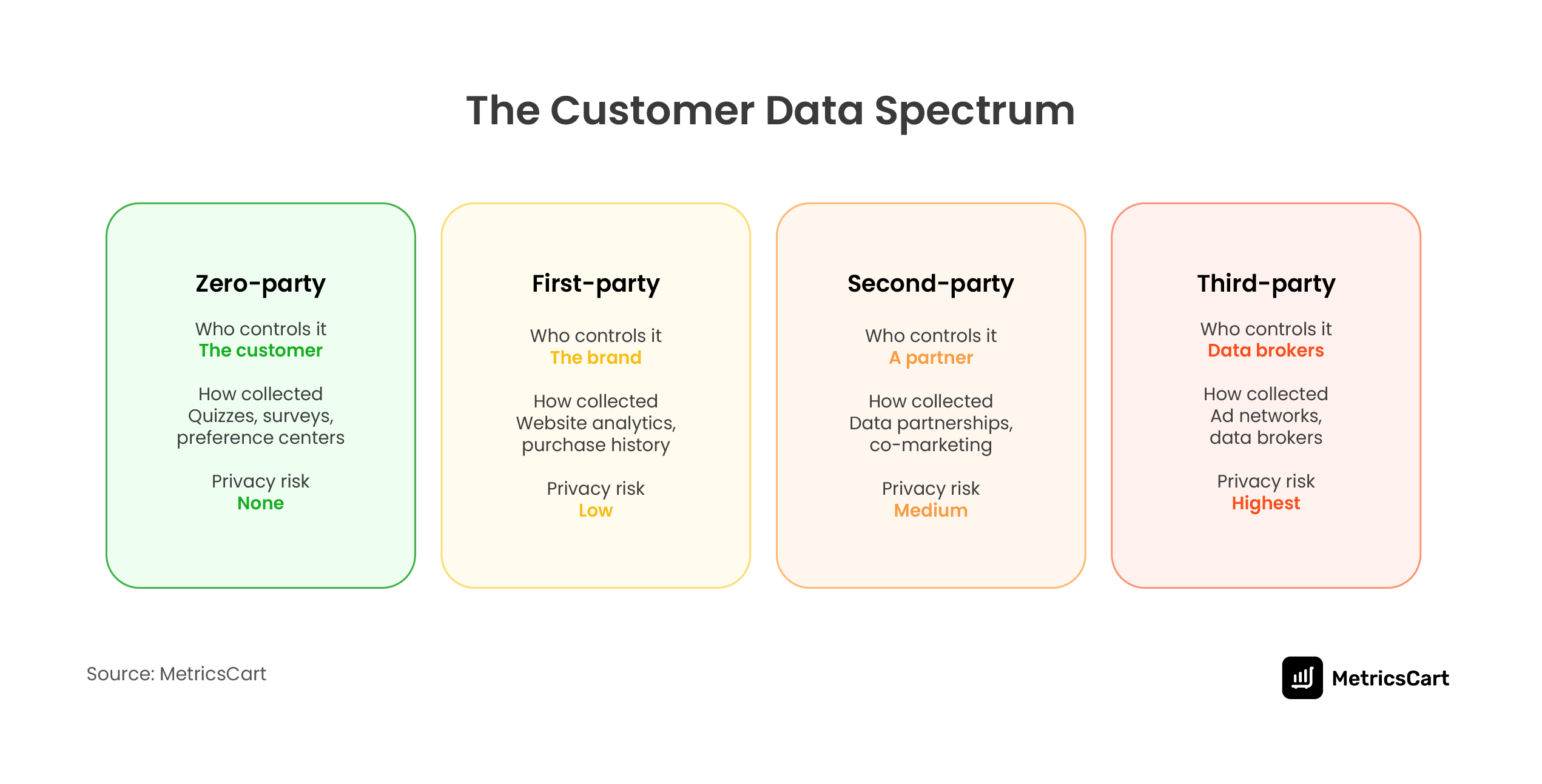
Customer data generally falls into four categories based on who owns it, how it is collected, and how much customer consent is involved. They are
- Zero-Party Data
- First-Party Data
- Second-Party Data
- Third-Party Data
How Is Zero-Party Data Different From First-Party Data?
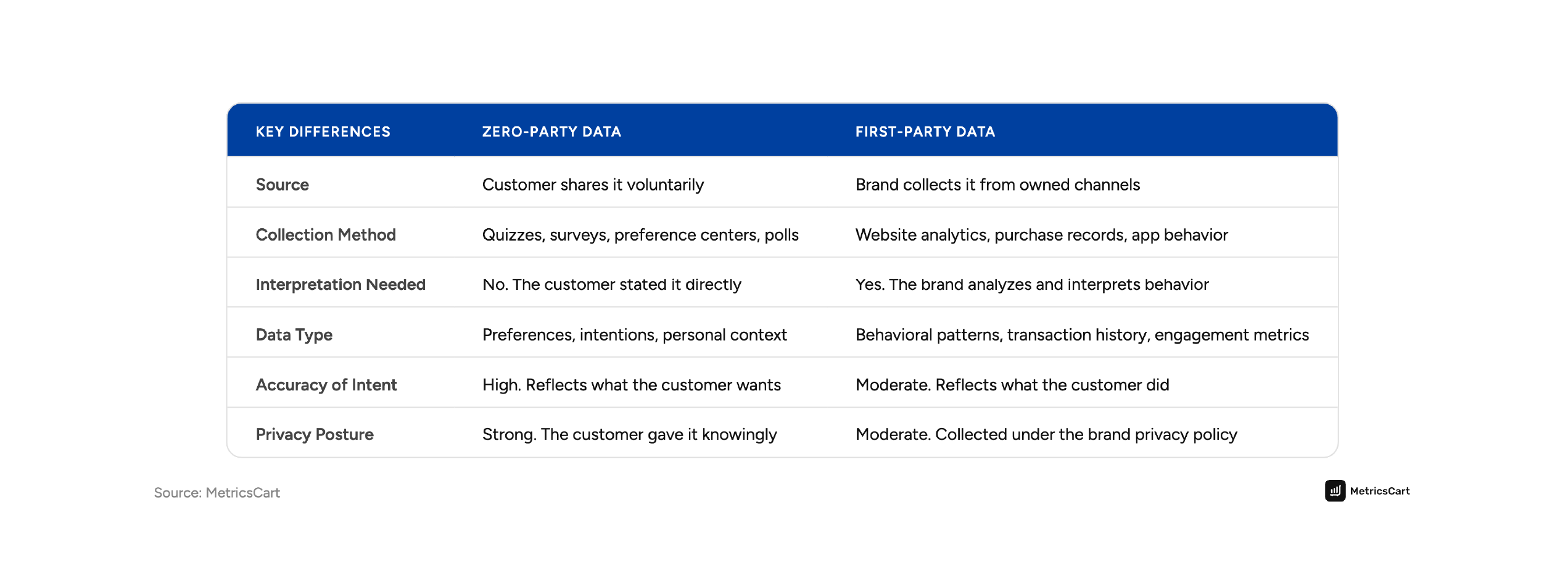
First-party data is information a brand collects by observing what customers do on its own channels. When someone visits a product page, opens an email, makes a purchase, or spends time on a specific category, the brand records that behavior. The customer did not intentionally hand over this data. The brand collected it in the background and drew conclusions from it.
Zero-party data is information the customer gives a brand directly and on purpose. They filled out a quiz, quick poll, website widget, answered a survey, selected their preferences, or declared an interest. There is no observation or inference involved because the customer told the brand exactly what they wanted.
Here is a comparison that makes the distinction clearer:
Examples of Zero-Party Data
Zero-party data appears at various points in the customer journey. What all these examples have in common is simple: the customer chose to share the information. Here are the most common ways brands collect it.
Product Recommendation Quizzes
Product recommendation quizzes are the most widely recognized form of zero-party data collection. A customer answers a few questions about their preferences, skin type, goals, or lifestyle, and the brand uses those answers to recommend the most relevant product.
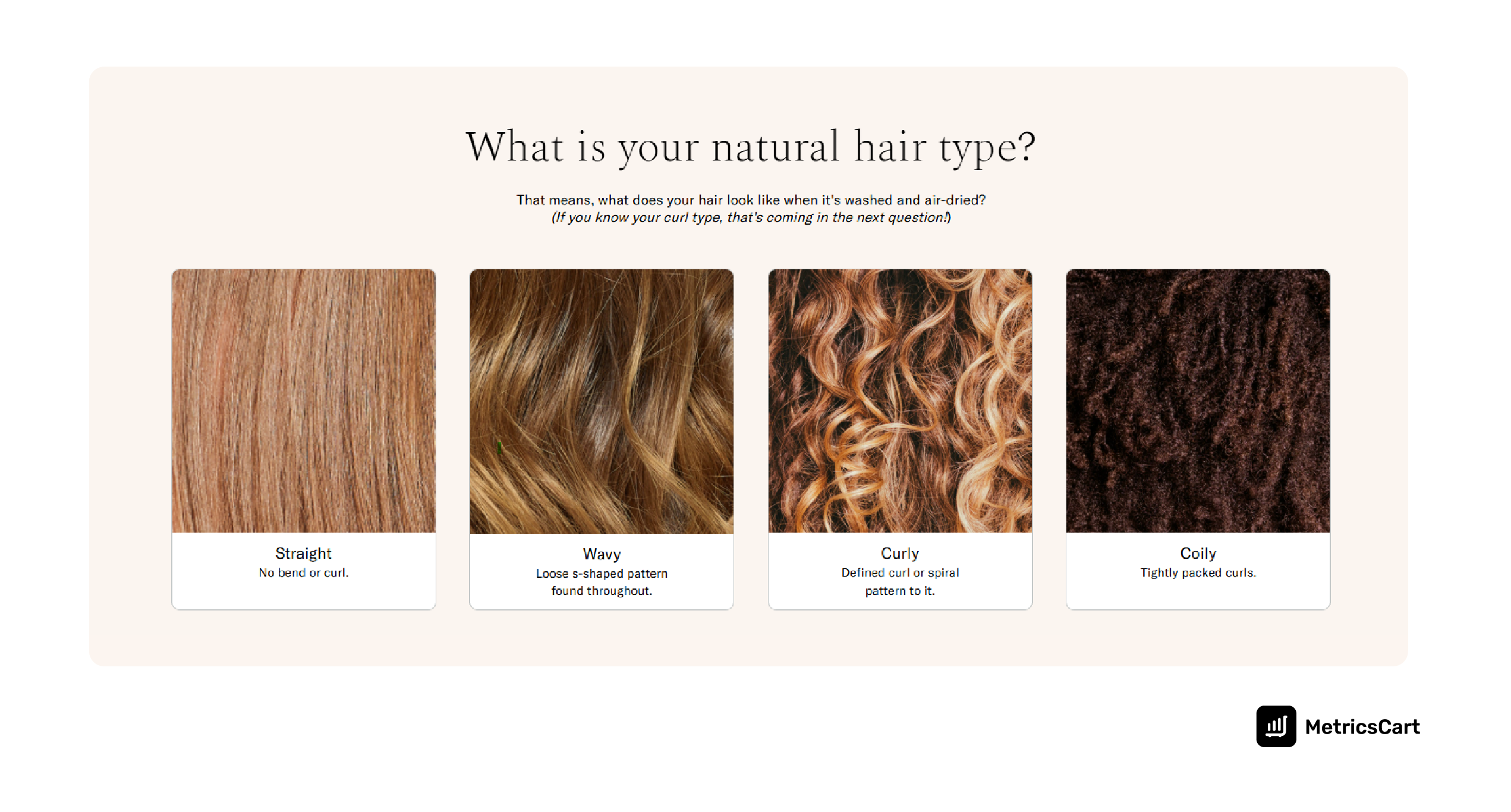
The data collected is direct and reliable because it reflects exactly what the customer told you, not what an algorithm inferred from their browsing history. Brands like Function of Beauty and Warby Parker built their entire acquisition model around this approach because it converts well and builds trust from the very first interaction.
Post-Purchase Surveys
A short survey sent after a purchase captures customer intent and context that behavioral data simply cannot provide. Asking why a customer chose a product, who they bought it for, and whether it met their expectations gives brands high-quality signals that feed directly into product development, content strategy, and review monitoring.
It is one of the most underused zero-party data collection methods, especially for CPG and DTC brands managing large product catalogs across multiple retailers.
Loyalty Program Profile Questions
When a customer joins a loyalty program and shares details such as dietary preferences, household size, pet ownership, or lifestyle habits, that is zero-party data at its most valuable.
Unlike transactional data that tells you what someone bought, loyalty profile data tells you who they are and what they care about. This gives brands a strong, specific foundation for personalization that becomes more useful and accurate with every interaction over time.
Pampers, a Procter & Gamble brand, is a good example of this. Through the Pampers Club app, parents share details like their baby’s age, diaper size, and growth stage. Pampers uses this information to send relevant product recommendations and helpful content as the child grows. Even though parents may buy Pampers products from retailers like Walmart or Target, the direct relationship and data connection stay with the brand.
Wishlist and Save-For-Later Features
When a customer adds a product to their wishlist or saves it for later, they are declaring purchase intent in the clearest possible way. That signal is far more reliable than a page view or an ad click because the customer made an active decision to mark that product as something they want. For e-commerce and CPG brands, wishlist data is one of the most actionable forms of zero-party data available, and most brands are not using it anywhere near its full potential.
Each of these methods works for the same reason: the customer has a clear reason to share, and when brands use that information to deliver something genuinely useful in return, it builds the kind of trust that drives long-term loyalty.
Why Is Zero-Party Data Important For Brands?
Here is how those three reasons translate into real outcomes for brands.
Zero-Party Data Builds a Privacy-First Data Strategy
Zero-party data is voluntarily shared by customers, making it one of the most privacy-friendly forms of customer data. It aligns well with regulations such as the CCPA and reduces reliance on tracking technologies that may be restricted by browsers, platforms, or privacy laws.
Since customers provide this information directly, brands can use it to deliver more relevant and personalized experiences with greater transparency and trust. This also helps minimize the legal and reputational risks often associated with third-party data collection.
Zero-Party Data Gives CPG Brands a Direct Line to Customer Intent
For brands selling on US retail platforms like Amazon, Walmart, and Target, the retailer owns the customer relationship. Brands rarely get meaningful data back from those platforms.
Zero-party data gives brands a way to build their own customer understanding independently, through their website, loyalty programs, and post-purchase touchpoints. That data belongs entirely to the brand and gets more useful over time.
How to Collect Zero-Party Data From Your Customers
The mechanics of zero-party data collection are straightforward. The strategy behind it is not. Brands that collect it well do one thing consistently: they make the exchange worth the customer’s time.
Start With a Clear Value Offer
Customers share information when they get something useful in return. A product quiz that ends with a genuinely helpful recommendation, a survey that leads to a personalized discount, or a loyalty profile that unlocks early access to new products. The more specific the return, the more willing customers are to share.
Use the Right Collection Method for the Right Moment
Different touchpoints work better at different stages of the customer journey. A product recommendation quiz works best at the top of the funnel, when a customer is still deciding. A post-purchase survey works best immediately after a transaction, when the experience is fresh. A loyalty profile question works best once a customer has already shown intent to stay. Matching the collection method to the moment is what makes zero-party data feel helpful rather than intrusive.
Keep the Questions Short and Specific
Asking too many questions at once reduces completion rates and lowers data quality. Two or three focused questions will always outperform a long form. Ask what you will actually use, not everything you might find interesting.
Act on What Customers Tell You
Zero-party data loses its value the moment a brand collects it and does nothing with it. If a customer shares that they prefer fragrance-free products and then receives recommendations full of scented options, they will not share again. The data only builds trust when the brand visibly uses it to deliver something more relevant
How MetricsCart Helps Brands Go Beyond Zero-Party Data
Zero-party data tells you what customers want. But knowing what they want and knowing whether your products are actually delivering it are two different things.
Declared preferences set a standard. Reviews are where customers measure your product against that standard. Without connecting the two, brands collect intent data on one side and miss the delivery signal on the other.
This is why zero-party data and review monitoring need to work together. Zero-party data captures what customers want. Review monitoring tells you whether your product is meeting that expectation on the shelf.
MetricsCart connects both. Its review monitoring surfaces sentiment patterns and recurring themes across every platform where your products are sold, giving brands a clear view of where customer expectations are being met and where they are not. That combined view is what turns preference data into something brands can actually act on.
The brands that win at personalization over the next few years will not be the ones with the most data. They will be the ones who asked better questions and actually used the answers.
Turn what your customers tell you into shelf performance you can measure and act on.
FAQs
Yes. Because customers share zero-party data willingly and knowingly, it is inherently compliant with privacy regulations such as the CCPA. There is no background tracking involved, so brands can collect and use it with confidence without legal or compliance risks.
Zero-party data is information that customers share with a brand directly, such as their preferences, needs, and purchase intentions. It matters because it tells brands exactly what customers want, eliminating guesswork and making personalization more accurate and customer relationships more trustworthy.
By making the exchange transparent and useful. Brands ask customers for information through quizzes, surveys, or preference centers and, in return, deliver something valuable, such as a personalized recommendation or a more relevant experience. When customers see a clear benefit, they share willingly.
Because it does not rely on third-party tracking or cookies. As privacy laws tighten and tracking methods become less reliable, zero-party data gives brands a way to understand their customers that is compliant, accurate, and independent of technology that is quickly losing ground.
It removes the guesswork. When customers tell a brand what they want directly, the brand can deliver relevant recommendations, campaigns, and experiences from the very first interaction, without needing to infer intent from browsing history or click patterns.