Amazon’s marketplace is one of the world’s largest online retailers. More than 89% of US buyers prefer to buy products from Amazon over any other e-commerce site.
Forbes once stated, “Amazon has earned our trust by delivering the products we want, on time, intact, in the same branded brown boxes—consistently.”
To maintain this level of trust and consistency, Amazon imposes strict rules on its sellers. One of the most crucial rules that affects brands is Amazon CRaP, a designation that is only visible internally and can significantly hurt a product’s visibility and sales.
In this article, we’ll explore what Amazon CRaP is, why it happens, and how brands can avoid Amazon CRaP using MAP policy.
Highlights
- Amazon CRaP (Can’t Realize a Profit) flags products that are unprofitable due to high shipping costs, storage fees, or poor pricing strategies.
- Products flagged as CRaP lose visibility, become ineligible for the Buy Box, and risk low profitability due to factors like high fees and poor pricing strategies.
Price fluctuations across marketplaces or sellers can trigger Amazon’s algorithm to lower prices, risking margin erosion and CRaP status. - A Minimum Advertised Price (MAP) policy sets a minimum price for resellers, ensuring consistent pricing and protecting margins, thereby enabling brands to stay off the Amazon CRaP list.
- Steps to Avoid Amazon CRaP:
- Set a Realistic MAP: Balance competitiveness and profitability while covering operational costs.
- Communicate MAP Rules: Clearly inform all sellers and internal teams about the policy.
- Leverage Technology: Use tools like MetricsCart’s MAP monitoring software to detect and address violations in real time.
What is Amazon CRaP and Why it Matters
CRaP, or “Can’t Realize a Profit”, is a term Amazon uses internally to classify products that no longer generate profit due to factors like high shipping costs, storage fees, or poor pricing strategies.
When a product is classified as CRaP, it faces serious consequences, including:
- Loss of Visibility: Amazon will limit or suppress the product’s search ranking, making it harder for customers to find and purchase the product.
- Reduced Buy Box Eligibility: Almost 90% of all Amazon sales occur through the Buy Box. If your product is flagged as CRaP, Amazon may pull it from the Buy Box, significantly lowering its chances of a sale.
- Profitability Concerns: CRaP indicates that a product isn’t generating sufficient profit to cover Amazon’s operational costs. This directly impacts your Amazon sales performance and can make your products less competitive.
READ MORE | Amazon CRaP Explained: Definition, Causes, and Solutions for Brands
The Role of Price Consistency in Amazon’s Profitability Models
Price consistency is really important for online stores. A survey by PwC found that over 60% of shoppers stop trusting a brand when prices are different across channels. And so, Amazon built its pricing algorithms highly responsive to price fluctuations.
When products are sold at inconsistent prices across different marketplaces, Amazon’s algorithm may lower prices to remain competitive, even if it means reducing the margin.
This becomes especially problematic for both 1P and 3P brands because the price erosion causes Amazon’s internal systems to view the product as a loss-making proposition.
- 1P Brands: Amazon sets the price for 1P products and may adjust it to remain competitive. If 1P pricing doesn’t reflect profitability (after considering wholesale pricing), CRaP status is likely.
- 3P Brands: These brands often control pricing directly, but when sellers undercut each other, Amazon’s algorithm reacts by pushing prices down, thus affecting profitability.
In both cases, price consistency is crucial to avoid margin erosion and CRaP status, ensuring products remain profitable and visible.
READ MORE | How Supply-Chain Leaks Create MAP Violations (And How to Prevent Them)
Why MAP Policy Is the First Line of Defense
A Minimum Advertised Price (MAP) policy is a critical tool brands can use to stop Amazon CRaP issues. A MAP policy sets a minimum price that resellers are allowed to advertise a product for, ensuring price consistency across all sales channels.
By enforcing MAP, brands can prevent unauthorized discounting and
- Protect Margin: MAP helps maintain consistent pricing, protecting the brand’s margins from aggressive underpricing.
- Stabilize for Amazon’s Pricing Algorithm: With MAP, Amazon’s pricing algorithm won’t react to third-party price fluctuations, reducing the chances of price erosion.
- Promote Brand Value: By controlling the advertised price, MAP ensures that your product maintains its perceived value in the market, which is crucial for brand integrity.
READ MORE | MAP Pricing: Everything Brands Need to Know
How to Use MAP Policy to Avoid Amazon CRaP Risk
To implement a successful MAP policy that helps protect your products from CRaP status, follow these actionable steps:
1. Set a Realistic MAP Price
Setting the right MAP price is crucial to ensuring that your product is both competitive and profitable. The MAP should cover all operational costs, including Amazon’s fees, shipping, storage, and other fulfillment expenses, while still leaving a reasonable margin.
- Too Low: If your MAP is set too low, it won’t cover these essential costs and may push the product into CRaP status, leading to margin erosion and potential delisting by Amazon.
- Too High: Setting the MAP too high can make your product uncompetitive, especially when compared to other similar offerings on Amazon or other marketplaces, which could hurt your sales.
Also ,make sure you regularly review competitor prices and analyze your operational costs to ensure that your MAP is competitive but sustainable. It should strike a balance between maintaining brand value and ensuring profitability.
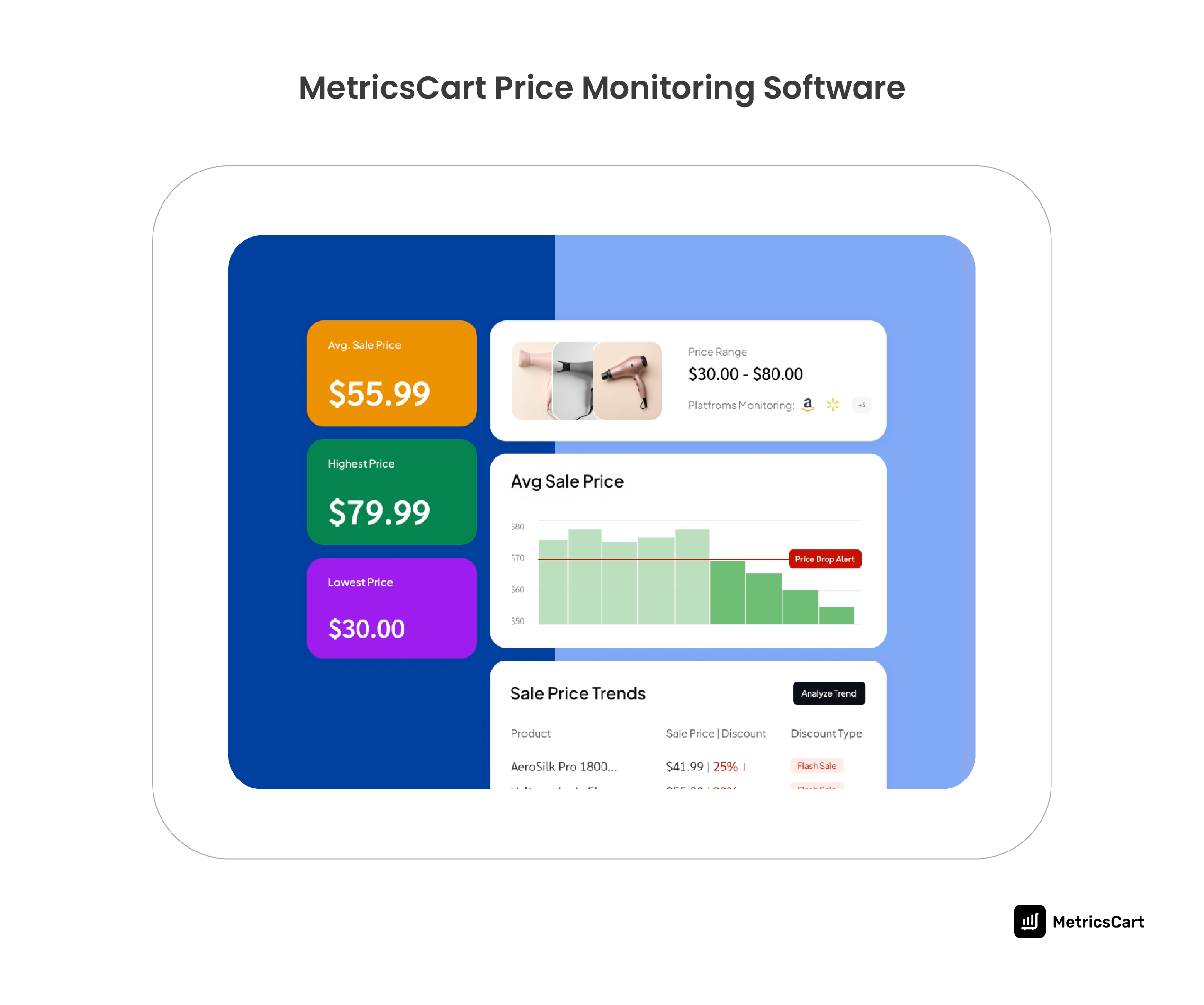
To make this process easier, consider leveraging MetricsCart’s price monitoring tool. It can help you track competitor pricing in real-time and adjust your MAP based on market trends, ensuring that your product is competitively priced while still profitable.

2. Communicate MAP Rules Clearly to All Sellers and Internal Teams
Once your MAP is set, it’s important to communicate the policy clearly to all stakeholders, both internally and externally. You may use formal agreements and contracts with resellers to make sure your MAP policy is enforced. These agreements should detail the penalties for non-compliance and include clear guidelines for pricing.
For brands selling directly through Amazon’s Vendor Central, your vendor management team must communicate the MAP policy and its importance to Amazon. It’s crucial that Amazon understands the price consistency and the importance of profitability for its products.
Brands must inform all authorized 3P resellers and distributors about their MAP policy. Make sure they understand that violating the MAP will have consequences. You can also include clauses in contracts to ensure that your MAP policy is legally enforceable across your reseller network.
READ MORE | What Every CPG Brand Should Know About MAP Pricing and Monitoring
3. Implement Technology to Instantly Catch and Address Price Violations
To protect your pricing strategy and prevent MAP violations, it’s essential to implement real-time pricing monitoring software. Using a robust tool can help you automatically detect pricing discrepancies and take immediate action to correct them.
MetricsCart’s MAP Monitoring and Enforcement Software is a powerful solution designed to automatically detect violations, flag products that are below the MAP, and send alerts.
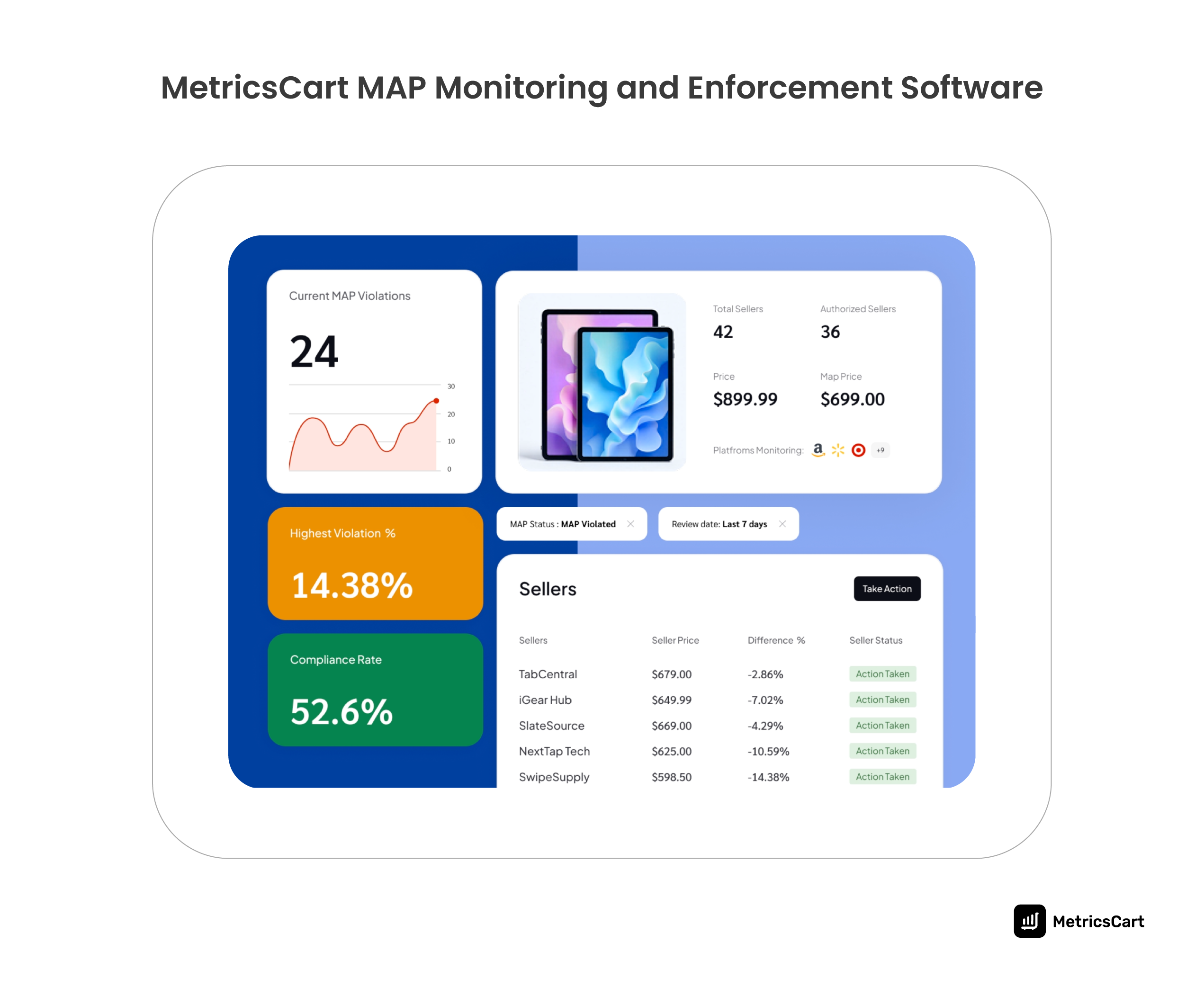
The software will notify you of price changes in real time, allowing you to take action before your product is flagged as CRaP by Amazon’s algorithms. It will also automatically give you alerts and send warning emails to violators if there are pricing discrepancies, ensuring that MAP compliance is always maintained.
By using MetricsCart’s MAP monitoring software, you can automate the enforcement of your pricing rules across multiple platforms. This reduces the risk of human error, ensures consistency, and allows you to focus on more strategic aspects of your business.
Ending CRaP
A MAP policy is the most effective way to ensure price consistency across all channels, avoid margin erosion, and stabilize your product’s performance on Amazon.
As outlined in this guide, by setting a realistic MAP price, communicating MAP rules clearly, and leveraging powerful tools like MetricsCart’s MAP monitoring software, brands can take proactive steps to protect their products from CRaP.
These strategies help maintain brand value, prevent unauthorized price cuts, and ensure that your products remain competitive and profitable.
Don’t Wait Until Your Product is Flagged as CRaP.
FAQs
Amazon CRaP issues are typically caused by pricing inconsistencies, low profit margins, and high operational costs (such as fulfillment and storage fees). Price fluctuations across marketplaces or resellers can trigger Amazon’s algorithm to lower the product price, causing margin erosion and CRaP classification.
Staying off the Amazon CRaP list involves implementing a consistent pricing strategy, using a well-enforced MAP policy, and monitoring pricing violations across your resellers. Additionally, tracking Amazon’s pricing algorithms and ensuring your products are priced in a way that covers costs while remaining competitive can help keep your products off the CRaP list.
Common causes of Amazon CRaP issues include price inconsistency, low profit margins, and high operational costs such as storage and fulfillment fees. If your product’s price is regularly undercut by third-party sellers or fluctuates too much, Amazon may automatically adjust the price, leading to CRaP classification.
Once a product is classified as CRaP, it can be difficult to recover, but it’s not impossible. The first step is to adjust your pricing strategy and ensure your MAP policy is in place. You may also need to engage with Amazon to correct the pricing issues, monitor your margins closely, and ensure your product is competitive but still profitable.
MetricsCart offers robust tools to help you monitor pricing consistency, detect violations, and ensure your products are not flagged as unprofitable. The software alerts you to any price discrepancies, helping you stay proactive and maintain price stability across platforms.