You set your price. Your competitor set theirs. And somewhere between those two decisions, you’re either making the sale or watching it go to someone else. That’s online pricing, plain and simple.
On marketplaces like Amazon, prices shift every few minutes. Amazon alone is known to adjust prices roughly every 10 minutes, meaning the price you set in the morning can be out of date before lunch.
Now think about how customers actually shop. They don’t land on one site and buy. They open tabs, compare across retailers, and make a decision based on what they see right then. If your product shows up even slightly higher, that sale is gone.
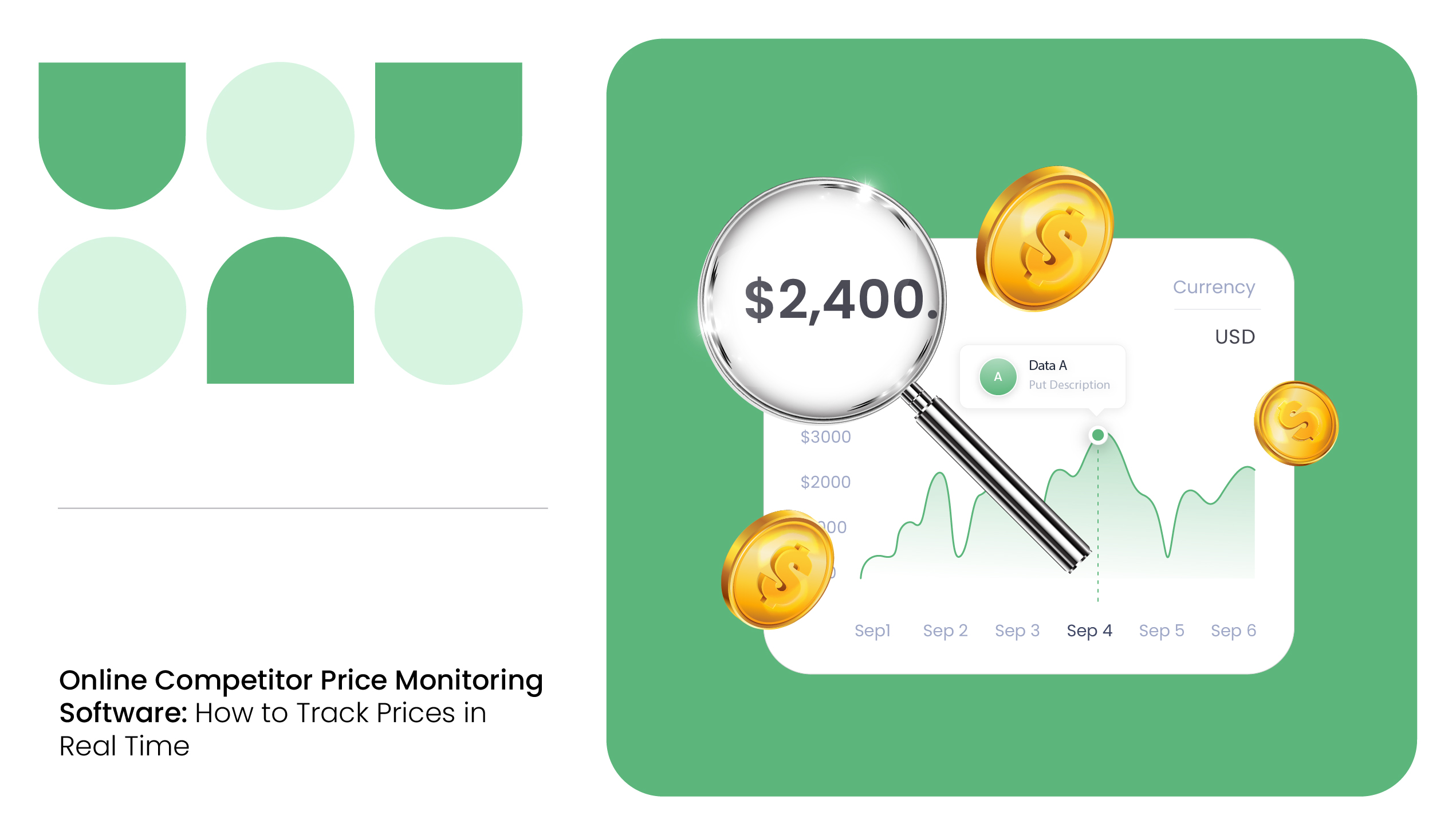
Online competitor price monitoring software closes that gap. It gives brands a real-time, accurate view of how their prices stack up across all channels, so they can monitor closely, respond faster, and make smarter pricing decisions.
That’s what this guide is about. Let’s get into it.
Why is Competitor Price Monitoring Important?
Price is one of the few levers in e-commerce that affects both conversion and margin simultaneously. Set it too high, and you lose demand. Set it too low, and you erode profitability. The real challenge is not just finding the right price, but holding that position while the market keeps moving.
Most brands don’t fail on pricing strategy. They fail on speed.
Pricing decisions are often based on delayed data, while competitors, marketplaces, and third-party sellers are adjusting prices in near real time. That gap is where revenue slips quietly. Conversions drop, margins shrink, and brand positioning weakens without immediate visibility.
This is where competitor price monitoring becomes critical.It gives brands a live view of how prices are shifting across competitors, sellers, and channels. Instead of reacting late, teams can act early and with confidence.
Here’s what it enables:
- Protect conversions: Stay competitively priced at the moment a shopper is making a decision, not after demand has already shifted
- Defend margins: Avoid unnecessary discounting by understanding when price drops are real threats vs temporary noise
- Control price integrity: Detect and respond to unauthorized sellers or MAP violations before they trigger a race to the bottom
- React to promotions instantly: Identify competitor discounts, bundles, or coupons as they happen and adjust strategy in real time
- Strengthen positioning: Maintain consistent pricing across channels, reinforcing brand value instead of confusing customers
Reactive Pricing vs. Real-Time Monitoring: Key Differences
| Criteria | Reactive Pricing | Proactive Price Monitoring |
| How prices are reviewed | Periodic audits, manual checks | Continuous, real-time tracking |
| When issues are caught | After the damage is done | As soon as they happen |
| Response to competitor moves | Scramble to react | Plan ahead based on patterns |
| MAP violation detection | Days or weeks later | Flagged immediately |
| Decision making | Based on outdated data | Based on live market data |
| Business impact | Lost conversions, margin erosion | Protected margins, better positioning |
Biggest Pricing Challenges Brands Face Online
Pricing Fragmentation Across Marketplaces and Retailers
Selling across multiple channels is good for reach. But it comes with a pricing problem that’s easy to miss until it’s already causing damage. The same product ends up listed at different prices across different storefronts: the DTC site, Amazon, a distributor running a clearance sale, and a third-party seller nobody approved. None of it is coordinated. And most of the time, nobody catches it until a frustrated retailer files a complaint or a sales report shows worse-than-expected results.
At a small SKU count, this is manageable. With hundreds or thousands of SKUs spread across multiple channels, price gaps quietly increase. Shoppers notice inconsistency and start losing confidence in what the product is actually worth. Authorized retailers who price correctly start getting undercut by those who don’t. It’s not a single crisis, which is exactly what makes it so hard to address without continuous visibility.
READ MORE | Is Your Brand Falling Behind? Everything You Need to Know About Automated Price Monitoring
MAP Policy Violations and Unauthorized Discounting
A MAP policy looks airtight on paper. In practice, it only works if violations get caught quickly. And most of the time, they don’t.
Some retailers undercut during busy seasons on purpose, calculating that no brand will pull inventory when demand is high. Grey-market sellers have no agreement to honor MAP in the first place. Repricing tools sometimes automatically push prices below the floor, with no one checking the outcome.
The violation starts small; one listing, a few dollars under the floor. But it doesn’t stay small. Other sellers adjust to match. Compliant retailers start feeling the pressure. Shoppers see the lower price often enough that it starts to feel like the real price. By the time it shows up on anyone’s radar through a manual process, the window to stop it cleanly has already passed.
READ MORE | 5 Common Price Monitoring Mistakes
Reacting to Price Changes Instead of Anticipating Them
Most pricing decisions are made in response to competitor moves.A competitor drops their price, someone on the team notices, and a conversation starts about what to do next. That takes time. And while it’s happening, the competitor is already getting the sales that came with that move.
The thing is, most competitor price moves aren’t random. Brands that track pricing data over time start seeing the same patterns repeat: a competitor that reliably cuts prices before back-to-school, or one that kicks off promotions on flagship products before spreading discounts across the rest of the catalog.
Once those patterns are familiar, the response doesn’t have to be improvised. It can be planned. That’s a fundamentally different way to approach pricing, and it’s only possible when the data has been there long enough to tell a story.

How Does Online Competitor Price Monitoring Software Work?
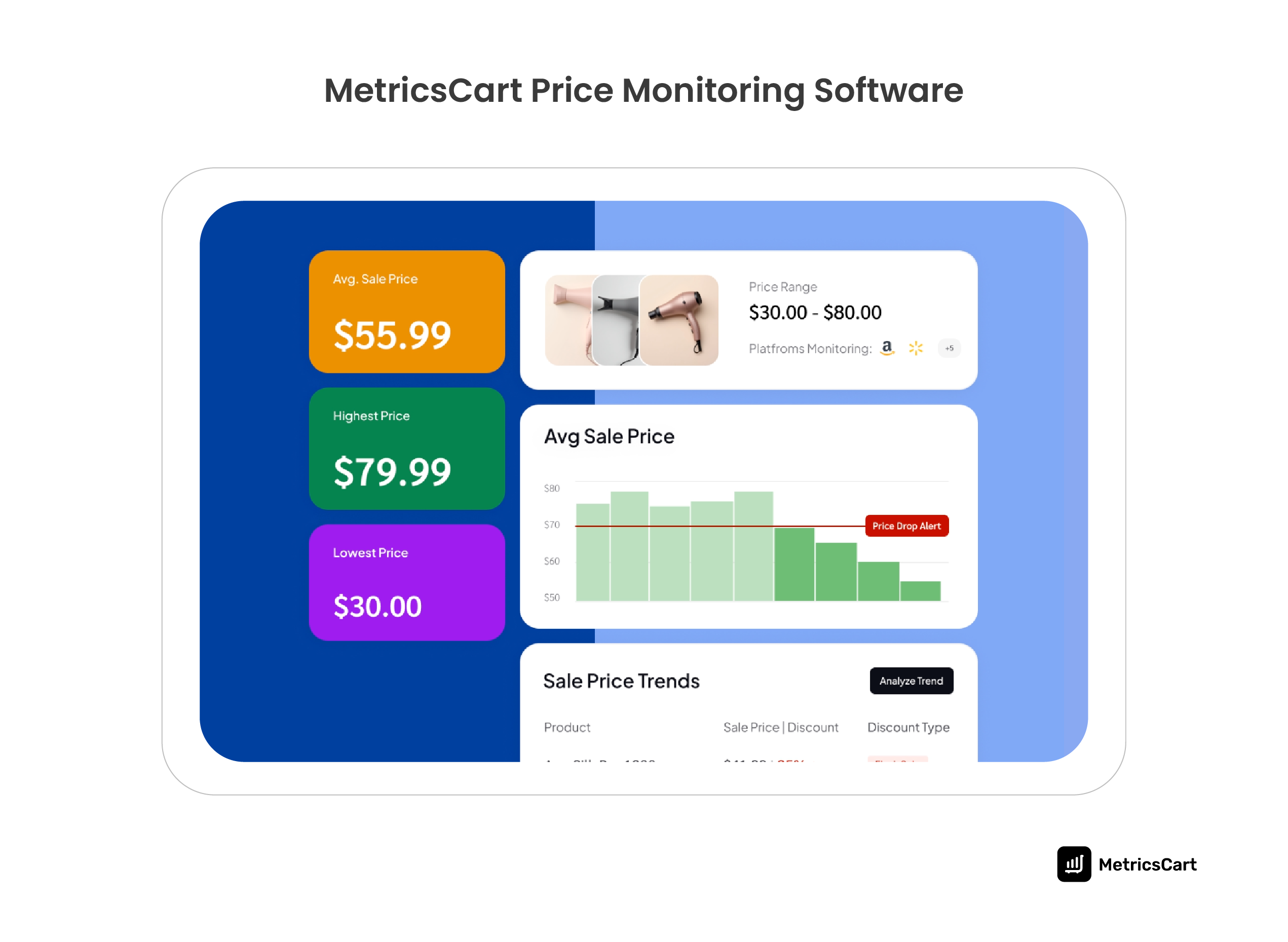
At its core, competitor price monitoring software does one thing: it watches the market so you don’t have to.
A competitor price monitoring tool like MetricsCart continuously tracks product pages from Amazon, Walmart, Target, and 100+ other retailers relevant to your category, pulling price, stock status, seller details, and promotional data in real time.
The trickier part is matching. The same product can appear under different titles, SKU codes, and descriptions across different storefronts. AI-powered price matching engines solve this by cross-referencing barcodes, product images, titles, and attributes, so that when a price comparison appears on your dashboard, it’s genuinely comparing the same product across storefronts. Building this kind of reliable, real-time matching pipeline typically requires a dedicated data engineering services partner who can handle the ingestion, normalization, and matching logic at scale.
Once the data is clean and matched, it feeds into two things that matter most to brands:
- Real-time alerts: Notifying your team the moment something meaningful happens, whether that’s a competitor’s price drop, a MAP violation, or an unauthorized seller listing your product below the floor price.
- Historical price intelligence: A growing record of how competitors price across seasons, how they run promotions, and where pricing pressure tends to build in your category. This is what allows brands to anticipate moves rather than just react to them.
For brands that want to do more than just watch, the platform lets you set automated repricing rules that work directly off live market data. You decide how close you want to follow a competitor, where your price floor sits, and what boundaries the system should never cross.
From there, it handles the adjustments on its own. No one needs to manually review every change or stay glued to a dashboard waiting for something to shift. Your pricing stays current with the market, even when your team’s attention is elsewhere.
Turning Price Monitoring Into Action: 6 Effective Strategies
Tracking competitor prices is only useful if it leads somewhere. The data means nothing if it just sits in a dashboard. Here is how brands can actually put it to work.
Stay Within the Buy Box Range, Not Just “Competitive” Pricing
On Amazon, winning the Buy Box is about staying within a specific price band that Amazon’s algorithm favors. A price that feels reasonable by general standards can still fall outside that band, costing the Buy Box to a seller who isn’t necessarily cheaper.
For most brands, the Buy Box is where the majority of conversions happen, so losing it, even briefly, has a direct impact on sales velocity.
Address MAP Violations at the Point of Origin
MAP violations rarely happen across all sellers at once. They usually start with a single seller and expand through matching behavior.
The key is isolating where the price drop originated. Addressing the source early prevents broader pricing disruption across the channel and reduces the need for reactive enforcement later.
Use Pricing Patterns as Signals, Not Just Data Points
Competitor pricing behavior is often structured. Discounts follow seasonal cycles, campaign periods, or inventory-driven decisions.
Looking at historical patterns helps separate temporary price drops from sustained pricing shifts. This allows pricing decisions to be planned, rather than made under pressure.
Focus on SKUs Where Pricing Has the Highest Impact
Pricing pressure is not evenly distributed across the catalog. It is typically concentrated in high-traffic and mid-tier SKUs.
Focusing monitoring efforts on these products provides a more accurate view of where pricing changes will influence demand and margin.
Evaluate Price Changes Alongside Availability
Price alone does not explain competitor behavior. Availability often determines whether a price change is meaningful or short-lived.
When pricing is viewed alongside stock levels, it becomes easier to avoid unnecessary reactions to situations that may correct themselves.
Use Outcomes to Continuously Refine Pricing Decisions
Pricing decisions should not end at execution. Their impact needs to be measured.
Tracking changes in conversion, visibility, and margin after each adjustment creates a feedback loop. Over time, this improves pricing accuracy and reduces reliance on reactive adjustments.
What Brands Need to Watch
The global price monitoring software market is on track to hit $5.09 billion by 2033, a clear signal that brands everywhere are waking up to how much pricing visibility actually matters.
Winning on price does not mean always being the cheapest. It means knowing exactly where you stand at any given moment and having the information to make the right call. That comes from live, accurate data, not weekly reports or manual checks that are already outdated by the time they land.
MetricsCart helps brands get there. From real-time competitor price tracking to MAP enforcement across Amazon, Walmart, and other major channels, it gives pricing teams the visibility and tools to act fast, stay in control, and make decisions that hold up.
If pricing is something your brand takes seriously, it is worth seeing what the right data can do.
Stop Reacting to Price Changes. Start Getting Ahead of Them.
FAQs
Brands use tools that track competitor prices across marketplaces, retailer websites, and sellers. These tools update prices automatically and show changes in real time. This helps brands see where they stand without having to check each site manually.
Brands should track competitors’ prices, discounts, and promotions; seller type (brand vs. third-party); Buy Box ownership; and stock availability. Looking at all of this together helps explain why the price changed and whether a response is needed.
In fast-moving categories, prices should be tracked multiple times a day or in real time. In slower categories, once a day may be enough. The key is to match the frequency of price changes in your market.
Brands use price monitoring tools and digital shelf platforms to track and compare prices across channels. Tools like MetricsCart help bring all this data into one place, making it easier to track changes and act quickly.
Price monitoring helps brands stay within the right price range, which improves visibility and conversions. It also helps avoid delayed reactions and unnecessary discounts, leading to better sales and stronger margins over time.