Highlights
- Most American adults now snack daily and replace meals with snacks.
- US shoppers are reaching for bolder flavors and nostalgic favorites.
- Snacks with clear nutrition claims, especially for protein and fiber, are winning shelf space in US stores.
- Mini and bite-size formats are outperforming across the US market because they offer portion control and a lower price point.
- A snack trend only matters once it turns into real US sales, so brands are tracking which trending products actually sell on the digital shelf.
The snack has quietly become the meal. Americans now reach for chips, bars, and bites all day long, turning a $231 billion habit into one of the toughest shelves to win in retail.
That is what makes US snack trends 2026 worth paying attention to. As snacking shifts from a between-meal habit to a primary eating occasion, the competition for the cart is only intensifying.
This guide breaks down what the latest data says, which snacks are actually selling, and what it means for brands watching the digital shelf, meaning how products show up and perform on retailer sites like Amazon and Walmart.
The State of US Snacking in 2026
How Big Is the US Snack Market?
| Market Segment / Metric | Stat / Value | Key Growth Driver |
| Total US Snack Market | $231 Billion | Shift from three set meals to all-day snacking |
| Salty Snack Segment | $31.6 Billion (+2.8% YoY) | Texture and flavor innovation in pretzels, corn snacks, and nuts |
| Daily Snacking Rate | 64% of US Adults | Snacks replacing meals in busy, on-the-go routines |
| Fastest-Growing Category | Nuts & Seeds (7.2% CAGR) | Demand for nutrient-dense, plant-based protein |
| Meat Snacks Projection | 6.0% Annual Growth | Low-sugar, high-protein meal replacement |
| Most Wanted Ingredient | Protein (60%+ of consumers) | Shoppers using snacks as fuel, not just treats |
Snacking is one of the most reliable categories in the US food industry. Salty snacks alone- chips, pretzels, popcorn, and nuts- make up roughly a quarter of the $231 billion US snack market. The segment is forecast to climb another 2.8% to $31.6 billion in 2026, holding steady even against inflation and cautious spending.
Across the broader snack market, healthier and functional options are the fastest-growing segment, as more shoppers seek protein, fiber, and cleaner ingredients without sacrificing taste.
The split between sweet and salty is worth watching. Salty snacks still command the larger share of the market, but the momentum in 2026 sits with segments that offer a health angle, from protein-rich options to gut-friendly snacks.
How often do Americans snack?
64% of US adults snack at least once a day, making snacking a regular part of American eating habits. For many, snacks are no longer the thing between meals; they are the meal. Some shoppers now graze throughout the day instead of sitting down to three set meals.
“Comforting” is the number one word US consumers of every generation use to describe their relationship with snacking, from Gen Z to Boomers. That emotional pull, familiar, easy, reassuring, sits beneath almost every trend below.
Latest Snack Trends in the US
Protein and Functional Snacks
Protein is the most wanted ingredient in the American snack aisle. Over 60% of US consumers are actively trying to eat more protein, according to the International Food Information Council. That demand is showing up in sales, with protein bars still leading the functional snack space. Shoppers reach for protein to stay full, to recover after a workout, or simply to replace a skipped meal.
The newer story is fiber. A social-media-driven habit called “fibermaxxing,” eating as much fiber as you can, has pushed fiber up the list of things shoppers look for.
Fibermaxxing is a social-media-driven nutrition trend where consumers intentionally increase their daily fiber intake by choosing high-fiber foods and packaged snacks. The trend has increased demand for snacks with visible fiber claims, making fiber-rich products more attractive to health-conscious shoppers.What is Fibermaxxing?
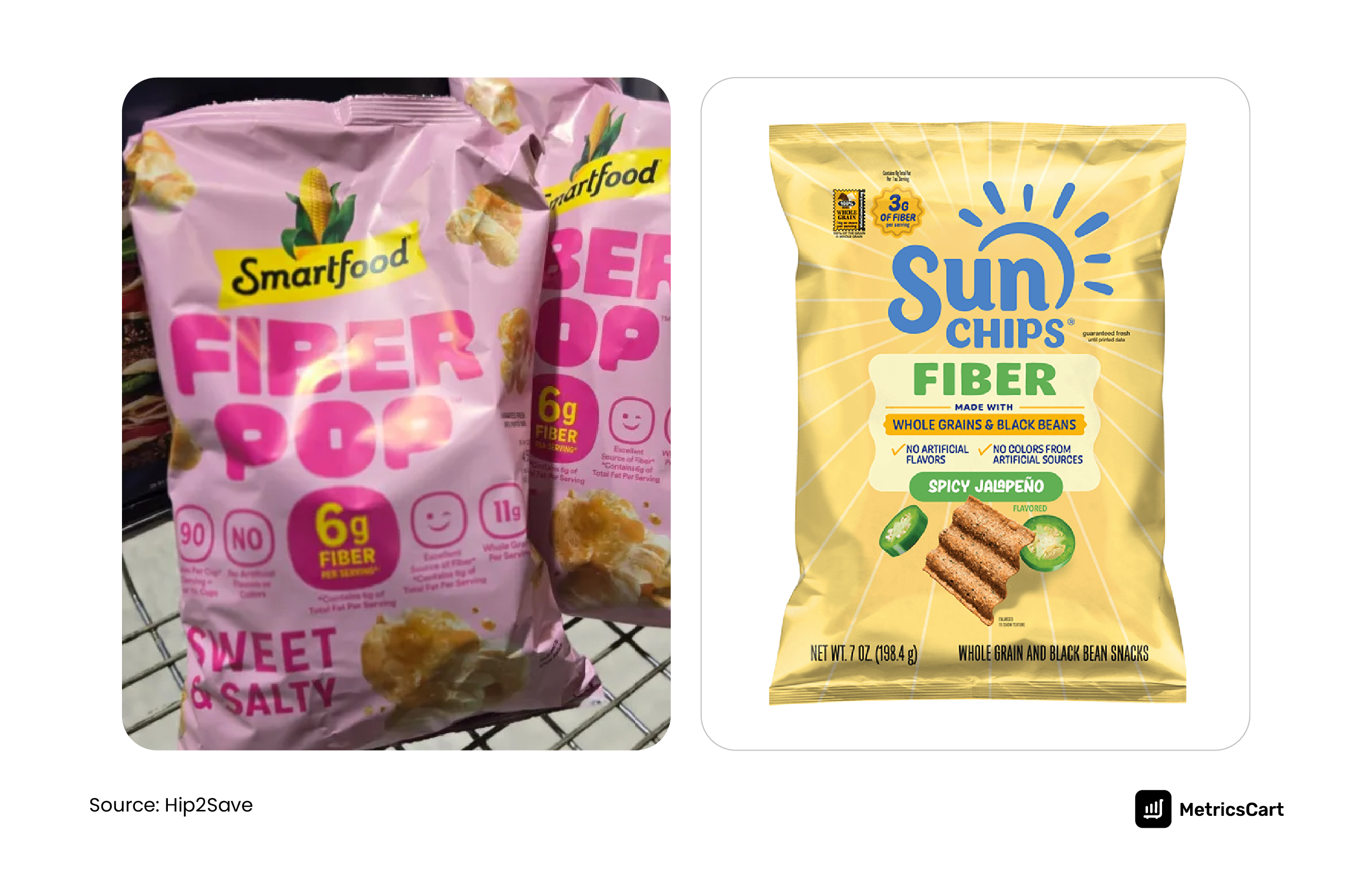
Only 7% of American adults currently hit their recommended daily fiber intake, and big brands are moving fast to close that gap: Frito-Lay opened 2026 with two fiber-forward snacks, SmartFood FiberPop and SunChips Fiber.
Source: Hip2Save
For brands, functional benefits like protein, fiber, and gut health are becoming the reason shoppers choose one snack over another.
Mini Formats and Portion Control
Smaller is winning. “Mini” is the single strongest driver behind snack choices in 2026, ahead of taste, health, and convenience. Shoppers want snacks that feel portioned and easy to repeat throughout the day, which is why mini sizes, bite-size pieces, and multi-packs are selling well.
The appeal is partly about control. A smaller pack lets someone enjoy an indulgent snack without overdoing it, fitting neatly into the health-and-comfort balance shoppers are chasing. It also helps with value: smaller packs carry a lower price tag at a time when many buyers are watching their grocery spend.
Bold and Comforting Flavors
Flavor is still what makes or breaks a new snack. 78% of Americans consider flavor a deciding factor when trying a new snack, with salty and sweet running almost neck and neck. Beyond the basics, shoppers are reaching for bolder combinations, sweet-and-smoky pairings like BBQ and brown sugar, or chipotle and maple.
Nostalgia is part of the flavor story too. Two-thirds of Americans say they would pay more, about 32% more on average, to bring back a favorite childhood product. Classic snacks with a modern twist tap into that feeling of comfort, giving brands a way to feel both familiar and new at once.
On-the-go and social discovery
Snacking has left the kitchen. Younger shoppers,s in particular,r eat on the move, and the way they find new snacks has changed. In the US, 38% of younger consumers are snacking more often than before, and social media is now a major source of snack discovery. A snack that looks good and is easy to recreate can spread fast online.
For Gen Z, snacks are also a statement of values. This group leans toward options that feel authentic and purposeful, whether that means a functional benefit, a clean label, or a brand they trust. Portable formats, individually wrapped bars, ready-to-eat cups, and snackable bites are built for how this generation actually eats.
Which Snack Categories Are Growing the Fastest?
The clearest signal for brands is where the money is actually moving, and in 2026 it is moving toward health, texture, and novelty. Here are the segments pulling ahead of the pack:
- Nuts and seeds — growing at roughly 7.2% a year through 2034, faster than the salty snack average, as shoppers treat them as a nutrient-dense, protein-rich option.
- Meat snacks — projected to expand at around 6% a year through 2031, carried by their high-protein, low-sugar appeal.
- Pretzels and corn snacks — outperforming the rest of the salty category on texture, versatility, and flavor variety.
- Better-for-you sweet formats — refrigerated snack bars, yogurt-based snacks, and lower-sugar bakery items are pulling strong growth as shoppers look for indulgence with a health angle.
A few patterns matter for anyone planning an assortment.
- Protein is the common thread: the segments growing fastest are the ones that carry a clear nutrition claim, which is why a jerky or a nut mix is winning shelf space that a plain chip used to hold.
- Texture is the second thread. Shoppers are trading up to snacks that are more interesting to eat, such as pretzels and crunchy corn snacks. And the health-and-comfort tension runs through all of it: the winners keep the crave, then add just enough nutrition or novelty to feel worth the price.
Overall, the salty snacks category is not shrinking. It is holding steady even under inflation, which tells brands the pressure is less about whether people buy snacks and more about which snacks earn the pick.
What This Means for Brands
Knowing the trends is one thing. Knowing which trending products are actually selling, and where, is what separates a good assortment from a guess. A trend only matters to a brand if it shows up in real sales on real shelves.
That is where digital shelf data earns its place. The questions brands are asking in 2026 are specific, and each one is answerable with the right tracking:
- Is this trend selling in my category, or just online? Watching which snack SKUs win on price, search ranking, and availability shows whether fibermaxxing or mini formats is turning into purchases or just noise. Digital Shelf Analytics gives that view across major retailers.
- Which of my products keeps going out of stock? Lost availability on a trending SKU results in lost sales and often goes invisible until the data surfaces it.
- Where am I losing the Buy Box or getting undercut? Pricing pressure on a hot product can quietly erode margins across an entire listing.
- What are shoppers actually saying? The claims, flavors, and formats that appear in customer reviews before they appear in sales reports.
- How is my category shifting on a specific retailer? Category-level tracking, like Walmart snack analysis shows where a segment is gaining or losing ground on the shelf that matters most.
- Is my product content keeping up? Titles, images, and claims that reflect current demand — high-protein, high-fiber, mini — help a snack get found and picked.
The 2026 US snack market lacks certainty. Shoppers are buying more often and expecting more from each choice, and the winning products answer a specific want rather than trying to please everyone.
For brands, the hard part is no longer spotting the trend. It is knowing which ones are turning into real sales in their category, among the retailers that matter. A snack can go viral online and still sit untouched on the shelf. Closing the gap between trending and selling is where MetricsCart turns marketplace data into actionable decisions for brands.
See which snack trends are actually selling in your category.
FAQs
The biggest US snack trends in 2026 are protein and functional snacks, mini and portion-controlled formats, bold and comforting flavors, and on-the-go snacking driven by social media. Underneath all of them is one shift: shoppers want comfort and health in the same product.
Yes, but the framing has changed. Plant-based snacks now sell less on the “meat-free” message and more on what they deliver: protein, fiber, and clean ingredients. Legume- and pulse-based snacks like chickpea puffs and pea-protein chips fit the broader shift toward functional, better-for-you options.
Healthy snacking in 2026 is led by protein, fiber, and gut-health benefits rather than simply “low-calorie.” The “fibermaxxing” trend has pushed fiber forward, and shoppers increasingly look for a clear nutrition claim on the pack rather than a vague health halo.
A better-for-you snack usually carries a real functional benefit (protein, fiber, gut health), a cleaner ingredient list, and a portion that feels controlled. Shoppers want the benefit without giving up taste, which is why comfort and craveability still matter alongside the health claim.
By tracking what actually sells, not just what trends online. Watching which SKUs win on price, availability, and search ranking across retailers shows whether a trend like fibermaxxing or mini formats is turning into real sales in a brand’s own category.