Modern beverage marketing has never had more data.
Marketing teams track impressions, click-through rates, engagement, customer acquisition costs (CAC), return on ad spend (ROAS), and social media reach across every campaign. Dashboards are filled with performance metrics, yet many beverage brands still struggle to answer one fundamental question: Why aren’t customers coming back?
The answer rarely lives inside your advertising dashboard. Instead, it lives on the digital shelf: in the product reviews across Amazon, Walmart, Target, Kroger, and other online retailers. Every review tells a story about taste, packaging, product quality, pricing, delivery experience, and whether your brand lived up to customer expectations.
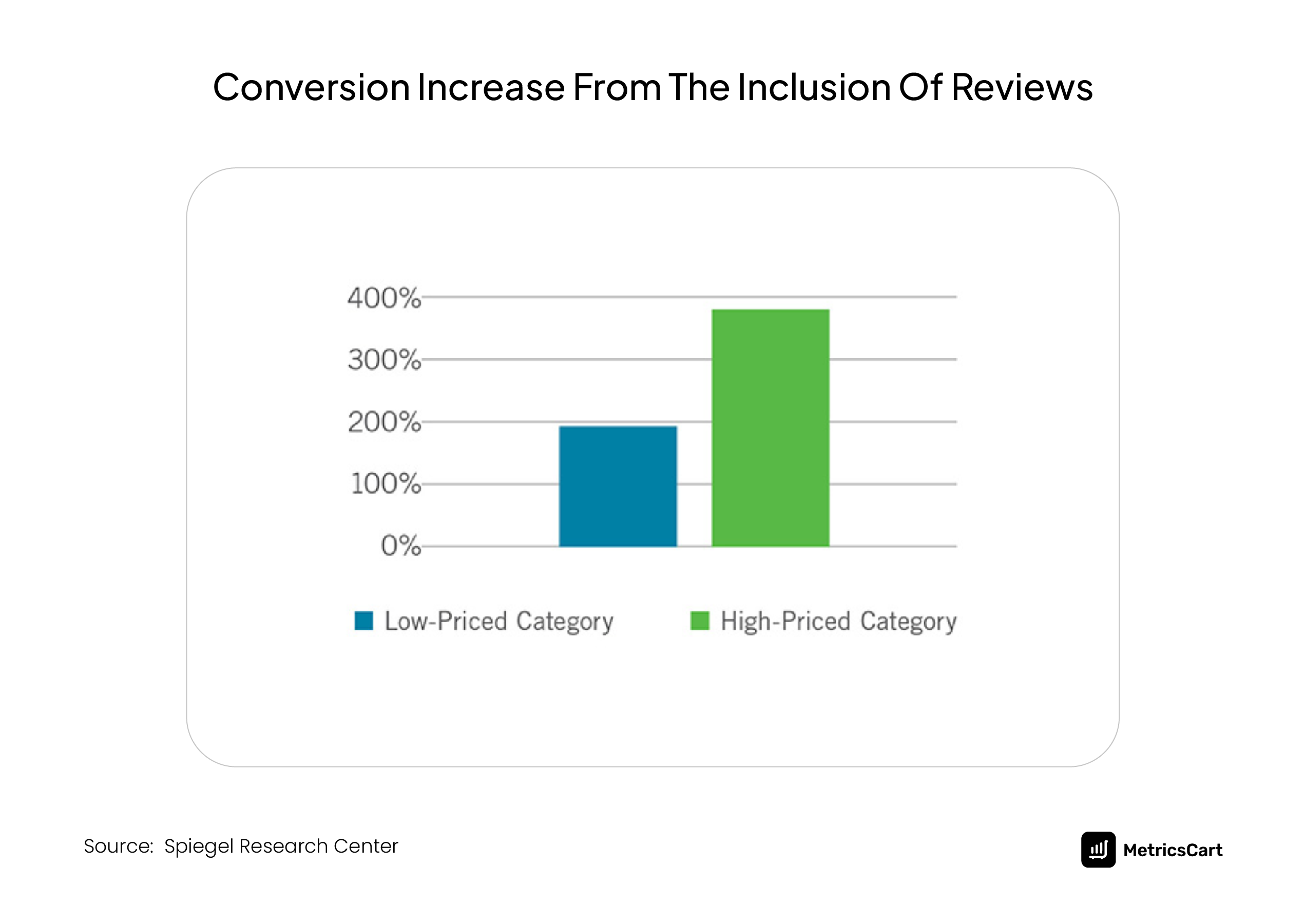
Research reinforces just how influential these reviews have become. The Spiegel Research Center found that displaying customer reviews can significantly increase conversion rates, especially for products with higher consideration.
For beverage brands competing in crowded categories like functional drinks, energy beverages, hydration products, sparkling water, and healthy sodas, reviews are no longer just customer feedback. They are one of the richest sources of consumer insights for beverage brands.
Yet many marketing teams still treat product reviews as a customer service issue instead of a strategic asset. Today, your brand is no longer defined by what your campaigns say.
It’s defined by what thousands of customers say about you.
Why Beverage Marketing Needs Consumer Insights, Not Vanity Metrics
Traditional marketing metrics still matter. Reach tells you whether people saw your campaign. CTR tells you whether they clicked. ROAS tells you whether advertising generated revenue.
But none of these metrics explain why customers loved or abandoned your product after purchasing it. Modern retail analytics combines marketplace performance with real consumer feedback, helping brands understand not only how products sell but why they succeed or fail on the digital shelf.
Instead of relying solely on campaign data, leading beverage companies now monitor:
- Customer sentiment trends
- Product ratings
- Review themes
- Digital shelf availability
- Competitive benchmarking
- Marketplace search performance
- Pricing consistency
- Packaging complaints
- Flavor preferences
- Repeat purchase drivers
These insights help marketing teams make better decisions across product development, campaign messaging, retail partnerships, and customer retention.
The global beverage industry continues to expand rapidly, with worldwide beverage revenues projected to exceed $2 trillion annually in 2026. At the same time, online grocery shopping continues to grow, making digital shelf performance increasingly important for beverage brands competing across Amazon, Walmart, Target, and grocery marketplaces.
Winning this environment requires more than creative campaigns. It requires listening to what consumers actually experience after purchase.
Review monitoring and analysis platforms like MetricsCart help brands transform thousands of marketplace reviews into actionable insights, enabling teams to identify recurring product issues, benchmark competitors, monitor customer sentiment, and detect emerging trends long before they appear in traditional market research reports.
Let’s look at how review intelligence supports every major beverage marketing function.
Chief of Brand: Protect Brand Equity Before It Starts to Erode
Brand leaders think beyond individual campaigns. They’re responsible for long-term brand perception, category positioning, customer trust, and sustained business growth. But those goals become increasingly difficult to achieve if consumer sentiment begins shifting underneath the surface. A brand health survey conducted every six months might tell you how customers felt yesterday. Marketplace reviews tell you how they feel today.
Research shows that customers who have positive brand experiences are significantly more likely to recommend and repurchase a product, making everyday consumer feedback analytics one of the strongest leading indicators of long-term brand equity.
Net Promoter Score (NPS) & Brand Health
Look at Olipop. They achieved a unicorn valuation by brilliantly reframing themselves from a clinical “prebiotic tonic” tucked in the wellness aisle to an inclusive, nostalgic “healthy soda alternative.” But if the daily consumer review sentiment shifts from “nostalgic treat” to “causes bloating,” the positioning breaks.
Modern digital shelf analytics solutions for beverage brands like MetricsCart continuously monitor marketplace reviews, customer sentiment, recurring product issues, and competitive benchmarks. Instead of waiting months for traditional market research, marketers receive real-time consumer insights directly from ecommerce shoppers.
MetricsCart tracks these daily sentiment fluctuations based on live marketplace data, letting you see a brand health dip in real time, long before a research agency delivers a lagging deck.
READ MORE | Consumer Sentiment Analysis for CPG Brands [2026 Growth Guide]
Market Share & Competitive Share of Voice
To achieve category leadership over legacy giants, you need deep competitive benchmarking. By running a thorough product ratings analysis on your competitors’ listings, you can find exactly where the category leader is dropping the ball.
If consumers are reviewing a legacy energy drink saying, “Tastes like synthetic chemicals and gives me the jitters,” those recurring themes become valuable consumer insights for beverage brands looking to differentiate themselves.
Brands like Celsius and Alani Nu have successfully positioned themselves around cleaner ingredients and wellness-focused messaging because they understand what modern consumers increasingly value.
Rather than guessing which positioning will resonate, marketers can benchmark competitor reviews to uncover unmet needs across the category.
Brand Equity & Sentiment
When Recess expanded from CBD into magnesium and “mood” mocktails, they weren’t just launching another SKU; they were selling an emotional state. Reviews are the rawest, unprompted expression of whether consumers actually feel that “calm” or if they think they just bought overpriced sparkling water.
Automated thematic review analysis helps brand teams identify recurring emotional language across thousands of reviews, making it easier to measure whether positioning aligns with actual customer experiences.
Integrated Marketer: Align Every Channel With the Customer Experience
Integrated marketers have one of the most challenging jobs in beverage marketing. They’re responsible for ensuring that every touchpoint, such as social media, retail media, email marketing, influencer campaigns, ecommerce listings, and in-store messaging, communicates one consistent brand story.
But consistency becomes impossible when marketing promises something customers don’t experience.
Omnichannel Consistency & Campaign ROI
Imagine investing heavily in a creator campaign promoting your beverage as:
“The cleanest-tasting sparkling hydration drink.”
Then customers visit Amazon and immediately see recent reviews saying: weird artificial aftertaste, damaged cans, Flat carbonation, and flavor wasn’t as expected, your campaign ROI goes out the window. Real-time review monitoring software gives you the ground truth to adjust your messaging before you waste another dollar of ad spend.
Content Compliance & Asset Accuracy
A massive chunk of negative beverage reviews stems from simple logistical disconnects on retail sites. For a high-velocity brand like Liquid I.V., a Target product review or Walmart review analysis that surfaces complaints like, “Image showed the old Passion Fruit packaging but I received the new formulation, tastes different,” damages conversion rates.
Imagine launching a reformulated electrolyte drink while marketplace listings still display the previous packaging. Customers receive a different-looking product than the one they ordered and immediately question whether they’ve received the wrong item.
These experiences often lead to negative reviews despite the product performing exactly as intended.
Integrated marketers need automated digital shelf analytics software that can monitor product listings across Walmart, Target, and other retailers to ensure they remain aligned with current packaging, imagery, and messaging.
READ MORE | The Impact of Inconsistent Product Content on Brand Growth
Customer Acquisition Cost (CAC)
Customer acquisition continues to become more expensive across nearly every digital advertising platform. That’s why the best-performing beverage brands increasingly use customer language—not marketing language—in their campaigns.
If hundreds of five-star reviews consistently mention:
- “Perfect afternoon pick-me-up.”
- “Finally found a healthy soda that actually tastes good.”
- “Keeps me hydrated without the sugar.”
Those phrases become incredibly valuable creative assets.
Review analysis enables marketers to identify the language consumers naturally use when describing products, helping improve advertising relevance, landing pages, retail media creative, and e-commerce product descriptions.
Shopper Marketer: Win at the Digital Shelf Where Purchase Decisions Happen
Shopper marketers operate at the final stage of the buying journey, where discovery turns into conversion. Whether it’s Amazon, Walmart, Target, or Kroger, success depends on how well your product performs on the digital shelf.
Unlike brand campaigns that shape perception over time, shopper marketing is measured in immediate outcomes: clicks, conversions, add-to-cart rates, and retail sales.
But these metrics don’t exist in isolation. They’re heavily influenced by what shoppers see before they click “Buy Now.”
Conversion Rate (CVR) at Retail
Product ratings and reviews have become one of the strongest trust signals in e-commerce. More than 95% of shoppers read product reviews before making a purchase, and products with a higher volume of recent reviews consistently outperform those with limited or outdated customer feedback.
For beverage brands, even a slight decline in average ratings can influence purchase decisions. Imagine two electrolyte drink brands appearing side by side in Amazon search results.
- Brand A: ★★★★★ (4.8) with 8,500 reviews
- Brand B: ★★★★☆ (4.1) with 350 reviews
Even before comparing ingredients or pricing, shoppers have already begun making assumptions about product quality.
This is why beverage brands should use review monitoring software to continuously track review trends and ratings. Instead of discovering declining customer satisfaction after quarterly sales reports, marketers can identify issues as they emerge and take corrective action faster.
Rating & Review Volume
Marketplace algorithms reward products that demonstrate strong customer engagement. A newly launched beverage with only a handful of reviews often struggles to gain visibility. Meanwhile, products with a consistent flow of authentic customer reviews tend to have higher search rankings because they signal relevance and shopper confidence.
Monitoring review velocity allows shopper marketers to identify products that may require additional review-generation campaigns, retail activation, or post-purchase engagement strategies.
READ MORE | Everything You Need to Know About Review Recency and Volume
Voice of Customer (VoC) Integration
Retail buyers don’t simply want to hear that customers love your product. They want proof. This is where consumer insights for beverage brands become especially valuable.
Imagine preparing for a category review with a national retailer. Instead of presenting only sales growth, you can demonstrate that your hydration drink:
- Maintains a higher average rating than competing products
- Receives significantly more positive mentions around taste
- Generates fewer packaging complaints
- Delivers stronger customer satisfaction than category averages
These insights strengthen conversations with retail partners because they’re backed by the authentic voice of the customer. When shopper marketing combines sales performance with review intelligence, negotiations become much more persuasive.

Lifecycle Marketer: Customer Loyalty Begins After the First Sip
According to Bain & Company, increasing customer retention by just 5% can increase profits by 25% to 95%. For beverage brands operating in highly competitive categories, improving repeat purchases is often more valuable than acquiring new customers. That’s why lifecycle marketers should pay close attention to post-purchase feedback.
Customer Lifetime Value (LTV)
Customer Lifetime Value (LTV) is determined by product satisfaction. Suppose customers repeatedly mention that your powdered hydration sticks:
- Clump inside water
- Are difficult to open
- Don’t dissolve properly
- Leak during shipping
Each complaint increases the likelihood that first-time buyers never become repeat purchasers. Traditional analytics may reveal declining subscription renewals or repeat purchase rates. MetricsCart’s thematic product review analysis isolates these sub-themes instantly, allowing you to pass immediate product feedback to R&D before your LTV drops off a cliff.
Instead of reacting to declining LTV, teams can proactively resolve the product issues causing it.
Retention Rate / Churn Rate
Every beverage brand experiences customer churn. The challenge is understanding the underlying reasons. Customers rarely cancel subscriptions because of a single bad experience. Instead, dissatisfaction often builds gradually. Or competitors introduced products that better matched evolving consumer preferences.
By monitoring review themes across multiple retailers, lifecycle marketers can identify emerging patterns before churn becomes visible in CRM dashboards.
Repeat Purchase Rate
If someone buys a multi-pack of your RTD beverage, what brings them back? Is it the low calorie count? The functional focus? Thematic consumer feedback analytics tell you the exact features your most loyal customers rave about and provide valuable direction for retention campaigns.
Instead of relying on generic messaging, lifecycle marketers can build email campaigns, subscription offers, and loyalty programs around the specific product attributes customers consistently praise.
This makes retention marketing more relevant because it’s based on genuine customer experiences rather than assumptions.
Growth Marketer: Scale What Customers Already Love
Growth marketers focus on efficiency. Every campaign, experiment, and optimization is measured by its ability to drive measurable business outcomes. But growth becomes difficult when advertising performance improves while customer satisfaction declines. Scaling a poor customer experience simply accelerates negative outcomes.
Return on Ad Spend (ROAS)
You can optimize your Amazon PPC bids until you are blue in the face, but if you drive paid traffic to a product listing with recent 1-star reviews screaming about damaged cans at the top of the page, your ROAS will plummet.
Amazon has repeatedly emphasized that customer experience—including ratings, reviews, pricing competitiveness, and product availability—directly influences marketplace visibility. Driving paid traffic to listings with declining customer sentiment often reduces advertising efficiency regardless of bid optimization.
Growth marketers must use real-time review alerts to pause or pivot retail media measurement and ad spend for listings experiencing sudden quality-control issues.
Share of Search (SoS) on Marketplaces
On major e-commerce platforms, search algorithms heavily weigh review velocity and sentiment. Higher ratings directly equal higher organic ranking. By utilizing ecommerce analytics to close keyword gaps based on the literal language customers use in reviews (e.g., swapping technical terms like “gut health” for consumer phrases like “bloat-free soda”), you organically boost your Share of Search.
Product Return Rate
Returns are the silent killer of growth margins. In the beverage space, this usually manifests as leaking packaging, broken cans, or incorrect order fulfillment. Automated review monitoring enables teams to detect recurring complaints quickly, helping operations, product, and marketing teams collaborate before small issues become widespread problems.
Check out my previous article on Mental Shelf: Why Consumer Brands Must Master It | MetricsCart
What Retail Analytics Should Beverage Brands Actually Track?
Many marketing dashboards prioritize campaign performance. The most successful beverage brands combine those metrics with digital shelf intelligence and customer feedback.
Here’s how the focus should shift:
| Traditional Marketing Metrics | Retail Analytics Metrics That Drive Growth |
| Impressions | Customer sentiment trends |
| Reach | Product rating trends |
| Click-through rate (CTR) | Review volume and velocity |
| Engagement rate | Digital shelf availability |
| Return on Ad Spend (ROAS) | Share of Search across marketplaces |
| Cost Per Click (CPC) | Competitive review benchmarking |
| Social media followers | Voice of Customer (VoC) insights |
| Campaign impressions | Packaging and product issue detection |
| Website traffic | Pricing consistency across retailers |
| Customer Acquisition Cost (CAC) | Repeat purchase drivers from review themes |
From Consumer Feedback to Business Action
Collecting reviews is easy. Turning them into action is the challenge. As beverage brands expand across Amazon, Walmart, Target, Kroger, and regional grocery retailers, manually tracking customer feedback quickly becomes impossible.
A single product can generate thousands of reviews across multiple marketplaces, making it difficult to identify recurring issues or emerging trends before they begin affecting sales. This is where automated review monitoring becomes essential. Instead of spending hours reading individual reviews, platforms like MetricsCart automatically organize feedback into actionable themes such as:
- Taste and flavor preferences
- Packaging and shipping issues
- Ingredient and formulation concerns
- Pricing perception
- Product quality
- Delivery experience
- Customer sentiment trends
- Competitive benchmarking
Rather than simply reporting what customers said, the platform helps teams understand what requires immediate attention, what deserves further investigation, and what can be leveraged as a competitive advantage.
For example:
- A sudden increase in complaints about damaged cans can be routed to supply chain teams before ratings decline.
- Growing praise for a specific flavor profile can influence future campaign messaging.
- Emerging competitor weaknesses can inform positioning and retail media strategies.
- Positive customer language can be incorporated into e-commerce content and advertising to improve conversions.
Instead of becoming another dashboard that teams occasionally check, review intelligence becomes part of everyday decision-making.
Turn Customer Reviews Into Competitive Intelligence
Most beverage brands already have access to thousands of customer reviews. The challenge isn’t collecting more feedback—it’s uncovering the insights hidden within it.
MetricsCart helps beverage brands transform marketplace reviews into actionable intelligence by combining consumer insights, digital shelf analytics, and retail analytics in one platform.
With automated review monitoring, teams can:
- Detect emerging product issues before they impact sales.
- Monitor customer sentiment across Amazon, Walmart, Target, and other retailers.
- Benchmark review themes against competitors.
- Identify recurring complaints and opportunities for product improvement.
- Discover customer language that strengthens advertising, ecommerce listings, and retail media campaigns.
- Share insights across brand, growth, ecommerce, shopper marketing, and product teams.
When every team works from the same customer feedback, decisions become faster, marketing becomes more relevant, and products become more competitive.
The digital shelf changes every day. The brands that keep listening are the ones that keep winning.
Build Smarter Beverage Marketing With MetricsCart Consumer Insights.